
Kenya Power Reveals Why It Wants Wind and Solar Power Expansion Moderated
Share


Kenya Power has called for careful management of variable renewable energy sources such as wind and solar to protect the stability and reliability of the national electricity grid.
The utility said the growing share of variable renewable energy (VRE) could create challenges for the grid because wind and solar generation can rise or fall suddenly.
In a press release issued on Tuesday, August 11, 2026, Kenya Power said VRE sources currently account for 34% of the energy mix during the day’s peak demand of 1,900MW and 36% during low demand of 1,200MW.
According to the company, sudden changes in wind and solar generation can affect the frequency and voltage of electricity supplied to consumers.
When production from these sources drops, Kenya Power has to bring in other generation sources to maintain a stable power supply.
The company said this can increase the cost of electricity as it has to dispatch additional generation plants to cushion the impact of intermittent renewable sources.
Kenya Power Managing Director and CEO Dr (Eng.) Joseph Siror said global benchmarks recommend limiting VRE to about 15% of a grid’s total firm capacity.
“Our current system under the take-or-pay model of power purchase has led to an increase in VREs to over 20% against a recommended average of 15%,” Siror said.
He added that the intermittent nature of wind and solar means Kenya has to dispatch and pay for additional generators.
“This increases the overall cost of power,” he said.
Kenya Power Proposes More Stable Power Sources
Kenya Power said the country should prioritize grid stability when adding new power generation capacity.
The company also called for consideration of the additional costs required to support variable renewable sources and prevent power outages.
Siror said battery storage systems could help manage the challenges posed by VREs but noted that the systems would also face difficulties when wind and solar production falls.
“The true cost of VREs is its own cost and the additional power that we pay for to stabilize the grid,” Siror said.
He recommended increased investment in geothermal and hydropower, which he said could provide greater stability when intermittent sources are unavailable.
Also Read:Trump Unveils Ksh 31.3B Fresh Funding for Ebola Response as Kenya Boosts Preparedness
Kenya Has Highest VRE Dependence in Region
Kenya Power said Kenya currently has the highest dependence on variable renewable energy among countries in the region.
Within the Eastern Africa Power Pool, Egypt’s VRE share stands at 10.4%, followed by Ethiopia at 5.3%, Uganda at 4% and Tanzania at 1.2%.
Kenya Power said the country’s baseload generation currently consists of geothermal, hydro, power imports and thermal sources, which together account for about 80% of the grid’s energy mix.
The company wants Kenya to increase baseload generation because it is more stable and less affected by sudden changes in production.
Also Read:Kenya Power Explains Why the Same Amount Can Buy Different Electricity Tokens
New Generation Projects in the Pipeline
Kenya Power listed several baseload projects expected to add more power to the national grid.
They include KenGen’s Olkaria I Unit 6 with 61 MW, KenGen Olkaria 7 with 80 MW, Globeleq Menengai with 35 MW, Orpower 22 Menengai with 35MW and 200MW of electricity imports from Ethiopia.
The list also includes Paka Silali, which has a potential output of 100MW, and Nabuyole, expected to generate 28MW.
Kenya Power said plans to raise the level of the Masinga Dam by 1.5 meters could also increase electricity generation by 83GWh annually.
Other projects in the pipeline include a planned 300MW LNG power plant, the 700MW High Grand Falls project and the 90MW Karura Falls project.
The company said balancing variable renewable energy with stable generation sources will be important as Kenya continues to expand its electricity supply.
Follow our WhatsApp channel for instant news updates
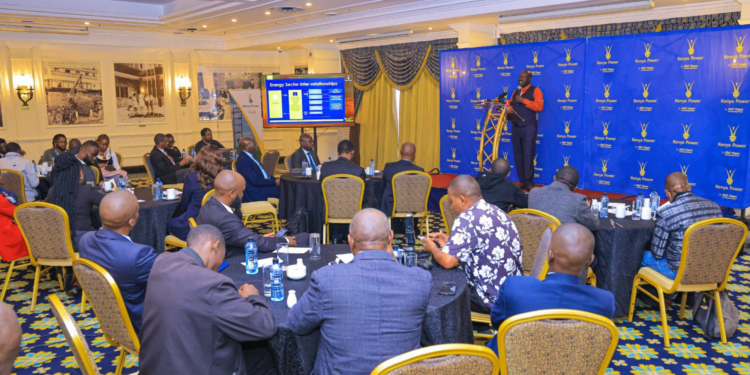
Kenya Power & Lighting Company Managing Director Joseph Siror and KPL Members During the State of Grid Briefing at Sarova Stanley on August 11
PHOTO/KPLC