IEBC Reveals Key Issues That May Affect the 2027 Election
Share
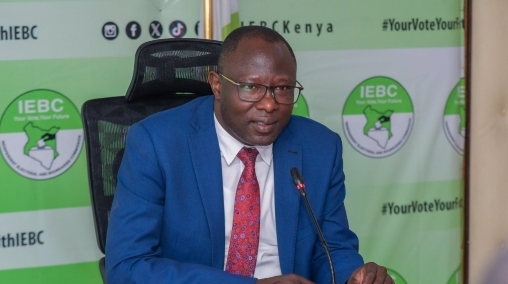
The Independent Electoral and Boundaries Commission (IEBC) has listed several constitutional, legal, and institutional challenges that could greatly impact the build-up to the General Election slated for 2027.
One of the issues that has come to the fore is boundary delimitation.
IEBC Chairperson Erastus Ethekon said that their stand is informed by their constitutional obligations.
According to the Commission, the decision taken reflects its commitment to upholding constitutionalism while ensuring electoral preparedness.
Boundary delimitation, Ethekon noted, remains fundamental to Kenya’s representative democracy, as it gives practical effect to the principle of “one person, one vote, one value” by aligning electoral units with population changes and geographical realities.
“The Constitution, therefore, obligates the Commission to periodically review electoral boundaries to promote equitable representation and to prevent voter dilution,” Ethekon said, underscoring that IEBC is mandated to conduct such reviews within stipulated timelines to maintain democratic fairness.
Following the conclusion of the first boundary review in 2012, the Commission developed the Boundaries Review Operations Plan covering the subsequent cycle, outlining methodology, timelines, data requirements, and public participation frameworks.
“Consequently, significant preparatory work has been undertaken since 2019 to date,” Ethekon explained, citing strategy development, situational analysis, pilot studies, acquisition of GIS and geolocation systems, and staff capacity building.
Missed Constitutional Timelines
In spite of the preparatory steps, the boundary review process faced major setbacks.
Ethekon acknowledged that the Commission has exceeded constitutional timelines, which require reviews to be conducted every eight to twelve years.
“The last review was to be completed by March 2024, and those timelines have since passed,” he said.
One of the primary constraints was the absence of commissioners after the previous team left office in January 2023.
IEBC remained without commissioners until July 11, 2025.
“In the absence of commissioners, the Secretariat alone had to pause some of those activities that required policy decisions and oversight,” Ethekon noted, adding that critical policy documents could not be reviewed or extended.
Also Read: Former IEBC Chair Issack Hassan Nominated as Court of Appeal Judge
Census Data and Court Rulings
Another major hurdle has been the judicial invalidation of the 2019 Kenya Population and Housing Census data in parts of North Eastern Kenya.
On January 28, 2025, the High Court in Garissa invalidated census data for 14 constituencies in Garissa, Wajir and Mandera counties.
“The Court of Appeal subsequently directed that the matter be maintained in status quo,” Ethekon said, rendering the data unusable for IEBC.
The Commission requires valid census data to determine population quotas for Kenya’s 290 constituencies and 1,450 wards.
“Until the court resolves that issue, we can therefore not use that data for the discharge of our mandate,” he stated.
Also Read: IEBC Announces Temporary Election Jobs for Kenyans: How to Apply
Legal Risks and Competing Priorities
IEBC is also facing continued litigation linked to delays in boundary delimitation, including cases seeking to compel the Commission to complete the process ahead of the 2027 polls.
Additionally, the Supreme Court’s advisory opinion has added complexity, directing the Commission to make a definitive decision on the way forward.
“These are some of the factors that impacted negatively on the comprehensive delimitation of the boundaries,” Ethekon said, noting that elections and boundary reviews are complex processes involving multiple stakeholders and competing electoral priorities.
Follow our WhatsApp channel for instant news updates

IEBC Official Marks Ruto’s Finger After Voting in Koilel Primary School UDA Grassroots Elections. PHOTO/ File