
Controller of Budget & Auditor General Raise Concerns Over Sovereign Wealth Fund Controls
Share

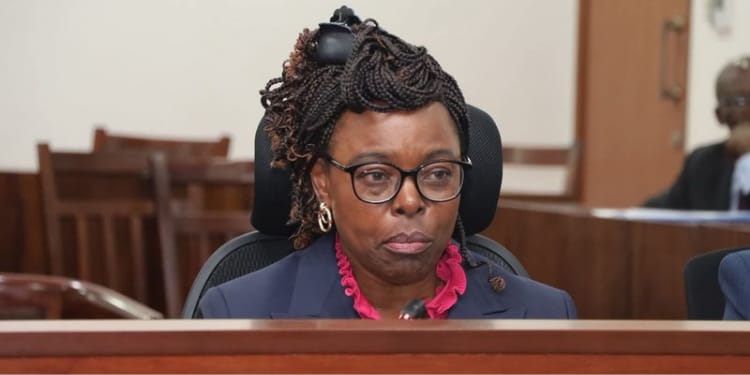
The Controller of Budget and the Office of the Auditor General have called for stronger legal safeguards in the proposed Sovereign Wealth Fund (SWF), to protect the integrity of its management of public resources.
Appearing before the National Assembly Departmental Committee on Finance and National Planning during stakeholder engagements on the Sovereign Wealth Fund Bill, on April 22, 2026, and the Public Finance Management (Amendment) Bill, 2025.
The two oversight institutions cautioned that the framework establishing the Fund must clearly put it within existing constitutional financial controls.
Controller of Budget Margaret Nyakang’o told the committee that the proposed law does not clearly define the Fund’s relationship with the Consolidated Fund or the oversight role of her office under Article 228 of the Constitution.
Public Revenue To Be Subjected To Parliament
Margaret maintained that all public revenues must pass through the Consolidated Fund and be subjected to parliamentary appropriation before transfer to any other account.
“All revenues deposited into the Fund must be expressly recognized as public money subject to the Constitution and the PFM Act,” she said.
Warning that the current structure risks creating a parallel financial architecture outside the national budget framework.
Also Read: EXPLAINED: Understanding the Difference Between Budget and Finance Bill
Debt Obligations
Committee chairperson Kuria Kimani acknowledged the concerns but noted the practical risk that routing funds through the Consolidated Fund Services could expose them to diversion toward debt obligations instead of long term investment objectives.
Kuria suggested the possibility of ringfencing the Fund to allow direct deposits. However, Dr Margaret insisted that any such exception must be explicitly provided for in law.
Margaret further proposed strengthening parliamentary oversight by requiring written authorization from the Controller of Budget before withdrawals are made, and expressed concern over what she described as broad discretionary powers granted to the Cabinet Secretary for Finance.
The Office of the Auditor General echoed these concerns, particularly highlighting Clause 6 of the Bill, which allows the Cabinet Secretary to determine additional revenue sources through a gazette notice without parliamentary approval or clear criteria.
Also Read: Moses Kuria Explains Why Mt Kenya Residents Are Not Registering as Voters
Auditor General
According to the Auditor General’s office, this creates a risk that general tax revenues could be redirected into the Fund to create the appearance of growth before they are withdrawn for recurrent expenditure, undermining the Fund’s long term purpose.
To strengthen governance, the office recommended the establishment of an independent board aligned with the Santiago Generally Accepted Principles and called for the inclusion of the Controller of Budget in the withdrawal process, noting that the Fund would remain a public entity subject to constitutional safeguards.
The Salaries and Remuneration Commission also raised concerns about the Fund’s administrative structure.
Commission Secretary Ali Abdullahi Surraw told the committee that provisions in the Bill reduce the SRC’s constitutional role in advising on the terms of service for the Fund’s chief executive officer and board staff.
He urged amendments to relevant clauses to ensure the Commission’s advisory mandate is fully reflected in the law as Parliament continues considering the proposed legislation.
Follow our WhatsApp channel for instant news updates
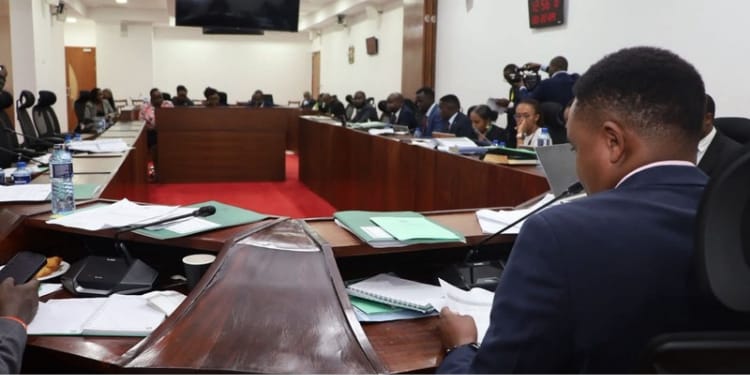
Parliamentary proceedings on April 22 2026
PHOTO/Parliament