OPINION: A Nation Campaigning Itself into Collapse
Share
By Dr. Luchetu Likaka
Kenya is not being governed; it is being campaigned. Every corner of public life has been converted into a stage, every policy into a slogan, every hardship into a talking point. What should be years of delivery between elections have instead become an endless rehearsal for the next vote. And if that does not anger you, it should.
We were promised transformation. Jobs. Lower cost of living. Relief from punitive taxation. Efficient public services. Instead, what Kenyans have received is a relentless expansion of taxes dressed up as reform.
From housing levies to increased fuel costs, from digital taxes to rising deductions on already strained incomes, the ordinary citizen is financing a government that appears more interested in optics than outcomes. You are paying more, but are you living better? That is the only honest test of leadership.
Consider the unfulfilled pledges. Affordable housing was meant to dignify lives; instead, it has become a compulsory deduction with unclear accountability and painfully slow delivery. The promise to reduce the cost of unga, fuel, and basic commodities has faded into silence while households restructure meals and survival strategies. Youth employment, perhaps the most repeated campaign anthem, remains largely rhetorical, with graduates cycling between internships, hustles, and despair. The gap between promise and reality is no longer a gap; it is a canyon.
Corruption and Governance
Meanwhile, corruption has not retreated; it has adapted. It is no longer just hidden in backrooms; it is embedded in systems, normalized in procurement, and rationalized in public discourse. Scandals erupt, dominate headlines briefly, and disappear without consequence. The message is clear: accountability is optional for the powerful, but survival is mandatory for the poor.
And then there is governance, or the lack of it. Institutions that should check power appear weakened or co-opted. Policy decisions are rushed, reversed, or poorly communicated. Public participation often feels procedural rather than meaningful. Leadership has become reactive, not strategic, responding to crises rather than preventing them.
Yet, even in this reality, the political class is already in campaign mode. Rallies. Alliances. Rebranding. Narratives. It is as if governance is a side activity, something to be squeezed between political calculations. This is the insult: leaders campaigning for jobs they have not yet performed.
Also Read: OPINION: 2027 Power and Pressure-Why William Ruto Leads, but the Race Is Far from Safe
Kenyans Should Reject the Cycle
Kenyans must reject this cycle. Anger, in this context, is not recklessness; it is clarity. It is the refusal to normalize dysfunction. It is the insistence that leadership is not about speeches, but about outcomes. If 2027 is to mean anything, it cannot be another emotional election driven by tribe, charisma, or empty promises. It must be a referendum on performance.
Ask hard questions. Demand evidence, not intentions. Who delivered? Who failed? Where is the impact? Where did the money go? And most importantly: why should anyone be trusted again without proof?
Also Read: OPINION: The Perils of a One-Man State: Why Ruto’s Solo Politics May Backfire
A meaningful election will not come from better campaign speeches. It will come from a more demanding, less forgiving electorate. One that remembers. One that measures. One that refuses to be distracted.
Because if Kenyans are not angry enough to demand change, they will once again be persuaded into accepting less than they deserve and calling it leadership.
Follow our WhatsApp channel for instant news updates

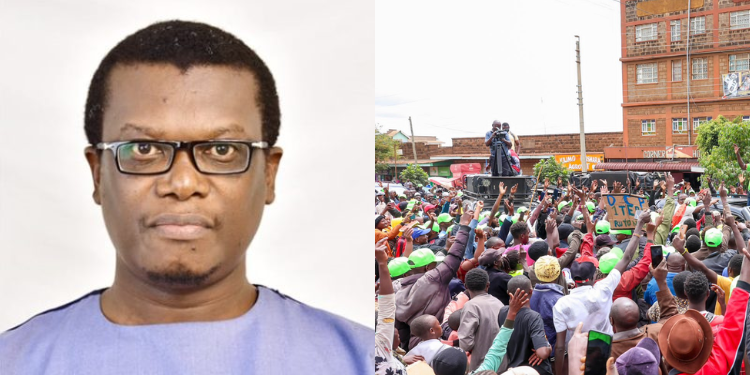
Dr. Luchetu Likaka. PHOTO/ Courtesy.