

Why Job Hunting in Kenya Feels Like a Full-Time Job
Share

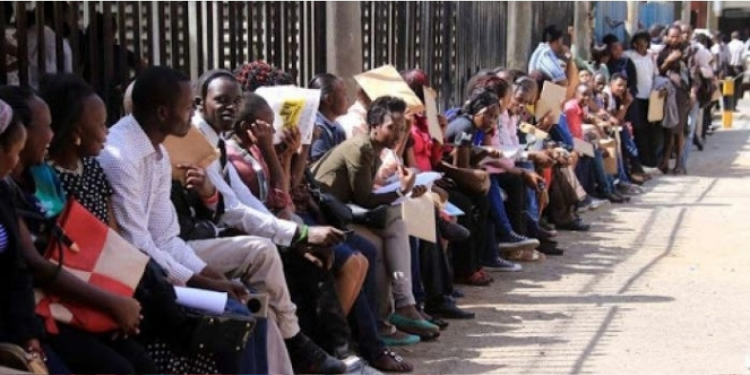
Job hunting shapes the daily routine of many young people in Kenya. For many, an employment search follows a structured and time-consuming pattern.
The Kenya National Bureau of Statistics (KNBS) shows that youth face the highest pressure in the labour market. Many remain unemployed, while others work in informal jobs.
The World Bank estimates Kenya’s overall unemployment rate at about 5.4% (2025). However, youth struggle more because the formal sector absorbs only a small number.
“The youth unemployment rate remains persistently high in many developing economies, with young people often transitioning into informal or vulnerable employment,” the International Labour Organization (ILO) states.
The agency adds that many young people work but remain underemployed with unstable incomes.
Job Hunting as a Daily Routine
As a result, job seekers spend most of their day looking for work. They submit online applications, print CVs and attend interviews. They also follow up on job adverts across different platforms. Entry-level roles such as clerical jobs, security positions and retail work attract large numbers of applicants.
For some, job loss shapes this experience. Reagan, a former sales records handler at Belavista Club, described what followed after he lost his job.
“She called me days later and asked how I was coping with life. I told her I had a job. ‘Kazi gani?’ she asked. I told her, ‘Niko na kazi ya kutafuta kazi,’” he said.
Also Read: I AM THE SYSTEM: Unemployment Crisis is a Manufactured Reality
Government Response and Labour Market Pressure
At the same time, the government acknowledges pressure in the labour market. President William Ruto continues to prioritize job creation.
He points to sectors such as digital work, affordable housing, manufacturing and agriculture value chains.
However, many young people rely on the informal sector.
They run small businesses, take up casual labour or offer transport services.
Others do freelance digital work. Still, these jobs lack stability and formal benefits.
Also Read: How Unemployment Is Luring Kenyans Into the Russia–Ukraine War
Cost of Living and Structural Challenges
In addition, the rising cost of living increases pressure on job seekers. Transport, food and basic expenses continue to rise. Many depend on family support as they search for work.
Labour reports highlight key challenges. Employers demand skills that many graduates do not have. At the same time, the economy creates jobs at a slower pace than new graduates enter the market.
Even so, many young people adapt. They learn new skills, start small businesses and explore informal opportunities as they continue to search for stable employment.
Follow our WhatsApp channel for instant news updates
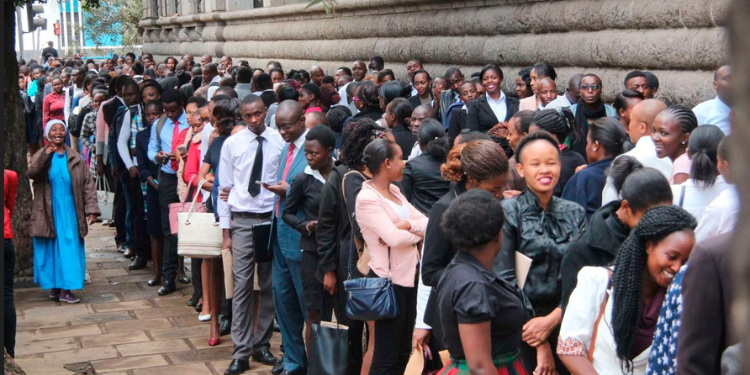
Youths queue for job interviews in Nairobi. PHOTO/NMG