Kenyan Athlete Hillary Kipchirchir Banned for Four Years Over Doping on
Share
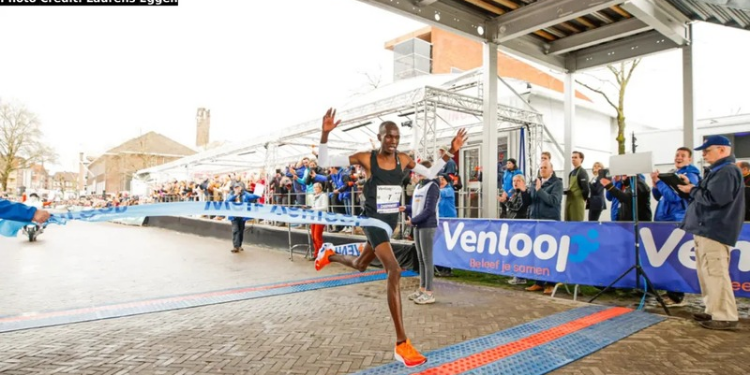
A disciplinary tribunal has banned Kenyan long-distance runner Hillary Kipchirchir Chepkwony for four years over a doping violation linked to abnormalities found in his Athlete Biological Passport (ABP).
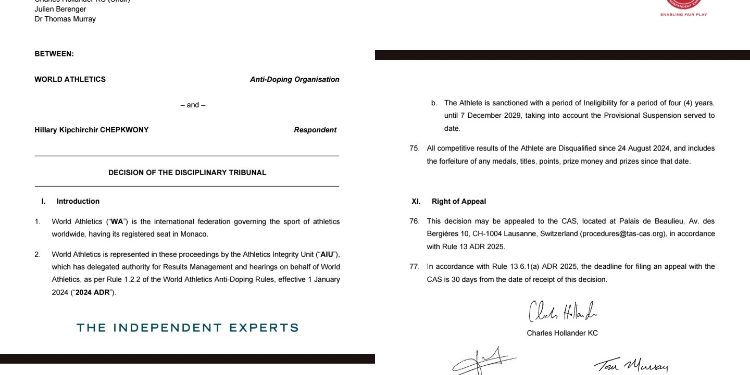
The ban took effect on December 8, 2025, and all his results from August 24, 2024, have been disqualified.
The case was handled under the anti-doping rules of World Athletics and managed by the Athletics Integrity Unit (AIU).
According to the tribunal decision, Chepkwony was charged with the “Use of a Prohibited Substance or Prohibited Method.”
The AIU said 17 blood samples were collected from the athlete between September 2022 and January 2025 under the Athlete Biological Passport programme.
Two blood samples taken on August 24 and August 29, 2024, raised concerns after experts detected abnormal blood values linked to possible blood doping.
A Joint Expert Panel reviewed the samples and concluded that it was “Highly likely” that the passport was the result of the Use of a Prohibited Substance or Prohibited Method (blood doping) and “unlikely” that the Passport was the result of any other cause.
The panel stated that the athlete’s blood profile showed signs consistent with the use of EPO or another blood manipulation method.
Hillary Kipchirchir Denied the Charges
Chepkwony denied the allegations and challenged the reliability of the blood samples.
His defence team argued that the samples may have been affected by transport and storage conditions. They also claimed one sample did not match results from a private blood test conducted on the same day.
The athlete relied on evidence from Professor Jean-Claude Alvarez, an expert witness who questioned the handling of the samples.
However, the tribunal rejected those arguments.
Also Read: This Is How Kenyans Are Using AI to Outlearn the World in 2026
Tribunal Criticises Defence Expert
In its decision, the tribunal strongly criticised the evidence given by Professor Alvarez.
The panel said,“We did not consider Prof. Alvarez an expert whose evidence we could rely on.”
The tribunal further stated that some allegations made by the professor against World Athletics and laboratory officials were “entirely without foundation.”
It added,“WA described his evidence as irresponsible. With regret, the Panel agrees.”
The panel instead said it found the evidence from the Joint Expert Panel reliable and helpful.
Also Read: CAF President Projects Billions in Economic Gains for Kenya, Uganda and Tanzania Ahead of AFCON 2027
Blood Samples Considered Valid
The tribunal ruled that the blood samples had been stored, transported and tested according to anti-doping regulations.
One of the key issues raised during the hearing was whether low temperatures during transportation may have affected the results.
But the panel found no breach of the rules, noting that the Blood Stability Score remained within the acceptable range required by anti-doping standards.
The tribunal said the integrity of the sample was therefore guaranteed under the rules.
Follow our WhatsApp channel for instant news updates
Athletics Integrity Unit Statement on the Ban.PHOTO/World Athletics Tribunal