
No Milk for Breakfast? Alternative Meals to Try Amid Shortage
Share

For many Kenyan households, breakfast starts with the same familiar combination: tea with milk, bread and eggs, or a warm bowl of porridge enriched with milk.
But with milk supplies under pressure in parts of the country, that routine is becoming harder to maintain. Recent reports indicate that Kenya is facing temporary milk supply constraints, with some retailers reporting reduced stocks and higher prices.
The Kenya Dairy Board has described the situation as a supply constraint rather than a complete national milk shortage. Formal milk deliveries also declined from 84.4 million litres in June to 81.3 million litres in July 2026.
The disruption has left households asking a practical question: What can you eat for breakfast when there is little or no milk? The answer does not necessarily mean skipping breakfast.
Milk is Useful, But Breakfast Does Not Depend on It
Milk provides protein, fat and several vitamins and minerals, making it a useful part of a balanced diet. However, it is only one food in a much wider group of foods that can contribute to a nutritious meal.
Food and Agriculture Organization of the United Nations (FAO) nutrition guidance identifies cereals, roots and tubers, legumes, groundnuts, eggs, meat, fish, fruits and vegetables as important sources of different nutrients.
Legumes and groundnuts, for example, can provide protein and fibre, while eggs provide protein and several vitamins and minerals.
This means households can temporarily change the composition of breakfast without simply replacing milk with another expensive product.
1. Porridge with groundnuts or other legumes
Porridge remains one of the simplest options for Kenyan households. Instead of relying on milk for added nutrition, families can make porridge using a more nutrient-dense flour or add groundnut or other legume flour.
FAO guidance notes that ordinary cereal porridge can be relatively low in energy and nutrients when it is heavily diluted. Adding groundnut or other legume flour can make it more energy- and nutrient-rich.
A simple combination could therefore be: Porridge + groundnuts/legume flour + a fruit
This gives breakfast a mixture of carbohydrates, protein, fats and other nutrients without requiring fresh milk.
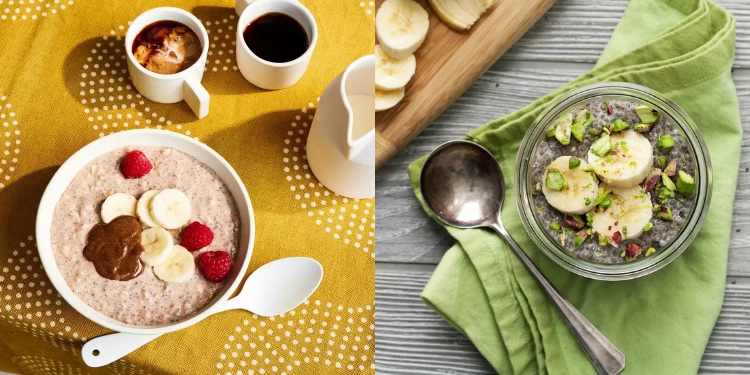
Photo collage of Banana Overnight Oats and Chai Chia Pudding for breakfast
PHOTO/File
Also Read:Milk Shortage Exposes Traders to New Risk as Businessman Receives Soil Instead of Goods
2. Eggs with bread, chapati or sweet potatoes
Eggs can also take a more prominent place at breakfast.They are a source of protein and contain several vitamins and minerals.
FAO nutrition information lists eggs among foods that provide useful amounts of protein and vitamins. A household could pair boiled or scrambled eggs with bread, chapati, arrowroots, sweet potatoes or another locally available staple.

Photo collage of Scrambled eggs and nuts for breakfast
PHOTO/File
The important point is balance. Rather than having only bread or another starchy food, adding an egg provides another major food group and makes the meal more substantial.
3. Sweet potatoes, arrowroots or cassava with fruit
Roots and tubers can form the main energy source in a simple breakfast. Sweet potatoes, arrowroots and cassava can be boiled or steamed and eaten with fruit or another protein-rich food when available.
FAO nutrition guidance identifies cereals, roots and tubers as important sources of carbohydrates, while fruits and vegetables contribute fibre and vitamins.
For households trying to control spending, this can also provide an opportunity to use foods already available at home instead of buying a separate breakfast item every morning.
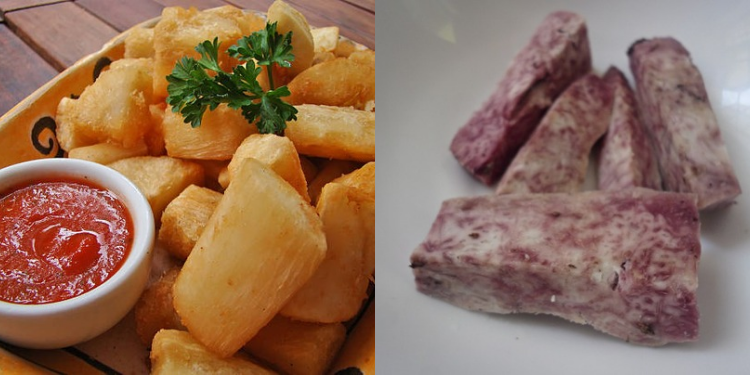
Photo collage of boiled cassava and arrowroots
PHOTO/File
Also Read:Milk Shortage: Kenya Turns to Uganda and Neighbours to Fill Supply Gap
4. Beans or ndengu for a more filling breakfast
Beans and green grams are often associated with lunch or dinner, but there is no nutritional rule that prevents them from appearing at breakfast.
Legumes provide protein, fibre and other nutrients. FAO guidance lists beans and peas among useful sources of protein, fibre and B-group vitamins.
Leftover beans or ndengu can therefore be paired with bread, chapati, sweet potatoes or another staple. For households facing a tighter food budget, using leftovers can also reduce food waste.
5. Bread with peanut butter or groundnuts
Another practical option is bread served with peanut butter or groundnuts. Groundnuts provide protein, fats and other nutrients, making them more than simply a flavouring.
FAO’s Family Nutrition Guide gives examples of balanced breakfasts that combine a starchy food such as bread or porridge with foods such as peanut butter, cooked beans, milk and fruit.
This means the absence of milk does not necessarily require households to abandon familiar breakfast staples. The other components can simply become more important.
For people accustomed to milk tea, switching temporarily to black tea may be the simplest adjustment. However, tea should not become a substitute for food.
If milk is removed from the morning cup, the household can compensate by making the meal itself more nutritious-for example, taking tea alongside eggs and bread, sweet potatoes and groundnuts, or another combination containing both an energy source and a protein-rich food.

Photo collage of bread with peanut butter and chapati ndengu
PHOTO/File
Plant-Based Alternatives
Plant-based drinks can also be used, but households should check the label rather than assuming every product provides the same nutrition as cow’s milk.
Products made from soy, oats, almonds and other ingredients differ considerably in their protein, fat, calcium and vitamin content.
Fortified products may provide nutrients such as calcium and vitamin D, but this depends on the individual product. They may also be more expensive than locally available foods such as beans, groundnuts or eggs.
For someone looking for a direct milk substitute in tea or cereal, a fortified plant-based drink may be useful. For a household primarily trying to replace the nutrients normally obtained from milk, however, looking at the whole breakfast may be more practical.
The cheaper option is not always the nutritional equivalent. One mistake households could make during a shortage is to focus only on finding the cheapest replacement.
If milk disappears from breakfast, replacing it with another drink may solve the immediate problem without replacing the nutrients it provided.
A better approach is to think in terms of food combinations. For example:
Instead of taking milk with bread, you can have bread with an egg for a more filling breakfast. If you normally take milky porridge, consider preparing porridge with groundnut or legume flour and adding a fruit.
For those who take cereal with milk, cereal can be paired with fruit and eggs or groundnuts.
If your usual breakfast is milk tea alone, you can switch to black tea and have it with sweet potatoes, arrowroots and an egg.
And if you normally take milk with mandazi, you can have the mandazi with fruit and another protein-rich food instead.
The goal is not to find one food that behaves exactly like milk. It is to build a breakfast that provides several important nutrients from different foods.
Children May Need More Attention
For children, simply removing milk without considering what replaces it may leave the breakfast less nutritious.
FAO guidance notes that young children have small stomachs and therefore need foods that provide sufficient energy and nutrients in relatively small amounts.
It recommends enriching porridge with nutrient-rich ingredients such as groundnut and other legume flours. Parents should therefore avoid replacing a nutritious breakfast with mainly tea, diluted porridge or other low-nutrient foods.
Follow our WhatsApp channel for instant news updates
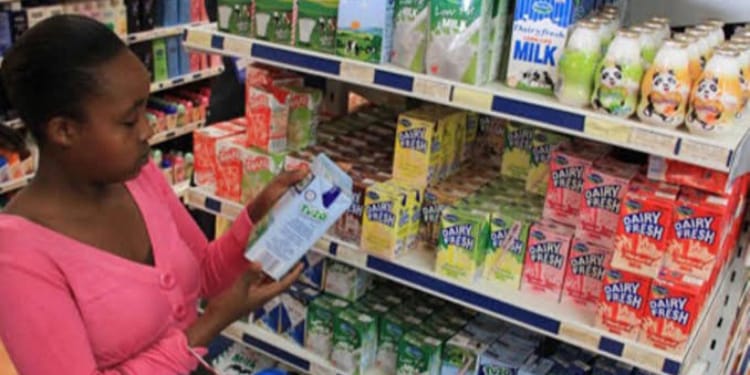
Photo of Milk on shelves in a supermarket
PHOTO/COFEK