
Is Quickmart at Risk of a Nakumatt-Style Collapse? Here Is What We Found
Share


Lawyer Donald B. Kipkorir has questioned Quickmart Supermarket’s expansion strategy, supplier payments and reliance on investor funding, drawing parallels with Nakumatt’s collapse.
In a post on X, Kipkorir argued that Quickmart was displaying characteristics similar to those that preceded Nakumatt’s downfall. He cited the supermarket’s use of rented premises, reliance on supplier credit to stock its shelves and delayed payments to suppliers while collecting cash from customers.
He also questioned the supermarket’s reliance on investors and institutional backing to finance its growth.
“History repeats itself, first as a tragedy, second as a farce!” Kipkorir wrote.
But do the available financial records support his claims, and are the similarities enough to suggest that Quickmart could suffer the same fate as Nakumatt?
An examination of Quickmart’s disclosures, published financial figures, and reporting on Nakumatt’s collapse reveals both similarities and important differences.
Quickmart Operates Stores in Rented Premises
One of Kipkorir’s claims is that Quickmart has expanded by opening as many stores as possible on properties it does not own. Available reporting supports the claim that the supermarket leases its premises.
In a June 2024 report, the Financial Times noted that Quickmart leased all its properties, a strategy that allowed it to expand without purchasing the land and buildings used for its stores.
Quickmart’s official IPO information states that the retailer operated 68 stores across 16 counties as of June 30, 2026. Four additional outlets opened in July and August, bringing the total to 72 stores.
However, leasing property is not, by itself, evidence of financial distress. It can allow retailers to expand while avoiding the substantial upfront costs associated with buying commercial property.
The available evidence confirms the use of leased premises but does not establish that Quickmart’s expansion strategy is financially unsustainable.
Supermarket Owes Suppliers Ksh4 Billion
Kipkorir also alleged that Quickmart sells goods to customers for cash but delays payments to suppliers for more than 90 days.
A report published by Business Daily on September 25, 2026, confirmed that Quickmart relies on favourable supplier payment terms to stock its stores without depending heavily on bank borrowing for working capital.
According to the report, Quickmart owed suppliers Ksh4 billion as of June 30, 2026. The retailer described the balance as a result of its rapid inventory turnover and favourable supplier payment terms.
It also reported borrowings of just Ksh6.8 million during the period. This supports Kipkorir’s broader argument that supplier credit plays a significant role in Quickmart’s business model.
However, the reported Ksh4 billion balance does not establish that suppliers were being paid more than 90 days late. The available information does not specify that all the debt was overdue or that the company had breached its agreed payment terms.
Supplier credit differs from overdue bills. Retailers can negotiate payment terms that allow them to sell goods before paying their suppliers.
Verdict: Partly supported. Quickmart relies on supplier credit, but the specific allegation of payment delays exceeding 90 days remains unverified.
Do Suppliers Own the Goods on Quickmart’s Shelves?
Kipkorir further claimed that all the stock in Quickmart’s stores belongs to suppliers. Quickmart’s disclosures confirm that suppliers deliver goods directly to its stores and receive payment later.
The company says this arrangement helps it manage working capital and reduces the need for external financing. However, delayed payment does not automatically mean that suppliers retain legal ownership of the goods.
Whether ownership transfers when goods are delivered, accepted or sold depends on the applicable supply agreements and their terms.
The available public information does not establish that all Quickmart stock is held on consignment or that suppliers retain ownership until customers purchase the goods.
Verdict: Not established. Supplier credit is documented, but the claim about ownership of all stock requires further evidence.
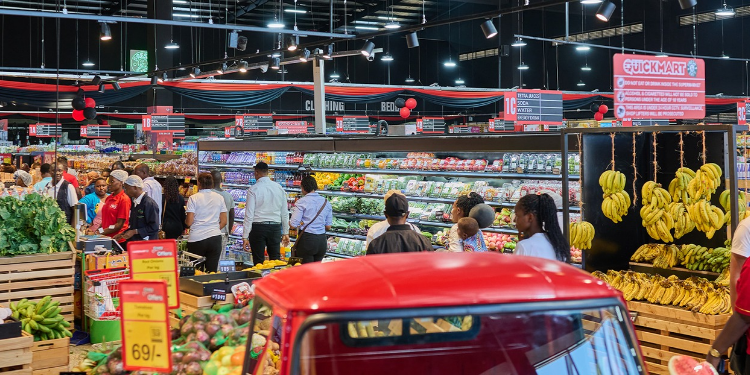
Photo of customers purchasing items from Quickmart supermarket in Nairobi
PHOTO/File
Retailer Relies on Investors to Fund Growth
Kipkorir also questioned Quickmart’s reliance on investors and equity subscribers rather than founders to finance its expansion. Quickmart’s ownership structure provides some context.
According to its official IPO information, Sokoni Retail Kenya Limited owns 100% of Quickmart. Sokoni Retail Kenya’s shareholders include investment vehicles managed by Adenia Partners, members of the Kinuthia founding family, the founders of Tumaini Supermarket and Quickmart’s Group Chief Executive Officer, Peter Kang’iri.
The company is currently offering 2 billion existing shares, representing 50% of its issued share capital, at Ksh7.50 per share.
The offer is structured as a sale of existing shares rather than an issue of new shares. Quickmart will therefore not receive the proceeds, which are estimated at Ksh14.4 billion after offer expenses, according to its official IPO disclosures.
This means the transaction allows existing shareholders to sell part of their investment rather than injecting fresh capital into Quickmart.
That does not establish that the supermarket is financially dependent on investors to meet its operating costs. Quickmart says it intends to finance its expansion primarily through cash generated by its business operations.
Also Read: Quickmart Announces Plans to List 50% Stake on NSE
Quickmart’s Financial Performance
The supermarket’s reported financial results provide additional context for assessing its position. According to reporting by Citizen Digital on September 23, 2026, Quickmart recorded revenue of Ksh50.4 billion in 2025 and adjusted profit after tax of Ksh1.7 billion.
In the first six months of 2026, it reported revenue of Ksh27.3 billion. The retailer’s revenue grew at an average annual rate of 18.4% between 2021 and 2025.
These figures show that Quickmart operates a substantial retail business and has reported revenue growth. However, revenue and profit figures alone cannot establish the company’s financial stability.
A proper assessment requires examining the company’s cash flow, payment obligations, liquidity, debt, operating costs and other liabilities.
The Ksh4 billion owed to suppliers is therefore an important figure to investigate. However, the amount alone does not prove that Quickmart faces the same financial challenges that led to Nakumatt’s collapse.
Also Read: Kiambu Farmers Get Digital Push as Safaricom Unveils New Ways to Grow Farm Businesses
What Happened to Nakumatt?
Nakumatt’s collapse provides the historical context for Kipkorir’s comparison. The supermarket chain entered administration in January 2018 after accumulating substantial debts to suppliers, banks, landlords and other creditors.
According to Business Daily, court-appointed administrator Peter Kahi told senators in June 2018 that Nakumatt owed creditors approximately Ksh40 billion following reconciliations. Suppliers and landlords accounted for Ksh18.5 billion of the debt as of December 2017.
Nakumatt’s difficulties also involved serious concerns about its financial records and stock. The administrator reported a discrepancy involving stock worth Ksh18 billion, which he said required further investigation.
The former management attributed the discrepancy to theft, pilferage, stock shrinkage and losses from obsolete goods, but the administrator questioned these claims.
Historical records show that Nakumatt’s collapse involved more than opening stores in leased premises or obtaining goods on supplier credit.
The retailer also struggled with mounting debts, financial difficulties, and problems with its stock records.
Quickmart and Nakumatt share some features of supermarket operations, but the evidence reviewed does not establish that their overall financial positions are the same.
Does Quickmart’s Public Relations Strategy Indicate Financial Trouble?
Kipkorir also questioned Quickmart’s use of public relations and its association with institutional investors. His post does not identify specific public relations activities that demonstrate an attempt to conceal financial problems.
Nor does the involvement of an institutional investor automatically indicate financial distress. Investors may provide capital, operational expertise, and governance oversight, while a public listing can allow existing shareholders to sell part of their holdings.
The available evidence is insufficient to determine whether Quickmart’s public relations strategy has any connection to its financial health.
Verdict: Are Quickmart and Nakumatt following the same path?
Kipkorir’s comparison is supported in some respects: Quickmart leases its stores, relies on supplier credit and has institutional investors among its owners.
However, his more serious allegations remain unproven. The available evidence does not establish that Quickmart routinely delays supplier payments beyond 90 days, that suppliers retain ownership of all goods on its shelves or that the supermarket is experiencing the same financial problems that brought down Nakumatt.
Quickmart’s reported revenue and profit provide important context, but they do not guarantee the retailer’s future financial stability.
The evidence reveals similarities in some business practices, but it does not prove that Quickmart is repeating the mistakes that led to Nakumatt’s collapse.
Follow our WhatsApp channel for instant news updates
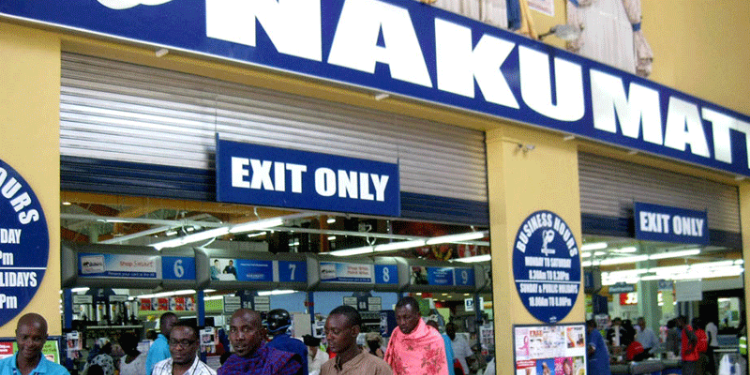
Photo of Nakumatt Supermarket in Nairobi
PHOTO/File