
EXCLUSIVE: Why Secondary School Football Draws Bigger Crowds Than Kenya’s Premier League
Share
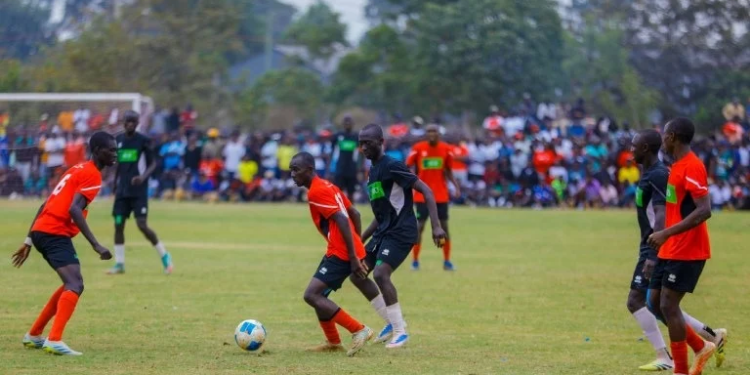
Secondary school football matches in Kenya are increasingly proving that attracting fans to the stadium is not only about the quality of the game.
From free entry and strong community ties to school anthems, chants and a sense of belonging, school competitions have created an atmosphere that many Kenya Premier League (KPL) clubs struggle to match.
During an interview, football players, coaches and fans who spoke on the issue identified affordability, accessibility, community ownership and trust as some of the main reasons school football attracts passionate crowds.
They also believe the professional game can borrow some of these ideas to reconnect clubs with supporters and build stronger fan bases across the country.
Free Entry Gives Secondary School Football an Advantage
For many fans, the biggest difference is simple: school football is largely free to watch.
Jared Obaa, a player who has featured for Wazito FC, Rusinga United and Yanga FC, said the cost of accessing KPL matches makes a major difference.
“Ni bei tickets kuaccess stadium, in which za high school ziko free then mkenya anapenda vitu za bure,” he said.
Obaa further explained that school teams are often closely connected to their communities, encouraging people to leave their homes and watch matches involving schools in their areas.
Eunice Adoyo, a football trainer at Joseph Kangethe Primary and Junior School, also pointed to ticket prices as a major factor.
She noted that KPL fans have to buy tickets while school matches are often free. School games are also held in places that are within easy reach of many supporters.
Vincent Awiti, a football fan, agreed that free entry gives school football a significant advantage.
He gave an example of a school match involving Agorosare Highschool and Ringa Boys, arguing that charging Ksh200 at the gate would likely have a major effect on attendance.
“Weka gate pass ya 200 Kenyan shillings. You’ll see how the turnout will be low,” Awiti said.

Photo of Highway Highschool playing against Musingu School during the KSSSA nationals football final in Gusii Stadium on August 8,2024
PHOTO/Citizen
School Teams Create a Strong Sense of Identity
Beyond free entry, interviewees said school football benefits from a strong sense of belonging.
Students are not simply watching a football match. They are supporting their school, classmates, friends and communities.
Amoko Brian, a player at Mlolongo Youth FC, explained how school football “feels personal” because students support their school as it represents their identity, friendships and community.
Amoko further stated that school football creates an event rather than just a match.
“There are students singing, cheering, school bands, friendly rivalries and a strong sense of belonging,” he said.
MellyMerricks, a player for Kenya School of Survey Football Club and Wadadia Football Club, also highlighted the accessibility of school teams.
She said secondary school teams allow students who are interested in football to participate without first having to prove themselves to a club board or establish connections.
According to her, school competitions also sometimes provide playing kits, making it easier for young players to participate.
Flags, Anthems and Chants Make Matches Exciting
Thomas Owino, a football trainer at St. Teresa’s Kehancha Girls and TOFA High School, said schools have developed their own ways of making matches attractive.
“Each school has their match base, unique flags, anthems, chants,” Owino said.
He added that passionate supporters sometimes travel to matches to support their schools.
Owino believes this level of identity and organisation gives school football an advantage over professional matches.
School competitions also follow a structured path from lower levels to the regional, national and East African stages. Teams must qualify through different levels before reaching the biggest competitions.
He said this step-by-step system gives schools a clear competitive structure and helps build interest around their teams.

Photo of football fans gather at an open restaurant to watch a football match. PHOTO/ File
Communities are Part of School Football
The interviewees also highlighted the close relationship between schools and surrounding communities.
Adoyo said communities can play an important role in identifying talented players and supporting their development.
“The community acts like overseers,” she said, explaining that local people can identify both good and struggling players and help connect young talents with trainers, referees and coaches.
Owino also said schools benefit from local coaches who understand the communities where they work.
He contrasted this with some professional clubs that employ foreign coaches who, in his view, may not fully understand Kenyan culture.
School football therefore creates a relationship in which players, coaches, parents, students and local residents all have a stake in the team.
Fans also Want to Trust the Competition
Some interviewees raised concerns about trust in professional football.
Owino contrasted school competitions with the KPL, citing concerns over corruption and betting as factors that can affect the appeal of professional football.
Brayton Ambata, also known as Madawa, a player who has featured for Lugari Boys, Gor Mahia Youth FC, SS Assad FC and Darajani Gogo FC, said school football is seen as more transparent by supporters.
He argued that fans want to watch young players perform and enjoy matches without concerns over predetermined results or match fixing.
“School games are trusted free from the shadow of match fixing,” Ambata said.
He also said school matches provide an environment where family members and friends feel comfortable attending.
Also Read: KPL in Chaos as FKF Summons Clubs for Urgent Meeting
Professional Football Faces Financial Challenges
The challenges facing KPL clubs go beyond fan interest.
Owino said financial difficulties make it difficult for clubs to consistently move teams across the country.
He gave the example of Migori Youth travelling to Mombasa, saying such trips require serious sponsorship because of the high cost of transport and other expenses.
Unlike school competitions, where several sporting activities can share resources, professional clubs have to carry the financial burden of running their football operations.
The cost of following a club can also affect supporters.
Awiti noted that fans may struggle to travel when their teams play away from home.
He cited Gor Mahia travelling to Kakamega as an example, saying only a small number of supporters may be able to afford such trips.

Photo of St Joseph’s Kitale Girls crowned as 2026 KSSSA nationals girls champions on August 6 at M-Pesa Foundation Academy
PHOTO/FKF
KPL Clubs Can Take Football Closer to the People
The interviewees believe one way to solve the problem is to take professional football closer to the grassroots.
Ambata said clubs should move matches outside Nairobi and play in different parts of the country.
“They should move matches out of Nairobi and take teams closer to grassroots across different communities so fans can call the club as their own,” he said.
Owino also called for more football activities at the grassroots, including better stadiums and facilities.
He pointed to Migori Stadium, which is nearing completion, as an example of the type of infrastructure that can help bring football closer to communities.
He also encouraged political and community tournaments, citing holiday tournaments organised by senators and the Chapa Dimba tournament sponsored by Safaricom as examples of events that can increase people’s interest in football.
Also Read:Explained: How to End Match-Fixing in Kenyan Football
Social Media Can Help Clubs Reconnect with Fans
Ambata said clubs need to make better use of social media to communicate with supporters and build their brands.
He also called for better match-day security so fans can feel safe inside stadiums.
Adoyo similarly recommended wider promotion of matches through different media stations so that more people know when and where games are being played.
She also urged clubs to identify young grassroots players and give them opportunities to grow their fan bases.
While several interviewees highlighted the problems facing the KPL, Awiti offered a different perspective.
He argued that Kenyan football is not necessarily losing fans and that the league has actually gained momentum in recent years.
He recalled a time when even major matches involving Gor Mahia and AFC Leopards did not always fill stadiums.
Today, he said, high-profile matches involving the two clubs can attract much larger crowds, particularly when played at venues such as Nyayo Stadium.
Awiti also pointed to the growing demand for club merchandise.
He cited Gor Mahia’s kit, which he said costs about Ksh4,500, as an example of fans showing greater willingness to spend money on their clubs.
He further noted that the league now has more clubs with established fan bases, including Shabana FC, Migori Youth and Bandari FC.
Building Clubs People Can Call their Own
Awiti also highlighted the role of identity in building football support.
He said clubs such as Gor Mahia, Shabana FC, AFC Leopards and Murang’a Seal have strong community or regional identities that help them attract supporters.
He contrasted them with clubs such as KCB, Posta Rangers and Kenya Police, which he said can struggle to attract large crowds because they do not have the same community attachment.
For him, strengthening local connections could help more clubs build loyal supporters.
Amoko also called for clubs to engage supporters directly and develop stronger community relationships.
“Build strong community connections. Engage supporters directly. Improve marketing strategy,” he said.
Follow our WhatsApp channel for instant news updates

Photo of FKF President Hussein Mohammed while addressing the media
PHOTO/Standard