Panic and Fear Grip Foreigners Ahead of Crackdown on Small Businesses
Share
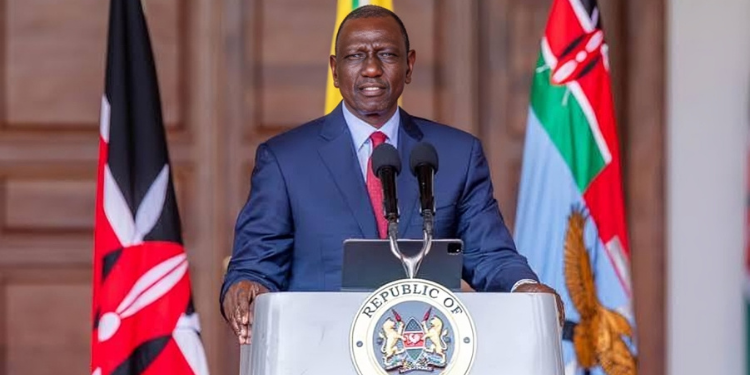
Fear and uncertainty have gripped foreign nationals operating small businesses in Kenya following President William Ruto’s announcement of a crackdown on foreigners engaged in small-scale trade.
Ruto announced on Wednesday, September 2, 2026, saying the government would move to protect Kenyan traders, hawkers and small business owners from foreign competition.
He said foreigners should focus on investments that create jobs and expand production instead of operating small businesses that can be run by Kenyans.
“It cannot be that a person comes from China or elsewhere to be a hawker or open a small shop,” Ruto said.
The President also said the government would fast-track legislation to prevent foreigners from engaging in certain areas of trade.
Calls to Protect Kenyan Traders from Illegal Foreigners
Ruto maintained that Kenya remains open to foreign investment but said foreign investors should contribute to the economy by creating employment and expanding production.
His remarks have sparked debate over the role of foreign nationals in Kenya’s informal economy, with some Kenyans arguing that local traders should be given priority.
However, Nairobi County Chief Officer for Citizen Engagement and Customer Service Geoffrey Mosiria said the government must first examine how foreigners entered and obtained permission to operate in the country.
‘Who Has Failed the System?’
Mosiria questioned why immigration officers responsible for protecting Kenya’s borders allowed foreigners to enter the country illegally if they did not have the required documents.
“The question is: How did they get into Kenya? Did they come by plane, matatu, motorcycle, or did they fly through the air or come through osmosis?”
He called for immigration officials found to have facilitated illegal entry through corruption to face consequences.
“Let them go home, but start by firing those people who allowed them in due to corruption, Mr President.”
Mosiria said the government should clean up the immigration system before beginning to remove illegal immigrants.
“Let us not hide behind a problem we have created as a system. Let us ask ourselves: Who has failed the system?”
He also warned against treating foreigners unfairly, noting that Kenyans living and working abroad could face similar treatment if other countries adopted hostile measures against immigrants.

Photo of Nairobi County Chief Officer for Citizen Engagement and Customer Service, Geoffrey Mosiria during a survey in the CBD
PHOTO/Mosiria
Also Read:Ruto Announces Major Changes to Magadi Mining Deal After Tata Exit
Foreign Traders Face Harassment
Following Ruto’s announcement, reports of harassment of foreign nationals have emerged, with some Kenyans confronting immigrant traders on the streets.
In one video, a person is heard warning foreign traders from Burundi and Uganda to leave Kenya, citing the President’s directive.
“Burundi, Ruto has given an order for you to go back home. From Monday, don’t let me find you on the streets, or I’ll drink your coffee and I won’t pay you.”
The man went on to tell foreign hawkers that they would have to leave Kenya whether they wanted to or not.
“You are going whether you like it or not.”
The person also targeted Ugandan workers, telling them to return home and work there.
“Uganda, you leave your job and then come here. Go and cook chapati in Uganda.”
The speaker ended with a threatening warning to foreign traders.
“Next week will be bad. Just let me meet you, and then you’ll find out that you don’t know what you’re dealing with.”
Also Read: KRA Clarifies Customs Changes, Denies Introducing New Taxes After Traders’ Protests
What the Law Says About Foreign Traders
While President William Ruto has ordered a crackdown on foreigners operating small businesses, foreign nationals are not automatically barred from working or doing business in Kenya.
Under the Kenya Citizenship and Immigration Act, foreign nationals must obtain the appropriate work permit from the Directorate of Immigration Services before engaging in employment, trade or business.
The permits are issued under different categories depending on the nature of the work or business.
A Class D permit covers general employment, while a Class G permit applies to people seeking to engage in specific trade, business or consultancy. Class C permits cover prescribed professions.
Employers can also face legal penalties for employing foreigners who do not have the required authorization.
The government has increasingly focused on regulating informal and small-scale trade, particularly where foreign nationals are accused of competing with Kenyan traders.
Refugees Have a Legal Right to Work
The position is different for recognized refugees and their spouses.
Under Kenya’s Refugees Act, recognized refugees and their spouses have the legal right to engage in wage employment, business and professional activities, subject to the required documentation.
Refugees who want to work or operate a business formally are required to obtain a Class M permit through the Electronic Foreign Nationals Services (eFNS) system.
The application requires supporting documents, including a recommendation from the Department of Refugee Services (DRS) and a recognition letter from UNHCR.
Follow our WhatsApp channel for instant news updates
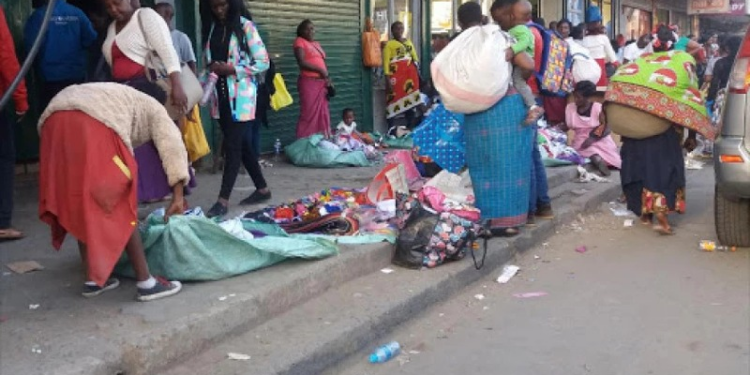
Photo of hawkers in the streets around Nairobi CBD
PHOTO/Courtesy