
Ruto’s Govt Slapped With 9 Demands Over Alleged Crackdown on Burundian Traders
Share

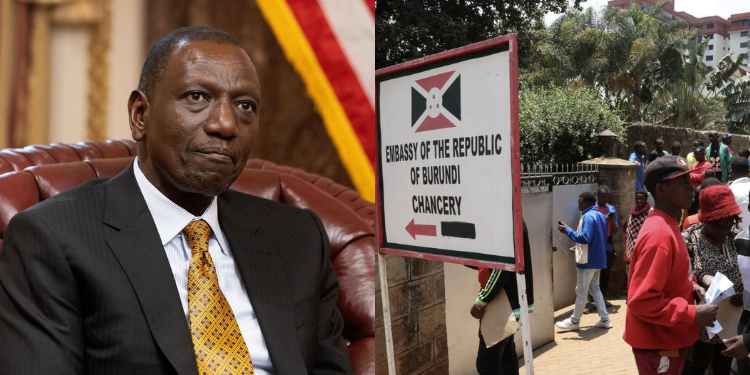
President William Ruto’s government has come under pressure from the East Africa Law Society (EALS), which has issued nine demands over the enforcement of his directive targeting foreign nationals engaged in small-scale trading and hawking in Kenya.
EALS wants the government to ensure the measures do not turn into nationality-based enforcement, particularly amid growing concern among Burundian and other East African Community citizens in Kenya.
The regional lawyers’ body said Kenya has a legitimate right to regulate businesses, enforce immigration rules and protect local traders, but insisted that enforcement must be based on the law and the circumstances of each individual case.
Ruto issued the directive on September 2 while addressing Micro, Small and Medium Enterprises (MSMEs) traders at State House in Nairobi.
He directed foreign nationals engaged in small-scale businesses and hawking to close their operations, saying the government would take administrative action as Parliament considers proposed legislation on the issue.
He also defended the move by drawing a distinction between the foreign investors Kenya seeks to attract and foreigners operating small businesses in the country.
“We have not built investor confidence so that hawkers can come to Kenya. The investor confidence we have built is for investors to come to Kenya, not hawkers and traders. People should not confuse us,” Ruto said.
The directive was followed by heightened anxiety among some foreign traders, with EALS specifically raising concern over Burundian nationals seeking consular assistance and documentation in Nairobi.
EALS warns against nationality becoming basis for enforcement
In its statement issued on September 7, EALS said the consequences of the measures extend beyond the regulation of small businesses because they could affect livelihoods, personal security, dignity and confidence in East Africa’s regional integration project.
“The concern of EALS is therefore with the application of the measures, particularly where nationality may become a determining factor in enforcement,” the society said.
EALS acknowledged that Kenya can act against anyone operating without a required licence or permit, violating immigration conditions, evading lawful taxes or otherwise breaking Kenyan law.
What the society opposes, however, is treating nationality as proof that a person has acted illegally.
“Nationality should not, in itself, be treated as evidence of illegality,” EALS said.
The lawyers’ body said a person accused of breaking Kenyan law should instead be assessed on the conduct involved and the circumstances of the individual case.
It said the same principle should apply to citizens from across the region.
“A Burundian, Tanzanian, Ugandan, Rwandan, South Sudanese, Congolese, Kenyan or other East African citizen should be dealt with according to the law applicable to that person’s conduct and circumstances,” EALS said.
That position comes as the government maintains that foreign nationals who have the necessary documentation remain entitled to live and work in Kenya.
EALS welcomed the clarification but said it must be reflected in how the directive is implemented on the ground.
Lawyers issue nine demands as EAC obligations come under scrutiny
EALS wants the government to clearly set out the legal basis, scope and procedures governing enforcement against foreign nationals involved in small-scale trading, hawking and related commercial activities.
It also wants authorities to ensure that no citizen of Burundi or another EAC Partner State is harassed, detained, dispossessed or removed solely because of nationality and without a lawful basis.
For those accused of violating Kenyan law, EALS says enforcement should be based on an identifiable breach and carried out fairly and proportionately.
Also Read: Ruto’s PS Clarifies Crackdown Order on Small Businesses as Fear Grows
The society is also demanding safeguards for people affected by enforcement, including proper notice, reasons for adverse decisions, access to legal assistance and avenues for judicial or administrative review where provided for by law.
EALS further wants Kenya to ensure that the implementation of the measures complies with its obligations under the EAC Treaty and Common Market Protocol.
The society has also turned its attention to regional institutions, calling on the Chairperson of the EAC Summit and the EAC Secretary-General to urgently engage Kenya and affected Partner States over the dispute.
It wants the East African Legislative Assembly to seek clarification on the implementation of Common Market commitments implicated by the measures.
At the national and professional level, EALS called on the Law Society of Kenya, the Burundi Bar Association and other bar associations across the region to document credible cases of unlawful or discriminatory treatment and facilitate access to legal assistance.
The organization also called on all Partner States to respect the rights and lawful interests of one another’s citizens, while offering to help facilitate discussions between governments, EAC institutions, lawyers and other stakeholders.
EALS said the dispute should not trigger retaliatory restrictions against citizens of other Partner States.
Instead, it wants disagreements over the Common Market to be addressed through the regional, diplomatic and judicial mechanisms established by the EAC.
EALS says dispute could test Common Market
At the heart of EALS’ intervention is the question of how Kenya balances protection of local traders with its obligations under the regional integration framework.
The society said Kenya remains entitled to regulate its economy and enforce domestic laws, but those powers operate alongside commitments made under the EAC Treaty and Common Market Protocol.
“These provisions do not exempt East African citizens from the laws of the Partner State in which they live or conduct business,” EALS said. “Nor do they prevent Kenya from regulating immigration, licensing, taxation, labour standards or economic activities in accordance with its laws.”
The concern, according to EALS, is ensuring that those laws are enforced against unlawful conduct rather than against nationality itself.
Also Read: Ruto’s PS Clarifies Crackdown Order on Small Businesses as Fear Grows
The society said uncertainty among citizens of other Partner States could damage confidence in the Common Market, particularly when people depend on the regional framework to work, trade or establish businesses across borders.
“East African integration will ultimately be judged by whether its legal commitments are reflected in the everyday experience of its citizens,” EALS said.
It urged the government to protect Kenyan traders while ensuring that foreign nationals who are lawfully entitled to work or conduct business are treated according to the law.
“The integrity of the Common Market depends upon that distinction,” EALS said.
Follow our WhatsApp channel for more updates
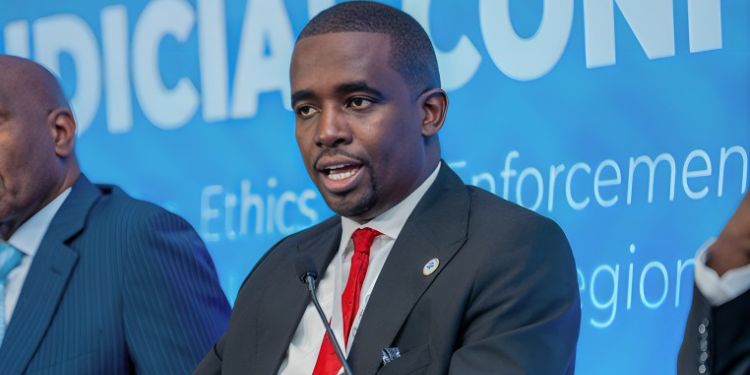
The head of East Africa Law Society (EALS) Ramah Abubakar. PHOTO/X