Wandayi Explains Surge in Frequent Power Outages Across Nairobi Estates in Recent Weeks
Share
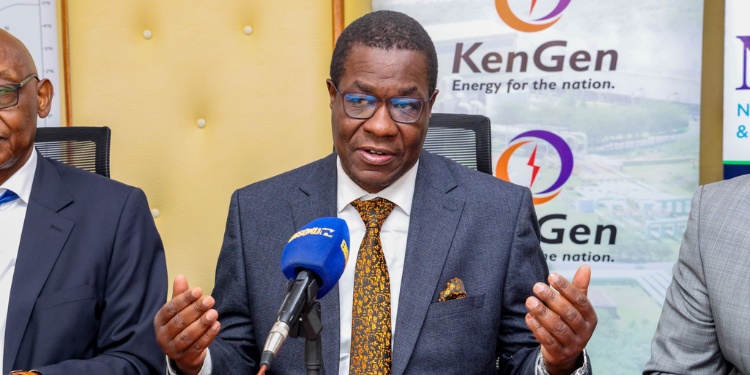
The senate raised the matter through Senator Beth Syengo by posing a question to the cabinet secretary: “Could the Cabinet Secretary explain the cause of the power outages experienced in several estates in Nairobi following the heavy rains and flooding of 6th March, 2026, and indicate the areas affected and the duration of the outages?”
Floods and Vulnerability of Substations
When responding, CS Wandayi highlighted floods as the main cause of power interruptions, especially in regions where urbanization had disrupted normal drainage patterns.
“The following were the causes of outages following the heavy rains in Nairobi and environs: Flooding: Substations in areas where the surrounding built environment has constrained /obstructed water paths are vulnerable and storm water overflow to the substations,” Wandayi noted.
He identified several key substations that were affected, including Nairobi West 66/11kV, Industrial Area 66/11kV, Ridgeways 66/11kV, Kimathi 66/11kV and Syokimau 66/11kV.
These installations supply electricity to densely populated and economically significant areas such as South C, Lang’ata Road, Upper Hill, South B, Industrial Area, Ridgeways, Jogoo Road, Mlolongo, Mavoko and Katani.
Also Read: Wandayi Reveals Cause of Fuel Supply Disruption, Says Situation Has Been Resolved
Storm Damage from Fallen Trees
Beyond flooding, the CS cited storm-related damage caused by falling trees as another major factor behind the outages.
“Fallen trees on power lines: Due to the storms and strong winds during this time, trees growing near power lines fell on the lines, leading to damage of both high and low voltage power lines and transformers, thereby causing extensive outages,” Wandayi explained.
According to Wandayi, areas most affected by such incidents included Dagoretti North, Lang’ata, Westlands and Ngong.
Government Response and Mitigation Measures
Senator Syengo further pressed the ministry on long-term solutions, asking: “What measures has the Ministry, together with the Kenya Power & Lighting Company Plc and other relevant agencies, put in place to ensure that electricity infrastructure is able to withstand heavy rains, flooding and other adverse weather conditions?”
In response, Wandayi outlined a series of remedial actions undertaken after the floods.
“Following the floods, a comprehensive assessment of the power infrastructure was undertaken and on the immediate term, the following remedial measures have been undertaken,” Energy CS stated.
Also Read: KenGen Addresses Concerns as Seven Forks Dams Reach Near Peak Capacity
Among the measures listed are improving drainage tunnels around substations in collaboration with county governments, and engaging agencies such as Nairobi City County, the Kenya National Highways Authority (KeNHA), and the Kenya Urban Roads Authority (KURA) to clear stormwater passages.
Additionally, the ministry is working with road authorities to integrate enhanced stormwater management systems into infrastructure design and construction.
Tree management has also been prioritized, with Wandayi noting that, “efforts toward cutting of trees in the wayleave trace in collaboration with Nairobi City County and customers with trees in own land but which encroach the wayleave corridor.”
Follow our WhatsApp channel for instant news updates
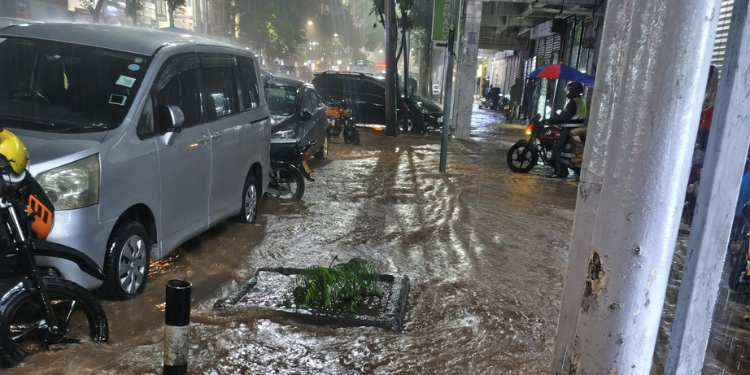
Photo of heavy rainfall witnessed in Nairobi CBD. PHOTO/Sammy Waweru