
Milk Shortage: Kenya Turns to Uganda and Neighbours to Fill Supply Gap
Share

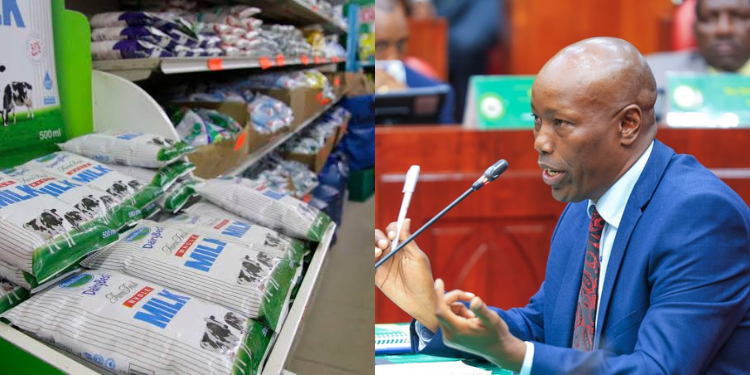
Trade Cabinet Secretary Lee Kinyanjui has raised the alarm over Kenya’s milk shortage, revealing that the country is importing milk from Uganda and other neighbouring countries to bridge the widening supply gap.
Kinyanjui said local dairy production is currently unable to meet national demand, putting pressure on the government to increase support for farmers and boost domestic production.
“We are not able to meet our demand, so we are actually importing from our neighbouring countries like Uganda,” Kinyanjui said while speaking during a family day hosted by the Catholic Diocese of Nakuru.
The CS added that relying on imports was not a long-term solution for Kenya’s dairy sector and urged farmers to increase production with government support.
Lee argued the need to boost domestic output and reduce reliance on imports.
“We believe that this is not where the country should be,” he said, adding that the government would support farmers to produce enough milk for the domestic market.
Earlier, the Secretary General of the Consumer Federation of Kenya (COFEK), Stephen Mutoro, called upon the Ministry of Agriculture to publish a 7-day emergency recovery plan and to hasten the activation of feed subsidies for those counties affected.
Also Read: India Backs UN World Map Resolution, Draws Red Line Over Kashmir
Urging Tax Suspension for Feed
COFEK further urged the National Treasury to act fast by suspending the import duties and value-added tax for critical livestock feed inputs such as soya and yellow maize so that the smallholder farmer does not walk away from the dairy industry.
According to the board, there has been a downward trend in supply since the beginning of the year.
Also Read: Gen Z Intern Takes Over Famous Company’s Social Media Accounts, Claims Months of Unpaid Work
Rising Milk Prices and Production
Several authorities raised frustrations over the rations and rising prices, with prices for fresh milk now said to have risen from 70 to 80 shillings.
The Kenya Dairy Board (KDB) agency in charge of the dairy industry also reported a reduction of 3.7% in transfers of formal milk to processors in July compared with June, from 84.4 million litres to 81.3 million litres, with initial reports indicating a further reduction in August.
Follow our WhatsApp channel for instant news updates.
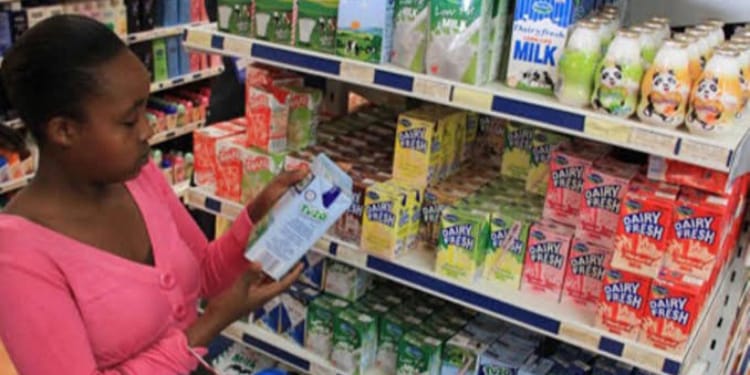
Milk on shelves in a supermarket
PHOTO/COFEK