16 Years of Katiba: Has Kenya Lost the Constitutional Dream?
Share
By Cornelius Gateri
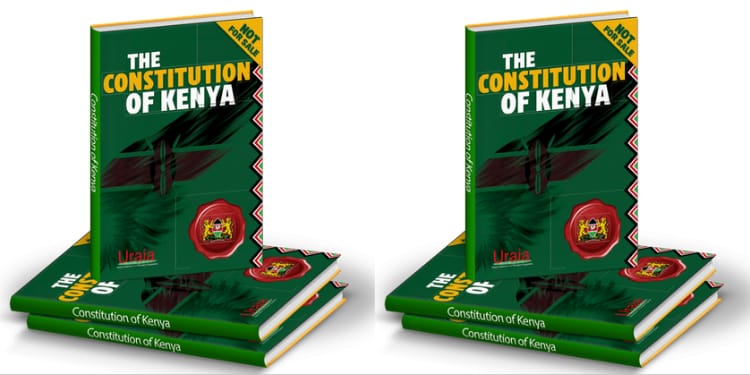
On August 28th 2010, Kenya promulgated the Constitution of Kenya 2010, which was unveiled by the late former President Mwai Kibaki.
To many Kenyans, this was a glimmer of hope for the realization of a dream they had long awaited after decades of political oppression, abuse of power, a weak bill of rights, socio-economic marginalization and widespread human rights violations.
Kofi Annan, the former UN Secretary-General, praised the 2010 Constitution and called it a highly progressive document which was designed to rectify systemic historical injustices and equitably distribute power through devolution.
16 years later, we celebrated Katiba Day on 28th August 2026, which was led by the head of state, President William Ruto, but the question lingers: Has this dream been achieved?
Devolution
Arguably, devolution is the most progressive and impactful provision that the 2010 Constitution brought about.
Devolution transformed the governance structure of Kenya by shifting power, resources and decision-making authority from a centralized national government to 47 devolved county governments.
Among the government services devolved were healthcare and in a span of a decade there was substantial growth in healthcare infrastructure and the immunization rates rose from 48% to 89%.
Also Read: OPINION: Gachagua’s Anti-Zoning Strategy Could Change Opposition Politics
The establishment of independent commissions was another major win under Chapter 15 of the 2010 Constitution.
The key independent commissions including Independent Electoral and Boundaries Commission (IEBC) which supervises election and referendum in Kenya , National Land Commission which manages public land in Kenya, Ethics and Anti-Corruption Commission(EACC) and the Judicial Service Commission (JSC) which vets judges and magistrates to the judiciary and the Kenya National Commission on Human Rights.
Implementation of Constitution
All these commissions are meant to operate free from any directive and receive their own separate budget.
However, the journey is still on; despite these major wins, parts of the Constitution still remain to be majorly unimplemented and are only on paper or have been partially achieved.
The principle of checks and balances as propounded by the Constitution was meant to avoid abuse of power and ensure that the 3 arms of the government; the Executive, Legislature and the Judiciary monitor and limit each other’s power.
Parliament Of Kenya
However, Parliament has been majorly critiqued of often succumbing to executive dominance, where this has been manifested mainly by parliamentarians voting along party lines and could be simply referred to as rubber-stamping executive policies rather than on fairness, equality and proper scrutiny.
This imbalance has also been seen through the continued disregard of court decisions on government policies.
The Executive in recent years has occasionally ignored or delayed implementation of court orders, weakening the judiciary’s role of checking the executive.
The most recent defiance is the Ebola facility in Laikipia, where Justice Patricia Nyaundi issued temporary conservatory orders halting the facility’s establishment or any development.
Also Read: OPINION: How the Registrar of Political Parties Became Kenya’s Newest Battleground
Despite this clear freeze, flight-tracking data and local residents confirmed that aircraft and medical equipment were still arriving at the site even after the injunction, which led to the Health Cabinet Secretary being summoned to Court to explain why the project is ongoing despite the freeze.
The 2010 Constitution can thus be best described as a 16-year journey that Kenyans embarked on but have never arrived.
Even though some miles have been achieved remarkably in the context of sharing of power through devolution, the Bill of Rights, and independent commissions to avoid tyranny. The journey is still on to actualize the promise given on paper.
Follow our WhatsApp channel for instant news updates
Cornelius Gateri
PHOTO/File