
Devolution’s Broken Promise in Nyanza and Western Kenya
Share

By Dr. Luchetu Likaka
Fifteen years after Devolution in Kenya, the uncomfortable reality is that parts of Nyanza and Western Kenya have little to show beyond bloated county bureaucracies and a trail of underwhelming projects.
The promise was simple: take resources closer to the people and unlock local development. What has unfolded instead is a slow, quiet betrayal-engineered not by scarcity, but by misrule.
Let us be clear: these regions have not been starved of funds. Billions of shillings have flowed into county coffers year after year.
But money alone does not build economies; leadership does. And here lies the failure. County governments have largely reduced devolution into a payroll expansion scheme, where recurrent expenditure crowds out development, and public service becomes synonymous with employment rather than impact.
The optics of governance, convoys, allowances, and endless meetings have taken precedence over substance.
The Illusion of Development
What passes for development is, in many instances, an illusion. Projects are launched with fanfare and abandoned in silence.
Markets without traders, hospitals without equipment, roads that dissolve with the first rains-these are not isolated incidents; they are symptoms of a governance culture that prioritizes visibility over viability.
Procurement, the engine that should drive local transformation, has instead become the marketplace of patronage, where contracts reward loyalty rather than competence.
Also Read: Treason or Political Miscalculation? How Charging John Methu Could Strengthen Opposition
Missed Economic Opportunities
Even more troubling is the absence of a coherent economic vision. Counties in these regions sit on undeniable advantages: fertile land, access to Lake Victoria, vibrant cross-border trade corridors, and a youthful population.
Yet there is little evidence of structured efforts to commercialize agriculture, modernize fisheries, or build agro-processing industries. The economies remain largely informal, fragmented, and vulnerable. Leadership has failed to answer a basic question: what will drive growth here?
Oversight mechanisms have not helped the situation. Audit reports routinely expose questionable expenditures and systemic leakages, but consequences are rare and often cosmetic.
Impunity has become institutionalized. Citizens, too, bear some responsibility. Public outrage is episodic, quickly drowned in ethnic loyalty and political theatrics.
Accountability is demanded loudly during crises and forgotten just as quickly.
National Politics Over Local Development
Perhaps the most damaging trend is the persistent obsession with national politics at the expense of local development.
County leaders position themselves as national actors, investing time in political alignments and rhetoric while neglecting the mundane but critical work of building functional local economies.
The result is a dangerous disconnect: leaders speak the language of power, while citizens live the reality of stagnation.
Also Read:Public Sector Accounting Standards Board Announces Jobs Opportunities
Leadership, Not History, Is the Real Problem
It would be convenient to blame structural inequalities or historical marginalization. But that argument is wearing thin. Devolution was designed precisely to correct those injustices.
If, after fifteen years, the same regions remain trapped in underdevelopment, then the problem is no longer history, it is leadership.
A Call for a Radical Shift
The path forward is not mysterious. It requires a radical shift from consumption to investment, from patronage to professionalism, and from politics to productivity.
Counties must define clear economic priorities, enforce discipline in public finance, and treat development as a measurable outcome rather than a political slogan.
Until that happens, devolution in Nyanza and Western Kenya will remain what it increasingly appears to be: not a vehicle for transformation, but a well-funded system of managing stagnation.
Follow our WhatsApp channel for instant news updates
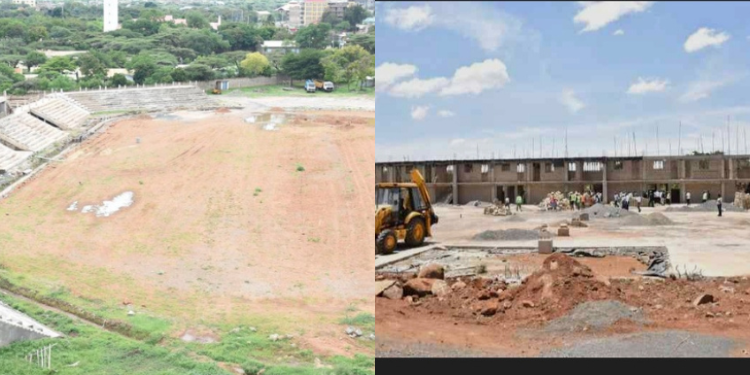
Some of the stalled projects in Nyanza and Western. PHOTO/File