Ruto Explains Why Kenyans Pay More for Fuel Than Neighbouring Countries
Share
President William Ruto has explained why fuel prices in Kenya remain higher than those in neighbouring countries, attributing the difference to the country’s economic status, infrastructure demands, and global market pressures.
Speaking during a church service at Africa Gospel Church in Karen on Sunday, April 19 2026, he said that Kenya’s status as a middle-income country places it in a different price category from its neighbours, which are mostly classified as least developed.
He also highlighted that external factors, such as geopolitical tensions affecting global supply chains in the Middle East, have driven up fuel costs.
“I know many people in Kenya keep asking why fuel prices are different from our neighbours, and it is important for them to know three things. Number one, Kenya is a middle-income country while our neighbours are least developed countries. If you want to compare Kenya fairly, compare it with other middle-income countries,” Ruto said.
Ruto Explains Why Fuel Prices in Kenya are Different Compared to Her Neighbours
The President further noted that fuel levies in Kenya support the development and maintenance of extensive transport infrastructure.
Also Read: Ruto Speaks Out on Fuel Price Hike
He highlighted that the country currently maintains about 20,000 kilometres of tarmac roads and has an additional 6,000 kilometres under construction, figures he said exceed the combined totals of several East African nations.
President Ruto added that the government is pursuing an infrastructure expansion agenda, targeting an additional 28,000 kilometres of tarmac roads over the next seven years.
He described the ongoing development efforts as part of a broader national transformation plan aimed at improving connectivity and economic growth across the country.
The Head of State Praises Parliament for Fast-Tracking Tax Changes That Dropped Fuel Prices
He argued that the scale of infrastructure development places a financial burden on the fuel sector, contributing to higher pump prices compared to countries with smaller road networks.
Ruto also pointed to global factors, including tensions in the Middle East, which he said continue to disrupt transport and logistics routes, leading to increased fuel costs worldwide.
Also Read: EPRA Reduces Fuel Prices by Ksh 10 After Uproar
At the same time, the President thanked Parliament for swiftly passing proposed tax changes aimed at easing fuel costs, noting that the adjustments had already contributed to a reduction in prices.
He said the government would continue monitoring the situation to ensure stability in the energy sector.
“They did it expeditiously. In fact, the passage of the law was done in an hour and 20 minutes. And we had a whole brand new law for me to sign. And that has significantly adjusted the prices downwards,” said President Ruto.
Follow our WhatsApp channel for instant news updates
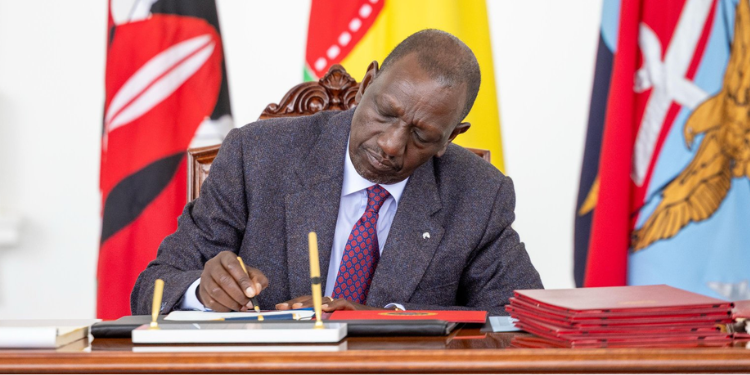
President William Ruto assents to the Value Added Tax (Amendment) Bill, 2026 at State House Nairobi, a move that reduces VAT on fuel from 16% to 8% to cushion Kenyans from rising costs linked to the Middle East conflict. PHOTO/PCS
You Might also Like