

Why Your Phone Battery Lasts Longer at 1%
Share

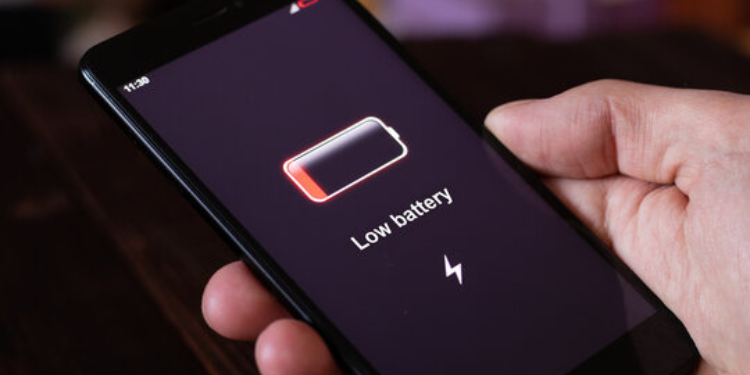
One thing many smartphone users can relate to is when their phone hits one per cent of its total battery charge level, but still manages to operate for a much longer time than anyone would anticipate.
In some instances, people can use their phones much longer after they hit one per cent battery life, even managing to send an additional text or make a call.
In recent years, this matter has raised quite a few eyebrows among consumers, who wonder if smartphone companies purposely engineer their devices in a way that makes it possible to stretch the last per cent of battery life.
It turns out, however, that the reason for such behavior of devices has nothing to do with hidden reserves of energy.
The key point here is that, in actuality, the per cent of remaining battery cannot always reflect an exact figure because it is determined through voltage level readings.
Therefore, the one per cent indicated by smartphone devices does not necessarily correspond to the remaining energy.
Software Techniques and Power Saving
The other major factor behind why the last one per cent seems to take longer is due to the implementation of very aggressive power management features.
When a device hits critical battery levels, usually anything at or below five per cent, the device will start to cut out any unnecessary operations.
The screen’s brightness gets lowered, background processes get limited, and processing power gets decreased.
This is known as the “survival mode,” which makes sure that important activities like making calls and texting can be performed until the bitter end.
Protective Buffers for Battery and Phone Protection
Besides all those technical tricks and methods to save battery life, modern phones are designed in a way to protect their batteries from being completely discharged.
This is due to the fact that lithium-ion batteries, commonly used in current devices, are easily damaged if depleted fully.
As such, there is always some buffer capacity included into a device’s battery which is not taken into account when displaying the percentage on the screen.
Therefore, having one per cent left in your battery, you still have some capacity available.
Moreover, phones are designed to automatically shut down at a certain voltage level.
Also Read: OPINION: Why Is the System Blocking Employment and Black Business Growth?
Human Behavior and Perception
Human behavior also comes into play in a rather subtle manner.
Upon realizing that their phone’s battery has gone down to one percent, individuals modify their behavior by engaging in the most critical tasks alone.
This change in behavior reduces consumption of power, thus prolonging the life of the device beyond the normal lifespan.
It should also be noted that the algorithms used by battery systems are designed to make estimations in a relatively safe manner.
In order not to irritate users by abruptly cutting off service when the battery goes down to one percent, estimations will always have some margin of error on the side of the user.
Environmental conditions like temperature, battery age, and condition are other factors that influence the time left after reaching one per cent.
Follow our WhatsApp channel for instant news updates
A user browses through the menu of a smartphone. PHOTO/ FILE.