

UAE Logistics Coordination Strengthens Trade Continuity for Kenya’s Key Export Corridors
Share

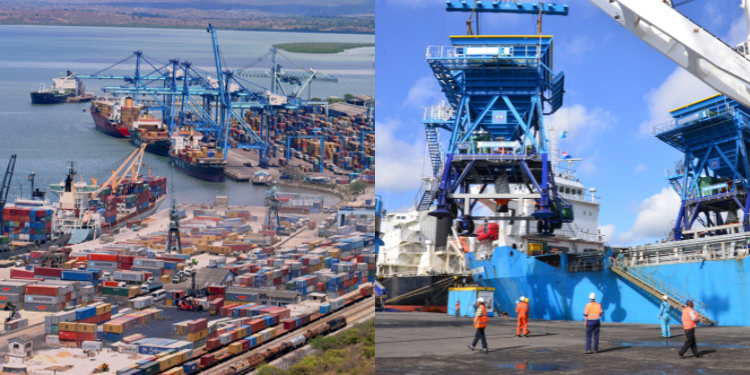
As Kenya moves to safeguard critical export corridors amid evolving regional trade dynamics, the UAE’s latest logistics coordination efforts offer a timely framework for strengthening route resilience, protecting cargo continuity, and sustaining the flow of key exports to Gulf markets.
The relevance is particularly clear for Kenya’s export sectors, where floriculture alone generated Ksh 203.6 billion in 2024, and Gulf-linked cargo routes remain central to preserving delivery continuity and pricing stability.
With tea exporters also reliant on efficient movement through the Port of Mombasa and onward Gulf markets, Kenya’s parallel expansion of alternative logistics pathways through Lamu aligns closely with the UAE’s focus on corridor diversification and multimodal resilience.
Regional Logistics Coordination
Dr. Thani bin Ahmed Al Zeyoudi, Minister of Foreign Trade, chaired a high-level coordination meeting hosted by the Ports, Customs and Free Zone Corporation (PCFC) at its headquarters in Dubai.
The meeting brought together senior executives from global shipping lines and representatives of maritime associations as part of ongoing efforts to address current challenges impacting regional supply chains.
The meeting was attended by His Excellency Abdulla bin Damithan, Chairman of the Corporation, and His Excellency Dr. Abdulla Busenad, Director General of Dubai Customs, alongside senior leaders from the logistics and maritime sectors.
During the meeting, His Excellency Dr. Thani bin Ahmed Al Zeyoudi reaffirmed the UAE’s unwavering commitment to safeguarding the continuity of trade flows and strengthening regional supply chain resilience through close collaboration with partners and forward-looking solutions that address current regional challenges.
He noted that the ongoing high-level coordination among key stakeholders reflects the UAE’s steadfast approach to advancing partnerships and deepening regional and international cooperation.
“The UAE will continue to play a pivotal role in supporting regional and international trade stability through targeted initiatives and adaptive policies that enhance supply chain performance and sustainability.”
“The UAE stands ready to deepen its engagement with regional and international partners to build a more connected, resilient, and future-ready trade ecosystem,” he said.
Efforts are also underway to strengthen alternative trade corridors and implement advanced customs and operational frameworks that reinforce the nation’s competitiveness and its standing as a trusted global trade and logistics hub.
Also Read:Airports Everywhere, Development Nowhere: We Need to Rethink Our Priorities
Public-Private Synergy
For his part, His Excellency Bin Damithan highlighted the importance of sustained coordination and collaboration among all stakeholders, noting the progress made since the previous meeting in addressing regional challenges to ensure continued trade flows into the UAE.
“Relevant entities have worked closely to implement a range of strategic initiatives aimed at enhancing supply chain resilience, including improving the efficiency of alternative corridors such as Fujairah and Khorfakkan ports, and strengthening regional maritime connectivity to ensure seamless and efficient cargo movement,” he stated.
He added that these achievements reflect strong collaboration and commitment from both public and private sector partners, while emphasising the continued need for joint efforts amid ongoing challenges related to rising costs and operational complexities.
“The meeting serves as an important platform to review recently implemented initiatives and explore opportunities for further collaboration in the next phase, supporting the development of practical and sustainable solutions that enhance supply chain efficiency and continuity,” he added.
Bin Damithan reiterated that ensuring the uninterrupted flow of essential goods remains a top priority, alongside reinforcing the UAE’s position as a reliable regional and global logistics hub.
Ongoing Initiatives
Meanwhile, His Excellency Dr. Busenad outlined key customs initiatives implemented to support trade flows and enhance operational efficiency, reaffirming Dubai Customs’ commitment to developing proactive and innovative solutions in collaboration with partners.
“Over the past period, we have successfully implemented a number of high-impact initiatives that facilitated cargo movement and enhanced supply chain efficiency,” he said.
These initiatives include:
- The issuance of Customs Notice No. (6) enabling transit cargo movement through the green corridor with the Sultanate of Oman
- Acceptance of undertaking letters as valid guarantees
- Organisation of workshops with traders to explain green corridor mechanisms and address enquiries
He further highlighted pilot projects currently being rolled out.
“We are currently rolling out several pilot projects, including the activation of the Advance Cargo Information (ACI) system through shipping companies for all green corridor cargo, as well as the launch of a new maritime feeder service linking the region with India, further strengthening trade connectivity,” he added.
Also Read:Fuel Spike Pushes Ena Coach to Hike Fares Across Major Routes
Strengthening Multimodal Trade Connectivity
Dr. Busenad also highlighted several ongoing initiatives aimed at improving efficiency and resilience across logistics networks. These include:
- Extending the grace period for re-export cargo
- Developing a framework to allow more land transport companies to join secured corridors
- Expanding the green corridor to include Saudi Arabia
- Offering multiple clearance options within the corridor
He emphasised that these efforts form part of an integrated vision to enhance the resilience and sustainability of supply chains while reinforcing the UAE’s standing as a highly efficient and globally competitive logistics hub.
The meeting also reviewed key developments since the previous session, including improvements in handling critical shipments, activation of alternative transport corridors, and expanded use of multimodal transport solutions such as land and rail.
Enhanced operational strategies were also discussed to address capacity and cost-related challenges across regional logistics networks.
Follow our WhatsApp channel for instant news updates
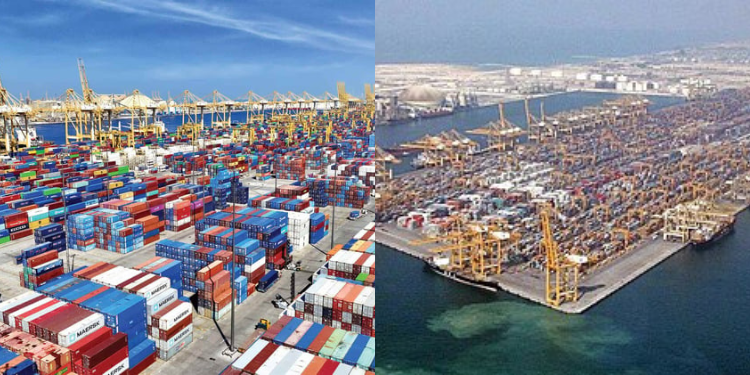
Jebel Ali Port Container Terminals in Dubai
PHOTO/DPA