Tobacco Bill Faces Fresh Opposition Ahead of Gen Z Protest Anniversary
Share

Business owners and traders in Nakuru have joined the growing opposition to the proposed Tobacco Control (Amendment) Bill, 2024, raising concerns over some of its provisions and the timing of public participation.
The traders, operating under the Bars, Hotels and Liquor Traders Association of Kenya (BAHLITA), spoke during a press conference on Tuesday, June 23, 2026, where they rejected the bill and urged lawmakers to reconsider some of its proposals.
BAHLITA Secretary General Boniface Gachoka accused Parliament of failing to consider views previously submitted by stakeholders when the bill was before the Senate.
“It is surprising that we opposed this bill in the Senate, but our views were ignored. We are now seeing the same trend in the National Assembly,” Gachoka said.
Concerns Over June 25 Public Participation
The traders also questioned the decision to hold public participation on June 25, the day Kenyans are expected to commemorate the second anniversary of the Gen Z protests.
Also Read: Bunge la Wananchi Demands Nationwide Public Participation on Tobacco Amendment Bill
According to Gachoka, many stakeholders may be unable to attend the exercise, making it difficult for their views to be fully captured.
“Is there a genuine intention to hear our views? June 25 is a significant day for many Kenyans, and some people will not be available to participate,” he said.
Traders Oppose Proposed 100-Metre Rule
At the centre of the dispute is a proposal in the bill that would ban the sale of tobacco products, e-cigarettes and oral nicotine sachets within a 100-metre radius of schools, playgrounds and facilities mainly used by minors.
The provision is aimed at reducing young people’s access to tobacco and nicotine products.
However, BAHLITA argues that the rule would be difficult to implement, especially in towns and cities where businesses are located close to schools and other public facilities.
Gachoka described the proposal as a “soft ban”, saying it could force many traders out of business despite existing laws already prohibiting the sale of tobacco products to minors.
“We do not sell to children. The law already sets the legal age for tobacco users. The 100-metre rule is not practical and should be removed,” he said.
The association also called on lawmakers to study tobacco harm reduction approaches before passing the bill.
According to the traders, alternatives such as vaping products and oral nicotine sachets could help reduce the health risks associated with smoking traditional cigarettes.
“We are asking the Senate Health Committee and the bill’s sponsor to look at the science on tobacco harm reduction and approach this debate with an open mind,” Gachoka added.
What the Tobacco Amendment Bill Proposes
The Tobacco Control (Amendment) Bill, 2024, sponsored by Nominated Senator Catherine Mumma, seeks to strengthen Kenya’s tobacco control laws amid growing concerns over the use of alternative nicotine products among young people.
Also Read: More Stakeholders Join Debate Over Controversial Tobacco Amendment Bill
Among the proposed changes are a ban on the sale of tobacco and nicotine products within 100 metres of schools and playgrounds, restrictions on flavours such as mint, fruit and candy, stricter packaging requirements, and tighter regulation of e-cigarettes and nicotine pouches. The bill also seeks to introduce additional licensing requirements for traders.
The proposed law includes tough penalties for offenders. Anyone found manufacturing, importing, or selling unapproved tobacco products could face a fine of up to Ksh 1 million or 5% of their annual turnover, whichever is higher, or a jail term of up to two years.
Those convicted of selling tobacco products online could be fined up to Ksh 500,000 or jailed for up to three years.
Businesses operating without registration from the Ministry of Health would face fines of up to Ksh 3 million or a prison term of up to three years.
Meanwhile, manufacturers or traders using prohibited single-use plastics could be fined up to Ksh 10 million or imprisoned for up to five years.
Public health groups have backed the bill, saying stronger controls are needed to protect children and young people from nicotine addiction.
However, business associations, manufacturers, and traders argue that some of the proposed measures could lead to job losses, reduce revenues, and fuel the illicit tobacco market.
Follow our WhatsApp channel for instant news updates
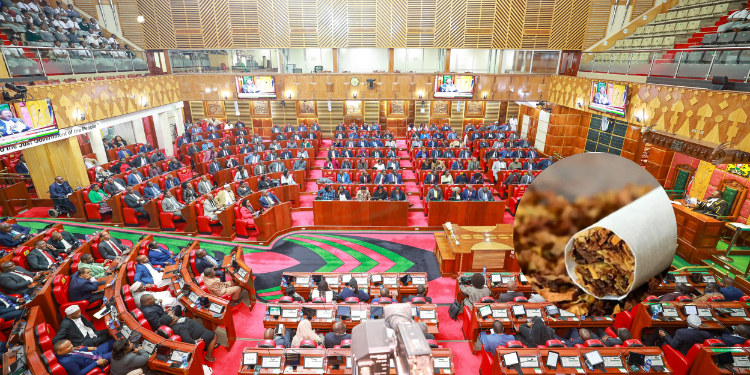
Members of parliament in session. PHOTO/Parliament