REVEALED: What’s Making Life More Expensive for Kenyans as Inflation Drops to 6.4%
Share
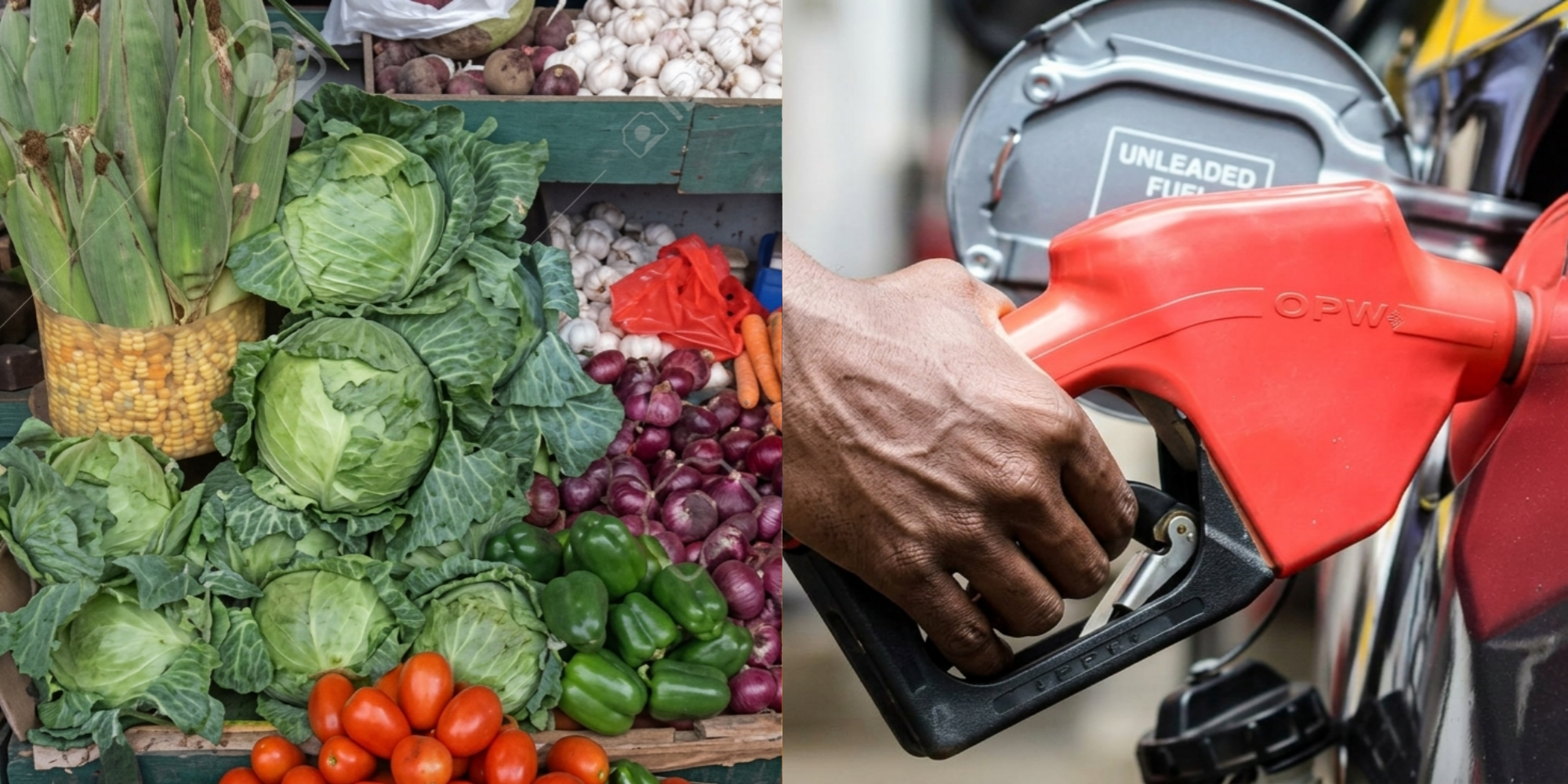
Kenya’s inflation rate eased slightly to 6.4% in June 2026, down from 6.7% recorded in May 2026, according to the latest data released by the Kenya National Bureau of Statistics (KNBS).
The marginal decline reflects a slowdown in the rate of price increases, even as the cost of key household items, particularly food and transport, remains high.
Every month, inflation rose by 0.2%, with the Consumer Price Index (CPI) increasing from 154.56 in May to 154.91 in June 2026, indicating that the cost of living continues to rise, albeit at a slower pace.
Inflation Trends as Food Prices Show Mixed Movements
Prices of basic food items showed a mixed but generally moderate trend between May and June 2026. Some commodities that recorded declines are as follows:
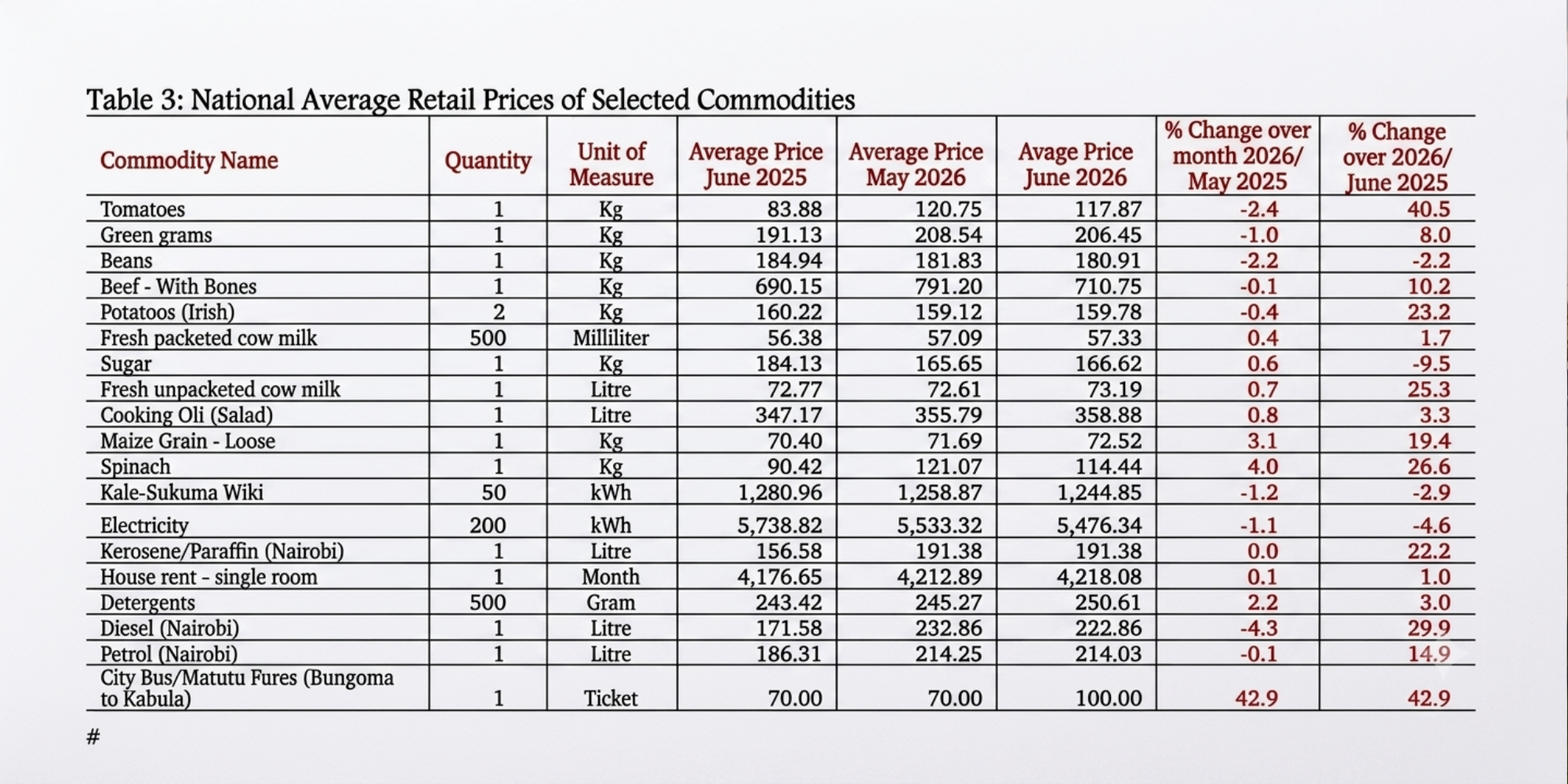
- Tomatoes fell from Ksh 120.75 to Ksh 117.87 per kg
- Beans eased slightly from Ksh 181.83 to Ksh 180.91 per kg
- Irish potatoes declined marginally from Ksh 111.16 to Ksh 111.10 per kg
However, several key household items recorded increases:
- Sifted maize flour (2kg) rose from Ksh 159.12 to Ksh 159.78
- Sugar increased from Ksh 165.66 to Ksh 166.62 per kg
- Fresh unpacked cow milk (1 litre) rose from Ksh 72.72 to Ksh 73.19
- Maize grain (loose) increased from Ksh 71.69 to Ksh 72.52 per kg
- Cabbages rose from Ksh 72.61 to Ksh 73.19 per kg
- Sukuma wiki increased from Ksh 110.07 to Ksh 114.44 per kg
- Cooking oil (salad) rose from Ksh 355.79 to Ksh 358.63 per litre
These mixed price movements continue to shape household food expenditure across the country.
Also Read: CBK Holds Interest Rate at 8.75% as Inflation Jumps and Global Oil Prices Surge
Transport Costs Remain Elevated Despite Fuel Relief
Transport remained a key contributor to inflation, continuing to exert pressure on household budgets. This is despite a decline in fuel prices during the month:
- Diesel prices dropped from Ksh 232.86 to Ksh 222.86 per litre
- Petrol prices edged down slightly from Ksh 214.25 to Ksh 214.03 per litre
Despite the reductions, transport costs remained elevated due to earlier fuel price increases and sustained pressure on public transport fares.
Utilities Provide Limited Relief
Utilities offered modest relief in June, particularly electricity costs as electricity (200 kWh) declined from KSh 5,535.22 to KSh 5,476.34, a decrease of about KSh 59
However, this relief remains limited as overall household expenses continue to be driven by food and transport costs.
Core inflation, which excludes volatile food and fuel prices, remained relatively stable, reflecting moderate price changes in most goods and services.
However, overall inflation continues to be influenced by fluctuations in food and energy prices.
Also Read: Global Oil Prices Fall Below Ksh 9066 Per Barrel, Raising Hopes for Cheaper Fuel
June 2025 Vs June 2026
Annual consumer price inflation, as measured by the Consumer Price Index (CPI), stood at 6.4% in June 2026, compared to 3.8% recorded in June 2025, indicating a significant increase in the overall price level over the one-year period.
The CPI reflects the average change in prices paid by consumers for a fixed basket of goods and services, highlighting shifts in the cost of living over time.
The rise in inflation was primarily driven by higher prices in key household expenditure categories.
Food and non-alcoholic beverages increased by 8.6%, transport costs rose sharply by 16.1%, while housing, water, electricity, gas and other fuels increased by 3.4%.
These categories account for a significant share of household expenditure and continue to play a major role in shaping overall inflation trends.
Although inflation has eased slightly, the overall cost of living remains high.
Food and transport costs continue to dominate household spending, limiting the impact of price reductions in sectors such as energy.
As inflation persists, households are likely to continue adjusting spending patterns amid ongoing price pressures.
Follow our WhatsApp channel for instant news updates
Inflation Report and Kenya’s Consumer Price Index