
Mwai Kibaki Hospital Performs First Pacemaker Implant on 80-Year-Old Patient
Share

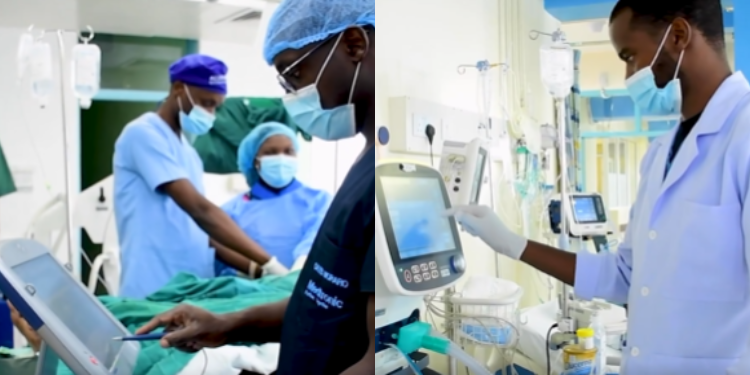
Mwai Kibaki Hospital in Othaya has recorded a major medical milestone after successfully performing its first pacemaker implant on a patient whose heart rate had dropped as low as 15 beats per minute.
The patient, who is living with diabetes and hypertension, had experienced difficulties with movement before the procedure, with dizziness and fatigue making it difficult for him to walk around.
In a statement dated August 21, the Ministry of Health said the cardiac team successfully implanted a single-chamber pacemaker, which helped increase his heart rate and improve his cardiac function.
“A heart rate as low as 15. Now, a chance to move around his farm again. A patient living with diabetes and hypertension has become the first to receive a pacemaker implant at Mwai Kibaki Hospital,” read part of the statement.
Mwai Kibaki Hospital Performs First Pacemaker Procedure on Patient
Cardiac Nurse Miriam Kisato from Kenyatta National Hospital said the patient was an 80-year-old man living with diabetes and hypertension, adding that the procedure would improve his quality of life.
“We were able to implant a single-chamber pacemaker in an 80-year-old man, a diabetic and hypertensive patient with a heart rate as low as 15. This was the first of its kind,” Kisato said.
Also Read: From Kibaki’s Personal Doctor to Founder of Karen Hospital: Meet Dr. Gikonyo
Additionally, cardiologist Dr Nguchu from Mwai Kibaki Hospital said the patient’s condition had significantly improved following the procedure, explaining that before receiving the pacemaker, the patient could not walk around his room without experiencing difficulties.
Nguchu said the procedure marked the hospital’s first case of its kind, expressing hope that more patients would benefit from similar procedures in the future.
She further explained that pacemaker implantation is often performed under local anaesthesia, with some patients able to return home on the same day.
However, Doctor Nguchu noted that some patients may be kept in hospital for observation depending on their condition and the medical team’s assessment.
Furthermore, Nguchu acknowledged the support received from staff at Mwai Kibaki Hospital and other medical professionals who helped facilitate the procedure, while also acknowledging the technical support provided by Medtronic, which assisted the medical team in carrying out the procedure.
What Is a Pacemaker?
A pacemaker is a small device implanted in the chest or abdomen to help control abnormal heart rhythms. It works by sending electrical pulses to prompt the heart to beat at a normal rate.
It is used to treat arrhythmias, a condition in which the heart beats too fast, too slowly, or with an irregular rhythm.
Also Read: Ruto to Launch New 150-Bed Hospital Set to Open Doors to Kenyans.
This condition can cause symptoms such as fatigue, shortness of breath, and fainting.
By helping the heart maintain a more normal rhythm, pacemakers can relieve some of these symptoms and enable patients to return to a more active lifestyle.
The battery in an implanted pacemaker can last about 10 to 13 years, although its lifespan varies depending on the device and how much it is used.
Meanwhile, serious complications from pacemaker implantation are considered uncommon.
Follow our WhatsApp channel for instant news updates.
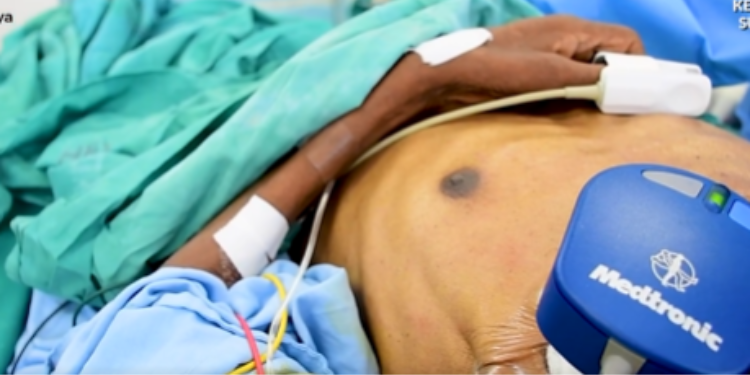
A screengrab showing the patient after the pacemaker surgery. Photo / Ministry of Health