How One of the Architects of Kenya’s New Constitution Was Assassinated
Share
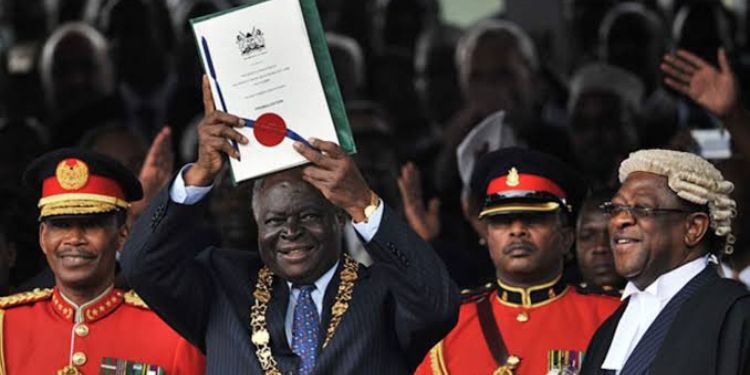
As Kenya marks Katiba Day on August 27, 2026, the country celebrates 16 years since it promulgated the 2010 Constitution. The Constitution changed how power, resources, and rights are shared nationwide. But behind that achievement are people whose contributions are often forgotten during the annual celebrations.
One of them was Dr. Crispin Odhiambo Mbai, a political scientist and strong advocate for devolution who played a key role in shaping ideas that later found their way into the 2010 Constitution.
Mbai, however, did not live to see the Constitution become a reality.
On September 14, 2003, seven years before its promulgation, armed men attacked him at his Nairobi home, bringing his life to a tragic end.
His death shocked the country and sparked student protests. It also cast a shadow over the constitutional review process, in which Mbai had played an important role.
As Kenyans mark another Katiba Day, Mbai’s story offers a reminder of the people who contributed to the long journey towards the Constitution the country celebrates today.
Who was Crispin Odhiambo Mbai?
Mbai was a University of Nairobi political scientist who emerged as one of the prominent voices in Kenya’s constitutional reform debate in the early 2000s.
He chaired the Devolution Committee at the Bomas of Kenya National Constitutional Conference, where delegates spent months debating how Kenya should be governed under a new constitutional order.
At the centre of Mbai’s argument was a concern that had shaped Kenya’s politics for decades — too much power and too many resources were concentrated in Nairobi.
He pushed for a system that would give communities a greater say in decisions affecting them and ensure resources reached people outside the capital.
That position put him at the centre of one of the most sensitive issues being discussed at Bomas: whether Kenya could move away from a system dominated by a powerful central presidency.
Mbai became closely associated with the push for devolution and was later widely described as one of its leading architects.
Prof Yash Pal Ghai, who chaired the Bomas conference, remembered Mbai as a committed member of the process and a key figure in the committee handling devolution.
Also Read: Ruto Announces Major Post-Vision 2030 Plan, Sets August 12 Launch
How Mbai was killed
On Sunday, September 14, 2003, Mbai was at his home in Nairobi when armed men attacked him.
Contemporary reports said three gunmen were involved in the attack. Mbai was shot and seriously wounded before being taken to Nairobi Hospital where he later died from his injuries.
The court records established that Mbai suffered gunshot wounds to his head and chest and died while receiving treatment. His death immediately raised questions because of the work he was doing at the time.
He was chairing a committee involved in one of the most important parts of Kenya’s constitutional negotiations — deciding how power and resources should be shared. Political motives were consequently raised almost immediately.
Some politicians and observers viewed the killing as an assassination linked to the constitutional debate, particularly Mbai’s advocacy for devolution. However, no court established who ordered the killing or what motivated it.
Three men were eventually charged with Mbai’s murder in 2005 where the High Court acquitted them. No one has since been convicted for his killing.
His death shook Kenya’s constitutional talks
Mbai’s death sent anger through the University of Nairobi community, where he had taught.
Students took to the streets to protest his killing, with contemporary reports describing clashes between demonstrators and police as students attempted to travel to the Bomas talks.
Police used tear gas as tensions rose, adding to the sense of crisis surrounding a constitutional process that was already facing deep political disagreements.
Inside Bomas, delegates mourned the loss of one of the people at the centre of the devolution debate.
Conference records later described his murder as a major setback to the proceedings. His colleagues had lost not only a fellow delegate but also a person who had spent considerable time working through one of the most difficult questions before the conference.
Mbai’s death came at a particularly sensitive point in the country’s political transition. Kenya was under President Mwai Kibaki, whose government had come to power less than a year earlier after the end of KANU’s long rule.
For those pushing constitutional reform, questions about the distribution of political power were impossible to separate from the country’s history of centralised government.
He had become one of the people arguing for a different model, his death leaving that debate hanging over the constitutional process.
Also Read: Ruto Announces Major Post-Vision 2030 Plan, Sets August 12 Launch
Seven years later, his vision became part of Kenya’s Constitution
Mbai would not live long enough to see where the constitutional debate eventually led.
On August 27, 2010, Kenya promulgated a new Constitution after years of political negotiations, public debate and a national referendum. One of its biggest changes was devolution.
The Constitution created 47 county governments and gave them responsibilities and resources intended to bring decision-making and public services closer to citizens.
He never got to see counties take shape, watch resources flow through the devolved system or witness Kenyans elect their first governors and Members of County Assemblies, yet the idea he championed survived him.
More than two decades after his death, questions surrounding Mbai’s murder remain unanswered. His family has continued to seek justice, while his contribution to Kenya’s constitutional reform remains part of the country’s history.
Follow our WhatsApp channel for more updates
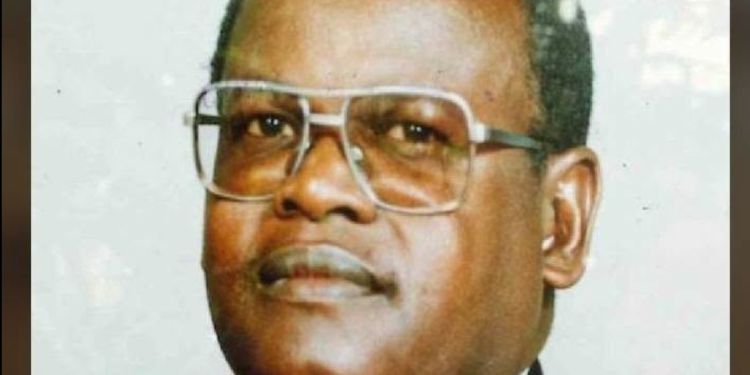
The late Prof. Crispin Odhiambo Mbai . PHOTO/ FB.