
Court Orders Stanbic Bank to Refund Ksh511,000 After Fraudsters Drain Customer’s Account
Share

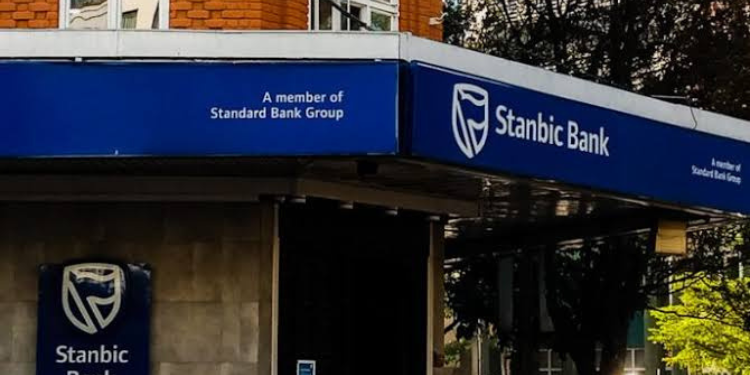
A court in Nairobi has ordered Stanbic Bank Kenya Limited to refund a customer Ksh511,000 after fraudsters used his stolen identification documents and mobile phone to activate a digital banking profile and transfer more than Ksh1 million from his account.
According to a judgment delivered by the Milimani Small Claims Court on August 25, 2026, the case involved James Njoroge and Stanbic Bank Kenya Limited.
Njoroge, who had been a customer of the bank for more than 10 years, sued the bank after his account was accessed following a robbery in which his National ID, ATM cards, and mobile phone were stolen.
Stanbic Bank Loses Sh511,000 Fraud Case Over Digital Banking Security
He was robbed on July 13, 2025, and later that day, at about 2:48 pm, a new digital banking profile on Stanbic’s OMNI platform was self-registered on his existing account.
The court found that the fraudster used information contained in the stolen documents, together with an OTP sent to the stolen phone, to activate the digital banking service.
Three unauthorised transactions were subsequently carried out between 3:09 pm and 3:25 pm, transferring a total of Ksh1,001,000 from the account.
The court noted that Njoroge had never registered for mobile or internet banking during his more than 10 years with the bank and had instead preferred to transact physically at a branch.
Also Read: CBK Reveals Banks With Lowest Interest Rates as of July 2026
As a result, the court found that Stanbic Bank had breached its duty of care and fiduciary obligations to Njoroge, adding that activating a new digital banking channel on a long-standing account constituted a significant change that required a high level of identity verification.
According to the judgment, the bank’s reliance on information such as the customer’s ID number, date of birth, and account number, together with an OTP sent to the stolen phone, did not provide sufficient protection.
The court observed that the same information Njoroge had provided when opening his account years earlier was available to the fraudster following the robbery.
It therefore found that the bank’s Know Your Customer and digital onboarding procedures were insufficiently secure.
Court Questions Failure to Flag Transactions
The court also questioned why Stanbic’s fraud detection systems did not identify the transactions as suspicious.
It noted that Ksh1,001,000 was transferred within 16 minutes of the new OMNI profile being created on an account with no previous digital activity.
According to the judgment, the large and rapid transfers presented warning signs that a reasonably competent banking system should have detected and halted.
The judgment further noted that banks have an obligation to exercise reasonable care and skill when safeguarding customers’ funds.
Stanbic subsequently recovered Ksh490,000 and credited the amount back to Njoroge’s account, leaving Ksh511,000 outstanding.
In addition, the court held that the bank’s partial recovery did not remove its primary obligation to restore the customer’s remaining funds.
It further noted that information in the bank’s own documents identified one recipient of two of the fraudulent transactions, which the court said provided an avenue for further recovery and investigation.
Also Read: Stanbic Bank Appoints Former Safaricom Executive Michael Mutiga as New CEO
Court Rejects Argument on Delayed Reporting
Stanbic argued that Njoroge’s delay in reporting the incident contributed to the loss. However, the court found that the delay was not the root cause of the loss.
The judgment noted that Njoroge had been the victim of a violent robbery and had been drugged, while his wife reported the matter as soon as was practicable.
Therefore, the Milimani Small Claims Court entered judgment in favour of Njoroge and ordered Stanbic Bank to pay him Ksh511,000, as it awarded him Ksh50,000 in costs.
The amount will attract interest at 12 per cent per annum from the date the suit was filed until payment in full, declining to award general damages, noting that the loss was a specific and quantifiable financial amount.
“For the reasons set out as above, the court hereby makes the following consequential orders: Judgment is hereby entered in favor of the Claimant against the Respondent for the sum of Kshs. 511,000,”
Follow our WhatsApp channel for instant news updates.

Stanbic Bank Kenya logo on a building in Nairobi. PHOTO/ File