
Why Burial Disputes Become Cultural and Legal Battles
Share

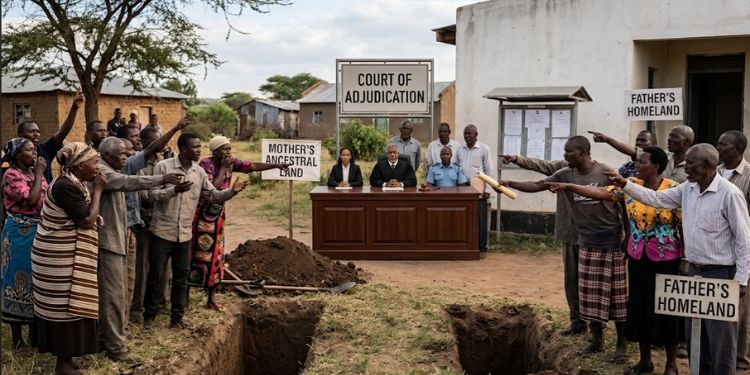
When a family cannot agree on where to bury a loved one, who gets the final say—the deceased, the parents, the spouse, or the cultural tradition?
That question has come into focus following the burial of Kenyan rapper Stoopid Boy, whose real name was Edgar Odhiambo Ochieng, after a disagreement between his paternal and maternal families over where he should be laid to rest.
Stoopid Boy was buried at his mother’s home in Miharati, Kipipiri, Nyandarua County, on Wednesday, September 16. His father, George William Ochieng Awili, had maintained that his son wanted to be buried at their ancestral home in Alego, Siaya County.
Ochieng later said dowry demands and certain Kikuyu cultural practices became part of the disagreement, while his side also went to court to challenge the planned burial.
His case raises a wider question that can confront families after death: what happens when a person’s wishes, family expectations, and cultural traditions point to different places?
Why Burial Can Become a Family Dispute
Death does not necessarily end disagreements within a family. Sometimes, it exposes them.
In Stoopid Boy’s case, his paternal and maternal relatives had different views on where he should be laid to rest. His father pointed to Siaya, while the maternal family eventually buried him in Nyandarua.
Ochieng said cultural requirements and dowry issues stood between him and the burial he wanted for his son.
Also Read: Court Halts KCB Executive Rosemary Chemutai’s Burial After Husband’s Challenge
Such disagreements can become complicated because burial may involve more than deciding where a body should be taken. Ancestry, marriage, family ties, land, and customary practices can all influence what relatives consider the appropriate final resting place.
The problem becomes harder when relatives come from different cultural backgrounds. One side may regard a particular place as the deceased’s home, while another may attach greater importance to where the person was raised, married into a family, or maintained close ties.
That can turn a decision expected to be made during mourning into a disagreement over rights, customs and family authority.
What Happens When the Deceased Had a Burial Wish
Stoopid Boy’s father has repeatedly said his son wanted to be buried in Siaya. In an earlier interview, Ochieng said Edgar had told him to take him to his home there if he died.
A person’s wishes, however, do not automatically settle every burial dispute under Kenyan law.
Courts have considered the wishes of deceased people in burial cases, while also examining family relationships, customary practices and other circumstances surrounding the deceased.
That leaves room for difficult questions. What happens when one relative says the deceased clearly expressed a preference, while another side disputes that account or relies on a different customary expectation?
Where such disagreements reach court, evidence surrounding the alleged wish and the relationship between those involved can become important.
In Stoopid Boy’s case, his father’s account was part of the disagreement, while court proceedings temporarily affected the burial arrangements. The case was later withdrawn and the rapper was buried in Miharati.
Why Culture Can Take the Dispute to court
Kenya does not have one comprehensive law setting out every rule governing burial disputes.
In a 2022 judgment, the High Court noted the absence of a codified law specifically governing such disputes. Courts can also consider customary law where applicable, provided it is consistent with written law, justice and morality.
That is why cultural practices can feature prominently when relatives disagree.
Previous court cases have dealt with questions including who has responsibility for burying a deceased person and where that burial should take place. The courts have also considered the wishes of the deceased alongside family relationships and applicable customs.
Also Read: Burial Chaos as Husband Refuses to Sign Papers, Woman Buried at Night
Going to court, therefore, can become a way of resolving a conflict when relatives cannot agree on which consideration should take priority.
Stoopid Boy’s case shows how quickly a disagreement over a final resting place can move from a family setting into the legal system.
Why These Disputes Are So Difficult
Burial disputes often involve competing ideas about who has authority to make the final decision.
One relative may believe a cultural obligation must be followed. Another may insist that the deceased’s wishes should come first. A spouse, parent or child may also have a different understanding of where the deceased regarded as home.
Kenyan courts have consequently had to consider two recurring questions: who has the right to bury a deceased person, and where should that burial take place?
Stoopid Boy’s case brought both questions into public view. His father wanted Siaya and said that was his son’s wish, while the rapper was eventually laid to rest at his mother’s home in Miharati.
Also Read: Drama as Court Approves Exhumation of 80-Year-Old Man’s Body One Month After Burial
It would also be too simple to reduce such disagreements to a Kikuyu versus Luo conflict. Cultural traditions can influence how relatives approach burial, but each case depends on its own family relationships, evidence and circumstances.
For families facing similar disagreements, the central issue is not always simply where a body should be buried. It can become a question of whose wishes, rights and traditions should guide the final decision.
Follow our WhatsApp channel for instant news updates.

A collage of Arbantone rapper Stoopid Boy. PHOTO/Stoopid Boy