
Explainer: How to Find the Shareholders of Aliko Dangote’s Proposed Lamu Oil Refinery
Share
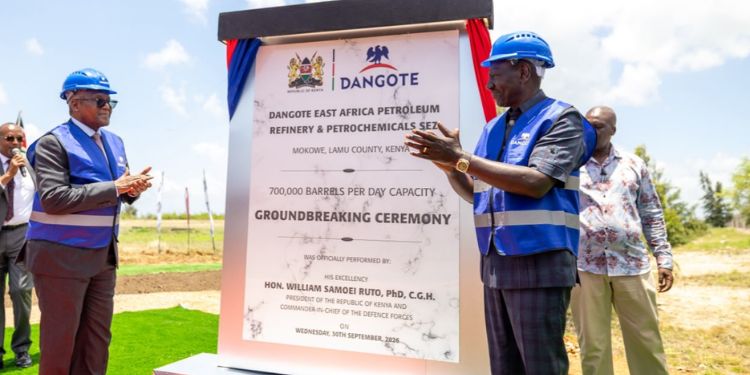
The proposed Lamu oil refinery associated with Nigerian billionaire Aliko Dangote has raised questions about the company’s shareholders and the terms of its planned investment in Kenya.
To find answers, Kenyans can examine official company registration records and request relevant documents from government offices.
Together, these sources can help establish who owns the company and clarify the proposed investment.
Search for the Lamu Oil Refinery Company Through BRS
First, establish the exact legal name of the company behind the Lamu oil refinery project.
Since a company may operate under a name different from the project’s public description, do not assume it is registered directly under Dangote’s name.
To begin the search, visit the Business Registration Service website at: https://brs.go.ke/companies-registry/ and access the relevant company search services through the BRS eCitizen portal.
You can then apply for an official company search, commonly known as a CR12, through the official procedure page: https://eprocedures.investkenya.go.ke/procedure
The document can show registered directors and shareholders.
However, if several companies participate in the Lamu oil refinery project, you may need to search for each relevant legal entity before establishing the ownership structure.
Establish Who Owns the Shares
After obtaining the company records, examine the shareholders’ names and their shareholdings, where the documents provide that information.
If another company appears on the shareholder list, trace its ownership through the relevant corporate records.
This additional step matters because a registered shareholder may be a company rather than the individual who ultimately owns or controls it.
Therefore, treat a CR12 as a starting point when investigating the Lamu oil refinery ownership structure, rather than conclusive proof of every ultimate beneficial owner.
Also Read: How to Register a Company on eCitizen Via BRS
Request the Refinery Agreement from the Government
Although company records can identify registered shareholders, they do not necessarily explain the terms agreed between investors and the Kenyan government.
For that reason, Kenyans can request relevant documents under Article 35 of the Constitution and the Access to Information Act, 2016.
Direct a written request to the relevant government ministry or public agency involved in the proposed Lamu oil refinery project.
Specifically, ask for a copy of the signed agreement, including its schedules, amendments and supplementary documents.
You can also request information about:
- The parties involved and their respective roles.
- The ownership structure and any government shareholding.
- Tax incentives and land arrangements.
- Public financial obligations or government guarantees.
- Relevant approvals and amendments to the agreement.
If the parties have not signed an agreement, ask the relevant office to confirm its status and provide accessible records concerning negotiations or proposed terms.
Meanwhile, keep a copy of your request for follow-up. Section 9 of the Access to Information Act generally requires public entities to process requests within 21 days, subject to applicable legal provisions.
Consult Official Statements and Parliamentary Records
In addition to company searches and formal information requests, official statements and parliamentary records can provide further information about the Lamu oil refinery proposal.
For instance, National Assembly Majority Leader Kimani Ichung’wah addressed questions about where people should obtain company shareholder information.
“William Ruto is not the registrar of businesses in this country. And you know where you ought to get the list of shareholders if you want them,” Ichung’wah said.
To examine related discussions, visit the National Assembly Hansard website: https://hansardna.parliament.go.ke/ and compare parliamentary statements with official company records.
Also Read: BRS Puts Kenyans on Notice Over Fake ‘Free’ Business Registration Portal
Compare the Records Before Drawing Conclusions
Finally, compare company search results with available beneficial ownership information, government correspondence and documents concerning the Lamu oil refinery agreement.
As you review the records, check that company names, registration numbers, shareholders and ownership percentages match.
If the documents identify parent companies, investigate their ownership structures as well.
Equally important, distinguish between a proposed investment and a completed transaction.
For example, a statement about a potential government stake does not prove that the government has acquired shares.
If a public office refuses to provide requested information or fails to respond, applicants can seek guidance from the Commission on Administrative Justice which oversees access-to-information matters.
Follow our WhatsApp channel for instant news updates

President William Ruto inspects Dangote oil refinery in Lekki, Lagos, Nigeria on September 25, 2026, accompanied by tycoon Aliko Dangote. PHOTO/@thecableng/X