
Ruto Unveils Plan to Milk Buffaloes to Boost Milk Supply in Kenya
Share

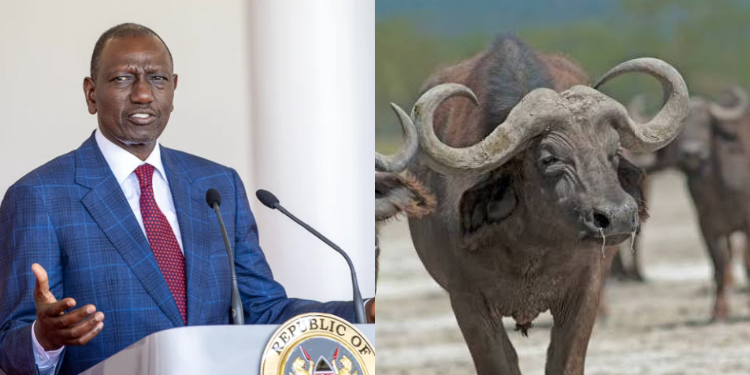
President William Ruto has proposed introducing buffalo farming and improving camel breeds as Kenya seeks to diversify milk production amid a shortage that has affected supplies in the country.
Speaking during the Agriculture and Food Security Summit at Jamhuri Park in Nairobi on Friday, October 9, Ruto said the country needed to explore alternative sources of milk rather than rely heavily on cows.
He said he had previously asked Principal Secretary for Livestock Jonathan Mueke to facilitate the introduction of improved camel breeds and buffaloes, arguing that both could help expand the country’s milk supply.
“I had told our PS, Jonathan Mueke, to help us bring in a good breed of camels and another breed of buffalo. I hear buffaloes also produce a lot of milk. We had agreed to start with a few and see whether we could milk buffaloes. If other people can milk them, why can’t we? What would be wrong with that?” Ruto said.
Ruto Wants Kenya to Diversify Milk Production
The President said Kenya should consider drawing milk from different livestock species to increase production and reduce reliance on conventional dairy farming.
He expressed disappointment with Mueke over the delay in bringing in buffaloes and improving camel breeds, saying the plans were intended to broaden the country’s milk supply.
“You had promised to import buffaloes and also bring in a good camel bull so that we could improve the breed. We need to diversify our sources of milk,” Ruto said.
Also Read: The Milk Squeeze: How Rising Prices Are Hitting Small Businesses
He added that the country should explore milk production from cows, camels, sheep, goats and buffaloes as part of efforts to strengthen supply.
Ruto’s remarks come as Kenya grapples with a milk shortage that has affected availability in the market.
Expanding production through alternative livestock could offer another avenue for addressing the supply gap, although the President did not outline a timeline for introducing the animals.
Ruto Highlights Rising Milk Prices and Farmers’ Earnings
The President also pointed to the increase in milk prices paid to farmers, saying the average price had risen from between Ksh 30 and Ksh 35 per litre in 2022 to about Ksh 50.
He said farmers in Meru were receiving Ksh 55 per litre, while he sold his own milk at Ksh 65.
However, Ruto warned dairy farmers against cooperatives that fail to pay them fairly, urging them to establish prices and payment terms before delivering their produce.
“Where you sell your milk is important. There are cooperatives that short-change farmers. We must be careful,” he said.
Also Read: Milk Shortage Exposes Traders to New Risk as Businessman Receives Soil Instead of Goods
He also called for changes in the management of the Kenya Cooperative Creameries (KCC), arguing that farmers should not have to wait two or three months to receive payment for their milk.
“We have said that KCC cannot continue paying farmers after two or three months. That is why we have proposed that the management of KCC be taken over by farmers,” Ruto said.
Follow our WhatsApp channel for instant news updates

Photo of Kenya Dairy Board Chairperson Genesio Mugo during the launch of Wakulima Sacco in Kikuyu on July 7
PHOTO/KDB