

Raila Rests: The Unhealthy State Of Affairs He Leaves Behind
Share

By Mwaura Muroki – Lawyer and Counseling Psychologist
George Clemenceau, a French Prime Minister during World War I, famously said, War is too important to be left to the generals.
The quest for democracy is a never-ending war that is too important to be entrusted to any one individual.
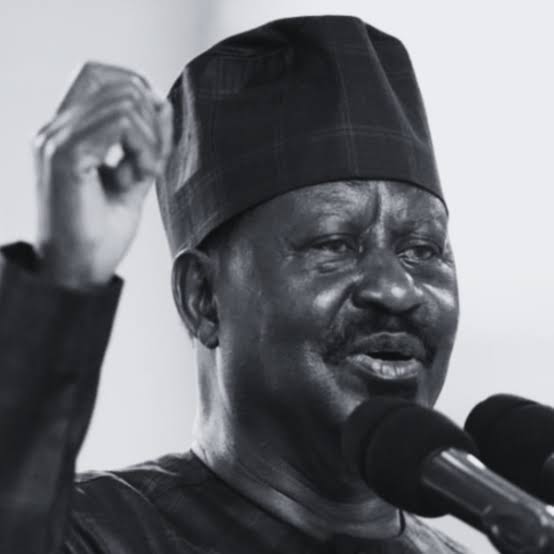
It is common knowledge that every mortal being shall die at some point, and Raila Odinga has rested.
For a man who for all his life hated oppression and injustice on himself and the people, he leaves the earth at a time when injustice and oppression are the order of the day, including in the broad-based government which he was a co-principal.
Now, this is not a chastisement of any sort of Mr. Odinga, whose immense contribution towards Kenya’s current democracy and constitutional dispensation is immeasurable.
It is simply an honest and true reflection of the current state of affairs before and following the death and interment of Kenya’s greatest statesman.
Raila fought all his life, even at the detriment of his own health, life, and well-being, and that of his family.
Health of the Nation
Raila leaves behind a country with poor health. The Social Health Authority (SHA), which is the country’s health insurance scheme, is not working.
The national union of private hospitals recently announced its members would not be accepting patients with the cover due to non-remittance by the authority.
And in what is perhaps the most tragic of fates, Odinga, in his final days, had sought treatment quietly, flying out of the country to India even as speculation spread over his health.
Separately, the health of the Kenya Kwanza administration is as precarious as it has ever been.
As news began spreading of Odinga’s demise in the early hours of Wednesday, October 15th, 2025, President William Ruto was busy signing into law several controversial amendment bills, among them the Cyber Crime Amendment Bill, the Land Amendment Bill, and others.
These laws are in direct contravention of fundamental human rights envisaged in the constitution, such as the freedom of expression and the right to own property, vital pillars of the Late Amolo Odinga’s core principles and beliefs.
Also Read: The “Baba Cult”:Why I Believe Raila’s Soul Rests in Divine Mercy and Eternal Peace
Further on, even in his own party, divisions had already emerged over the direction of the party following the now famous handshake between Odinga and Ruto, following countrywide demonstrations over a controversial finance bill.
The two factions were the young generals led by Secretary General Edwin Sifuna, flanked by Babu Owino, and the old guard comprising governors such as Gladys Wanga and CSs Opiyo Wandai.
These divisions were so pronounced that even after Baba’s death, they played out at his funeral.
Additionally, there is the health of the economy, which, since the takeover of the Kenya Kwanza administration, has been on the decline, with inflation, fiscal challenges being cited as the most significant factors contributed by the huge public debt burden.
This has resulted in the government raiding pay slips and the agitation for higher wages in strikes and go-slows.
Also, there have been closures of hundreds of companies and businesses, a clear indication of a declining economic state of affairs, with joblessness being the norm.
Health of the region
Just this year, Raila Odinga sought the continent’s biggest seat, the Chairperson of the African Union.
This was a testament to the ever-growing vision of Kenya’s statesmen of a united Africa.
His seven-point agenda was: the economic transformation, inclusive growth and sustainable development; enhanced Intra-African trade and Continental Integration; Financial Independence and Global Influence; Peace, Security and Good governance; Gender Equity, Equality and Youth Empowerment; Agricultural Transformation and Food Security and; Climate Action and Climate Justice.
The lack of health has been witnessed in the East African region as well as on the continent.
Our East African neighbors, Uganda and Tanzania, are on the verge of elections, and already the incumbent leaders have imprisoned the opposition figures, a sign of the ever-increasing boldness in authoritarianism.
Burundi and Rwanda are no different, with all their opposing figures either in hiding or in exile.
Sudan and its southern neighbor, South Sudan, are in a perpetual state of war, with warring generals of both countries fighting for control of the country a state which has led to scores of deaths.
Down south, Burundi and the DRC Congo are in conflict as well.
Also Read: Opinion: A Just Transition Is a Talent Transition
In the same breath, several countries have undergone coups, with the latest being the Island of Madagascar, after Gen Z protesters took to the streets to protest the lack of government to provide basic amenities like electricity and water.
This is in the backdrop of the ongoing agitation globally for better governance, particularly by the youth.
So, as the curtains close on a man whose name and fame were larger than any politician in recent history, the emptiness of his absence will long be felt not just locally but also regionally and beyond, and it is in such times that a call for a renewed push for democracy and good governance, devoid of any patronage or partisanship.
And as the African saying goes, you never miss the water till the well runs dry.
Truly, the loss of Raila Odinga shall be felt for decades to come. And until a leader of his intellect and vision arises, only then shall the vacancy left be somewhat filled.
Follow our WhatsApp Channel and WhatsApp Community for instant news updates
President William Ruto and former Prime Minister Raila Odinga during the signing of a political pact at KICC on March 7, 2025. PHOTO/PCS.