
CBK Governor Explains Why Benchmark Rate Remains at 8.75%
Share
The Central Bank of Kenya (CBK) has explained why it retained the Central Bank Rate (CBR) at 8.75% despite a rise in inflation in September 2026.
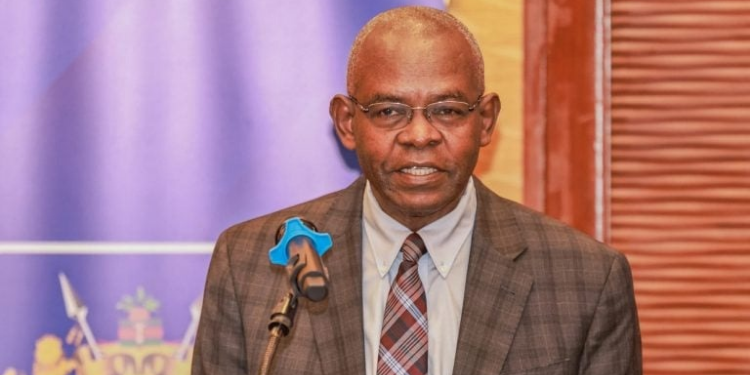
CBK Governor Kamau Thugge explained the decision on Thursday, October 8, a day after the Monetary Policy Committee (MPC) met and retained the benchmark rate.
The MPC said the decision was aimed at keeping inflation expectations anchored within the target range while maintaining stability in the exchange rate.
CBK Keeps Rate at 8.75 %
During its October 7 meeting, the MPC retained the CBR at 8.75 percent. The committee said the current monetary policy stance remained appropriate after considering developments in the domestic and global economies.
“Having considered these developments, the Committee concluded that the current monetary policy stance, with the Central Bank Rate unchanged at 8.75%, remains appropriate to ensure that inflation expectations remain anchored within the target range, and the exchange rate remains stable,” the MPC said.
The decision came despite inflation increasing in September, with the CBK saying it expects inflation to remain within the target range in the near term.
Inflation Rose to 6.8%
Kenya’s overall inflation rose to 6.8% in September from 6.6 percent in August. The rate, however, remained within the CBK’s target range of 2.5 to 7.5 %.
The increase was mainly reflected in higher prices of processed food products, with milk, wheat products and edible oils among the items that pushed core inflation higher. Core inflation rose from 3.4% in August to 4.0% in September.
“Core inflation increased to 4.0% in September from 3.4% in August, mainly driven by higher prices of some processed foods items, particularly milk, wheat products, and edible oils,” CBK said.
Milk Prices Add to Food Pressure
Higher milk prices were therefore part of a wider increase in processed food prices that pushed core inflation higher. Food prices have faced pressure following an extended dry period that affected crop and livestock production, including milk output.
The increase in food prices contributed to the wider rise in the cost of living recorded in September. At the same time, not all food prices moved in the same direction.
Also Read:CBK Makes Key Interest Rate Decision as Inflation Rises to 6.8%
Vegetable and Energy Prices Ease
Non-core inflation declined from 14.7% in August to 14.0% in September. The CBK attributed the decline mainly to lower vegetable price inflation and lower energy price inflation. This provided some relief against the upward pressure coming from processed food prices.
Global Oil Prices Remain a Risk
The CBK also remains concerned about elevated global energy prices following disruptions to oil supplies linked to the conflict in the Middle East.
The central bank said the developments could create additional inflationary pressure if higher energy costs are passed on through transport, production and other goods and services.
“Global inflation is expected to increase in 2026, mainly on account of higher energy and food prices,” the MPC said.
Global headline inflation is projected at 4.7% in 2026, up from the previous projection of 4.4%. The CBK said it would continue monitoring developments in global oil prices and their possible second-round effects on domestic inflation.
Also Read:Good News to Kenyans as CBK Licenses 29 More Digital Loan Apps
Government Measures Could Contain Inflation
The MPC expects Kenya’s inflation to remain within the target range in the near term. The outlook will be supported by monetary policy measures, government interventions and a stable exchange rate.
The interventions include subsidies and the temporary reduction of VAT on fuel. The CBK said these measures, together with the stable exchange rate, should help contain inflationary pressure.
Food Prices Could Ease
The outlook for food prices could also improve in the coming months. The CBK’s market perceptions survey indicated expectations of above-average rainfall between October and December 2026.
The expected rainfall could improve agricultural production and food supply, helping ease pressure on food prices. This could provide further support to the inflation outlook if food supplies improve as expected.
Lending to Private Sector Continues to Grow
The CBK also noted that average bank lending rates have declined, while private sector credit growth has continued to improve. Private sector credit growth increased to 10.6% in September from 10.3% in August.
The improvement was recorded across key sectors, including trade, building and construction, agriculture, finance and insurance, and consumer durables.
The CBK said the improvement reflected stronger demand for credit as previous monetary policy easing continued to feed through the economy.
CBK Raises Economic Growth Forecast
The central bank has also raised its economic growth forecast for 2026 to 5.0% from the previous projection of 4.9%. The improved outlook was supported by stronger activity in the industry and services sectors.
The CBK is therefore balancing the recent rise in inflation against an improving economic outlook and stronger credit growth.
MPC to Meet Again in December
MPC said it would continue monitoring developments in global oil prices, inflation and other risks affecting the domestic and global economies.
The committee said it remains ready to take further action if necessary in line with its mandate.The MPC will hold its next meeting in December 2026.
Follow our WhatsApp channel for more updates

Photo of Central Bank of Kenya in Nairobi
PHOTO/File