EPRA Announces New Fuel Prices as Global Oil Surges Past $100
Share
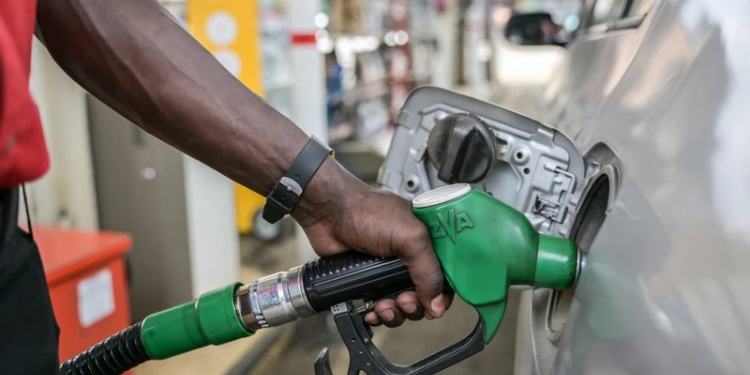
The Energy and Petroleum Regulatory Authority (EPRA) has announced the new fuel prices that will take effect from September 15 to October 14 2026.
The fuel prices will remain unchanged for the period running from September 15 to October 14, 2026.
In a press release, EPRA said the maximum retail prices for Super Petrol, Diesel and Kerosene would remain at their current levels for the new pricing cycle.
The decision comes despite significant changes in the landed cost of imported petroleum products.
The average landed cost of Super Petrol fell 7.87% from $948.92 per cubic metre in July to $874.26 in August.
However, the landed cost of Diesel rose 11.86% from $855.59 to $957.05 per cubic metre, while Kerosene increased 9.71% from $915.01 to $1,003.87 over the same period.
EPRA said the pump prices are inclusive of value-added tax and were calculated in accordance with the Petroleum Act 2019 and applicable tax laws.
The unchanged prices mean motorists and households will continue paying the same maximum retail rates at fuel stations until October 14, when the next monthly review is due.
In Nairobi, motorists will continue to pay a maximum of Ksh214.03 per litre for Super Petrol, Ksh217.86 for Diesel and Ksh191.38 for Kerosene. The prices will remain in force from September 15 to October 14, 2026, with rates varying across different parts of the country.
EPRA Fuel’s Previous Prices
In the previous pricing cycle, which ran from August 15 to September 14,2026, EPRA reduced the price of diesel by Ksh 5 per litre, while the prices of Super Petrol and Kerosene remained unchanged.
In Nairobi, a litre of diesel retailed at Ksh 217.86, while Super Petrol sold at Ksh 214.03 per litre and Kerosene at Ksh 191.38 per litre.
EPRA attributed the changes to movements in the average landed cost of imported petroleum products.
The regulator said Super Petrol and Kerosene prices were maintained through additional government fuel stabilisation support amounting to Ksh 938 million.
“The prices are inclusive of Value Added Tax (VAT), in line with the VAT Act, 2013, as read together with Legal Notice No. 128 of 14th July 2026, the Finance Act, 2023, the Tax Laws (Amendment) Act, 2024, and the revised excise duty rates adjusted for inflation under Legal Notice No. 194 of 2020,” EPRA said.
Global Oil Prices Rise Above $100
The latest review comes as international oil prices have risen sharply. Brent crude settled at $101.21 per barrel on September 9, its highest close since May, before trading at around $101.10 on September 10.
Brent, the international benchmark used to price much of the world’s crude, gained 3.4% on September 9, rising by $3.29 to settle at $101.21. It had earlier reached $101.58 per barrel.
The benchmark has gained nearly 30% from lows recorded in early August.
Also Read:CMA Exposes 15 Investment Firms Linked to Allegedly Scamming Kenyans [FULL LIST]
Strait of Hormuz Disruptions
The rise in global oil prices has been linked to disruptions to oil shipments through the Strait of Hormuz amid the escalating US-Iran conflict.
The disruptions have raised concerns over the supply of crude oil and refined petroleum products. Before the conflict disrupted traffic, the Strait of Hormuz carried roughly one-fifth of global oil and gas supplies.
Oil flows through the waterway have fallen sharply, while attacks on shipping and energy infrastructure have increased concerns that the disruptions could continue.
Traders have also been assessing the possibility of further supply disruptions from the Middle East as Brent remains above the $100 mark.
The US Energy Information Administration has raised its oil-price forecasts as global inventories decline.
Also Read:Fuel Price Hike Looms as Global Oil Hits Ksh 12,943 per Barrel Ahead of EPRA Review
Impact on Kenya’s Fuel Prices
The rise in international oil prices comes at a critical time for Kenya, with EPRA’s latest monthly fuel review taking effect from September 15.
The authority’s monthly reviews consider movements in the landed cost of imported petroleum products among other factors when determining the maximum retail prices.
In the previous cycle, the average landed cost of imported Super Petrol increased by 6.99%, from US$836.92 per cubic metre in June 2026 to US$894.92 per cubic metre in July 2026.
Meanwhile, the landed cost of Diesel fell by 13.08%, from US$984.37 per cubic metre to US$855.59 per cubic metre, while Kerosene declined by 11.01%, from US$1,028.17 per cubic metre to US$915.01 per cubic metre.
Follow our WhatsApp channel for instant news updates

Photo of Cabinet Secretaryfor Energy and Petroleum James Opiyo Wandayi. PHOTO/X