FACTCHECK: Can Safaricom Home Fibre Customers Move With Their Router?
Share
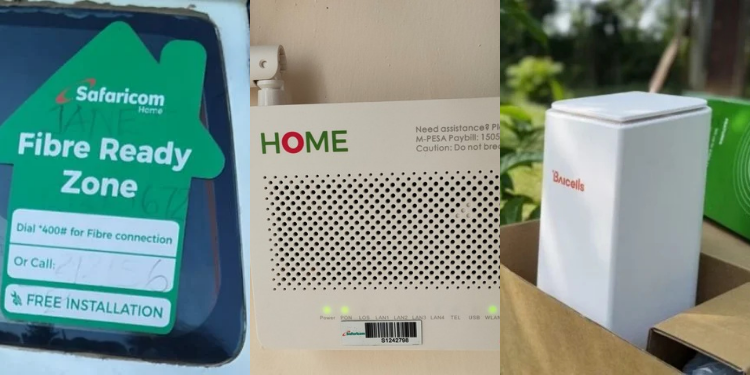
A social media post claimed that Safaricom Home Fibre customers could not unplug their routers, move them to another house and continue using an already-paid subscription.
The post argued that Home Fibre was tied to the house rather than the customer and suggested that travelling with the router could make the remaining period of a paid package useless.
A review of Safaricom’s Home Fibre Terms and Conditions, however, showed that the claim was misleading.
The terms provided for the relocation of Home Fibre when a customer moved to another fibre-ready area.
Safaricom Home Fibre Could Be Relocated
The terms specifically addressed customers who moved to new residences.Under the section on accessing and using Home Fibre, the terms stated,
“There will be no Installation/connection fees charged. We will also be available to relocate your router while relocating to a fibre ready area at no charge.”
The provision showed that moving to another house did not automatically mean that a customer had to abandon their Home Fibre service.
The terms added that the relocation provision was “subject to change based on router models and technology.”
Therefore, a customer moving to another residence can request relocation if the new area has the required fibre infrastructure.
The New Area Must Be Fibre-Ready
The relocation is not automatic for every location. Safaricom’s terms state that customers must live in a fibre-ready area or zone to access its Fibre to the Home service.
The company describes its Home Fibre service as internet access provided within the customer’s premises or house, which it refers to as the Customer Site.
They state,“The Internet will be available to the customer within his/her premises/house (Customer Site).”
The terms also state that customers can check whether their area is fibre-ready through Safaricom’s website, dial *400#, visit a Safaricom Shop, contact the company’s care lines or speak to a Safaricom Home sales representative.
Therefore, moving to another house does not by itself guarantee that the service can be connected there. The new location must have the required Safaricom fibre infrastructure.
Customers Cannot Simply Move the Router Anywhere
The Facebook post made it appear as though a customer could simply unplug the router, carry it to another house and continue using the service without involving Safaricom.
Its terms do not support that interpretation. Safaricom restricts Home Fibre to residential use at a specific location. Under the restrictions, customers can access and use the service:
“in a single residential unit”
and
“for private domestic use”
as well as
“at your physical address.”
This means customers cannot treat Home Fibre like mobile data and freely move the router between different locations.
However, the restriction does not permanently tie the service to one building. The relocation provision allows Safaricom to relocate the router when a customer moves to a fibre-ready area.
What Happens When a Customer Moves?
The terms allow Safaricom to relocate the router instead of requiring the customer to abandon the existing Home Fibre service.
The relevant provision states,“We will also be available to relocate your router while relocating to a fibre ready area at no charge.”
This is important because the social media post suggested that a customer who moved with an active subscription would simply lose the benefit of the remaining paid period.
The terms do not state that relocation automatically cancels an active subscription or makes the remaining service period useless.
Instead, they provide for relocation when the customer moves to a fibre-ready area, subject to the applicable router model and technology.
A Temporary Trip Is Different From Relocating
The Facebook post used the example of a customer travelling upcountry for two weeks and taking the router along.
The terms do not give customers a general right to temporarily carry Home Fibre to any location and use it there. The service remains restricted to a single residential unit and the customer’s physical address.
However, the terms also do not state that a customer automatically loses the remaining period of a paid subscription simply because they travel.
The relocation clause specifically deals with relocating to a fibre-ready area. Customers therefore should not confuse permanent relocation with temporarily moving the router during a trip.
Also Read:CA Changes How Safaricom, Airtel Short Codes and Numbers Will Be Allocated
Customers Pay for the Service in Advance
Customers pay for Home Fibre packages every 30 days in advance.
The terms provide that if a customer does not make the required payment on time, Safaricom suspends the service and reactivates it once the monthly payment is made.
The terms also explain what happens after termination or cancellation. In such cases,
“unused allocations of data/voice/other services are NOT REFUNDABLE.”
That provision concerns termination or cancellation. It does not state that an active Home Fibre subscription becomes worthless simply because a customer relocates.
The Router Remains Safaricom Property
The router does not belong to the customer. Safaricom classifies the router, fibre cables and faceplate as Customer Premise Equipment and provides the equipment to ensure compatibility with its network and service.
The terms state that the equipment,“remains Safaricom property during the agreement.”
Customers must take proper care of the equipment and cannot interfere with, alter or modify it or its software.
The terms also require customers to cooperate when Safaricom needs to remove or recover the equipment
Follow our WhatsApp channel for instant news updates

Photo of Safaricom CEO Peter Ndegwa speaking at a past function. PHOTO/Safaricom X