
IEBC Electoral Process: What Happens After Kenyans Vote for President?
Share
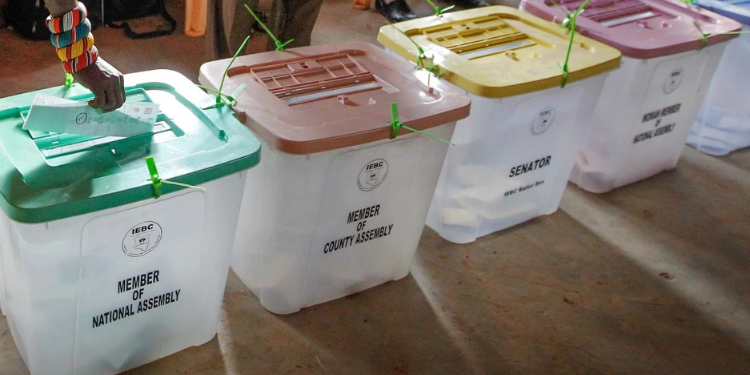
The presidential election in Kenya does not end when ballots are counted at individual polling stations. The results then move through a multi-stage process involving constituency tallying, transmission, verification, and a final declaration by the IEBC chairperson.
However, this process has come under renewed scrutiny following calls by the People’s Coalition on Electoral Reforms to abolish Bomas of Kenya as the national tallying centre.
Speaking during an interview on Fixing the Nation on Wednesday, September 16, 202, Senior Counsel Nelson Havi argued that the Constitution does not establish a national tallying centre and questioned why presidential results should undergo another physical tallying process after being aggregated at constituency level.
Therefore, Havi’s remarks have renewed debate over what happens to presidential votes after Kenyans cast their ballots, how the results move through the electoral system, and who has the constitutional authority to declare the winner.
IEBC: How Presidential Results Are Processed
According to the IEBC, the presidential results follow a defined process that begins at the polling station.
After voting closes, the presiding officer counts the presidential votes cast at the polling station, and the results are recorded in Form 34A, which is signed by the presiding officer and countersigned by agents of candidates or political parties.
The results are then electronically transmitted to the relevant electoral systems, together with an image of the completed Form 34A.
This is in accordance with Article 86(b) of the Constitution that requires votes cast at polling stations to be counted, tabulated and the results announced promptly by the presiding officer.
The constituency returning officer receives the Forms 34A from polling stations within the constituency and collates the figures.
Also Read: Why IEBC Is Opening a Fresh Voter Registration Exercise in Ol-Kalou
According to the IEBC, these polling-station results are aggregated into Form 34B, which records the presidential results for the constituency. The constituency returning officer then announces the presidential result for that constituency and submits it to the national level.
This process is also anchored in Article 86(c) of the Constitution, which requires results from polling stations to be openly and accurately collated and promptly announced by the returning officer.
Are constituency presidential results final?
According to a case ‘Maina Kiai case, the High Court held that once a constituency returning officer declares the presidential results for that constituency, those results are final in respect of that constituency and can only be challenged through an election petition.
The court also rejected the idea that the IEBC could treat constituency results as provisional figures that could subsequently be confirmed, altered or varied at the national tallying centre.
It held that what remained at the national level was for the Commission to collate and tally the results from the constituency returning officers and determine the winner of the presidential election.
Furthermore, the electoral body stated that the results declared by constituency returning officers are final and that the national presidential result is the aggregate of the results announced by the 290 constituency returning officers.
Therefore, the national tallying process involves aggregating the constituency results rather than treating those declared results as provisional figures that can simply be altered.
From Form 34B to Form 34C: How Presidential Results Reach the National Level
Once the constituency returning officers have completed the presidential tallying process, their results are transmitted to the national level.
According to the IEBC, the results contained in Form 34B are collated at the national tallying centre and used to complete Form 34C, which contains the national presidential tally.
At the national stage, the IEBC tallies and verifies the presidential results received from the constituencies before the final result is declared.
Also Read: IEBC Announces Exact Date Kenyans Will Vote in 2027
This responsibility is provided for under Article 138(3)(c) of the Constitution, which requires the IEBC, after the counting of votes at polling stations, to tally and verify the count and declare the result.
For the declaration of the presidential candidate, the Constitution separately identifies the official responsible for declaring the presidential election result.
Under Article 138(10), within seven days after the presidential election, the chairperson of the IEBC shall declare the result of the election and notify the Chief Justice and the incumbent President.
This means that while the Commission has the constitutional responsibility to tally and verify the presidential results, the formal declaration is made by the IEBC chairperson.
Therefore, Havi’s argument raises a question about whether the national tallying process necessarily requires a physical venue such as Bomas, particularly after results have already been declared at constituency level.
Follow our WhatsApp channel for instant news updates.

IEBC chairman Erastus Ethekon
PHOTO/IEBC