

Is Senegal Power Structure Quietly Shifting After Sonko’s Exit?
Share


The President of the National Assembly of Senegal, El Malick Ndiaye, has officially tendered his resignation, stepping down from one of the country’s highest legislative offices.
In a detailed statement issued on May 24, Ndiaye said his decision was guided by “deep reflection, responsibility, and a sense of duty to the state,” adding that it was a personal choice made in the “supreme interest of the Nation.”
He emphasized that during his tenure, he worked to strengthen parliamentary oversight, transparency, and modernization of the institution while enhancing the visibility of Senegal’s parliament locally and internationally.
“I give thanks to God for the immense honor I was granted to serve Senegal,” he stated, while thanking MPs from both the ruling majority and opposition for their cooperation.
Ndiaye extended appreciation to parliamentary staff, his cabinet team, and members of the public for what he described as trust and collaboration throughout his leadership.
He also expressed special gratitude to supporters and members of the PASTEF party, on whose list he was elected, saying their commitment to reform ideals remained a constant source of strength.
“I remain deeply convinced that stability, republican dialogue, and national cohesion must remain our compass,” he said.
Senegal Political Tension Deepens after Sonko’s Dismissal
His resignation comes just a day after major political changes in Senegal, following the dismissal of Prime Minister Ousmane Sonko by President Bassirou Diomaye Faye.
Sonko was removed from office after months of growing disagreements with President Faye over economic policy, governance decisions, and state spending.
The entire government was also dissolved, with ministers temporarily retained to manage day-to-day operations until a new cabinet is formed.
Also Read: DRC Football Team Isolated Over Ebola Fears Ahead of World Cup in the U.S
The political fallout has intensified public debate across the country, especially among supporters of the ruling coalition and opposition voices.
Shortly before his dismissal, Sonko had openly criticized President Faye in parliament, warning that certain decisions around political funds were “a mistake” and needed reconsideration.
After his removal, he reacted on social media, saying he would now “sleep with a light heart” at his home in Keur Gorgui.
Also Read: Sonko Fired With Immediate Effect Before End of Term
Rising Uncertainty in Governance
The developments come at a time when Senegal is facing economic pressure, including rising debt concerns and ongoing negotiations with the International Monetary Fund (IMF).
International Monetary Fund talks remain central to the country’s economic recovery plans.
The IMF froze a $1.8bn lending programme following the discovery of misreported debt hidden by the previous government, pushing the country’s end-2024 debt level to 132 % of its economic output.
The move by speaker El Malick Ndiaye clears the way for sacked Ousmane Sonko to run for the post of head of parliament, where his Pastef party holds a strong majority, in a challenge to President Bassirou Diomaye Faye.
Deputies have been summoned to a full session of the assembly on Tuesday morning, May 26, 2026, to reinstate Sonko as a member of parliament and vote for a new speaker
Follow our WhatsApp channel for instant news updates
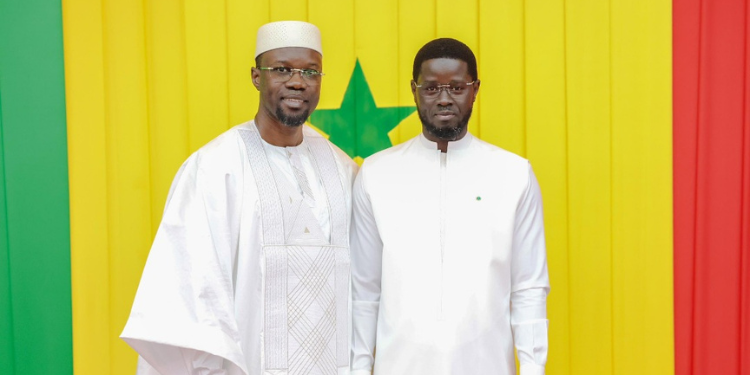
Ousmane Sonko, Prime Minister of Senegal, with Bassirou Diomaye Faye, President of Senegal, during a past event in Senegal. PHOTO/Presidency of Senegal.