Kenya Set to Receive Ksh 98 Billion World Bank Funding Ahead of Fiscal Year-End
Share
Kenya will get approximately Ksh 98 billion ($750 million) as financing from the World Bank through the Second Kenya Fiscal Sustainability and Resilience Growth Development Policy Operation (DPO7).
This amount will come in handy at such a time when only four days are left before the end of the 2025/26 financial year.
According to the project documents prepared by the World Bank, Project P508021 will receive Board approval on June 26, 2026, which falls only four days before the end of the government’s financial year.
The financing will consist of $397.5 million( approximately Ksh 51 billion) as credit, $12.5 million( approximately Ksh 1.6 billion) as a grant, and $340 million( approximately Ksh 44 billion) as an IBRD loan, making a total of $750 million.
This money will follow the amendment of the National Treasury’s fiscal framework, where the World Bank financing increased from Ksh 3.25 billion to approximately Ksh 101.4 billion.
If the funds are approved and disbursed immediately, they will definitely appear in the government’s account before the closing of the government’s fiscal year.
Budget Support Comes at Crucial Time
The government continues to address its fiscal challenges by reducing borrowing costs and narrowing the budget deficit despite high levels of public debt.
Unlike other types of loans, which are usually tied to specific infrastructure or sector projects, Development Policy Operations are disbursed into the government’s Consolidated Fund after the implementation of reforms agreed upon by the lender and the borrower.
The World Bank’s Fiscal Sustainability and Resilient Growth programme supports improvements in public finance management and transparency, promotes competition in the market, advances labour market reforms, and strengthens climate resilience.
The programme aims to improve efficiency, transparency, and equity in public finance, develop competitive and inclusive product and labour markets, and enhance climate action.
The National Treasury will include these funds in the budget financing requirements outlined in the 2026/27 Budget recently tabled in Parliament.
Also Read: Kenya Budget 2026/27: Expenditure, Revenue, Deficit, Borrowing, and Debt Explained
A Project Under a Larger World Bank Financing Scheme
The upcoming DPO7 is part of a string of World Bank budget support operations made to Kenya in recent years.
In May 2019, the World Bank approved a financing amount of $750 million IDA for reforms in the areas of agriculture, housing, industry, digitization, and fiscal reform.
In 2021, another financing of $750 million in the form of Development Policy Operation was approved to help Kenya recover from the impact of the COVID-19 pandemic and improve procurement and public expenditure management processes.
In March 2022, the World Bank approved another financing of $750 million that seeks to strengthen fiscal sustainability, improve debt management, and implement electricity sector reforms.
However, in May 2024, the World Bank approved a larger amount of $1.2 billion ( approximately Ksh 155 billion) financing for the Kenya Fiscal Sustainability and Resilient Growth Development Policy Operation, saying that this is the first in a series of three operations.
Loan Terms and Repayment Outlook
Project documents indicate that the financing package combines concessional IDA resources with IBRD financing.
While detailed final repayment schedules for DPO7 have not yet been published, IDA credits typically carry long maturities and highly concessional terms compared with commercial borrowing.
Previous World Bank Development Policy Operations extended to Kenya carried annual interest and service costs of roughly 3% to 3.1%, significantly below rates available through international commercial markets.
Historically, IDA financing often includes repayment periods extending up to 30 to 40 years with grace periods before principal repayments begin, while IBRD financing generally carries shorter maturities and market-based but still favourable rates relative to commercial debt.
Final terms for the latest operation are expected to be disclosed following Board approval.
Repayment will ultimately be met from future government revenues, including ordinary tax collections and other Treasury resources, as part of Kenya’s broader debt management strategy.
Also Read: World Bank Delays Ksh 97 Billion Kenya Loan
Effect on Reserves and Fiscal Status
The expected funds should strengthen Kenya’s external position by boosting foreign exchange reserves, among other benefits.
The World Bank has noted improvements in the country’s macroeconomic performance, including a stable exchange rate, stronger reserves, and lower inflation.
However, the World Bank has warned that Kenya still faces a high risk of debt distress due to the high cost of servicing its debts, which consumes a significant share of the government’s budget.
According to the World Bank, the government uses about one-third of the revenue it collects from taxes to meet interest payment obligations.
Follow our WhatsApp channel for instant news updates
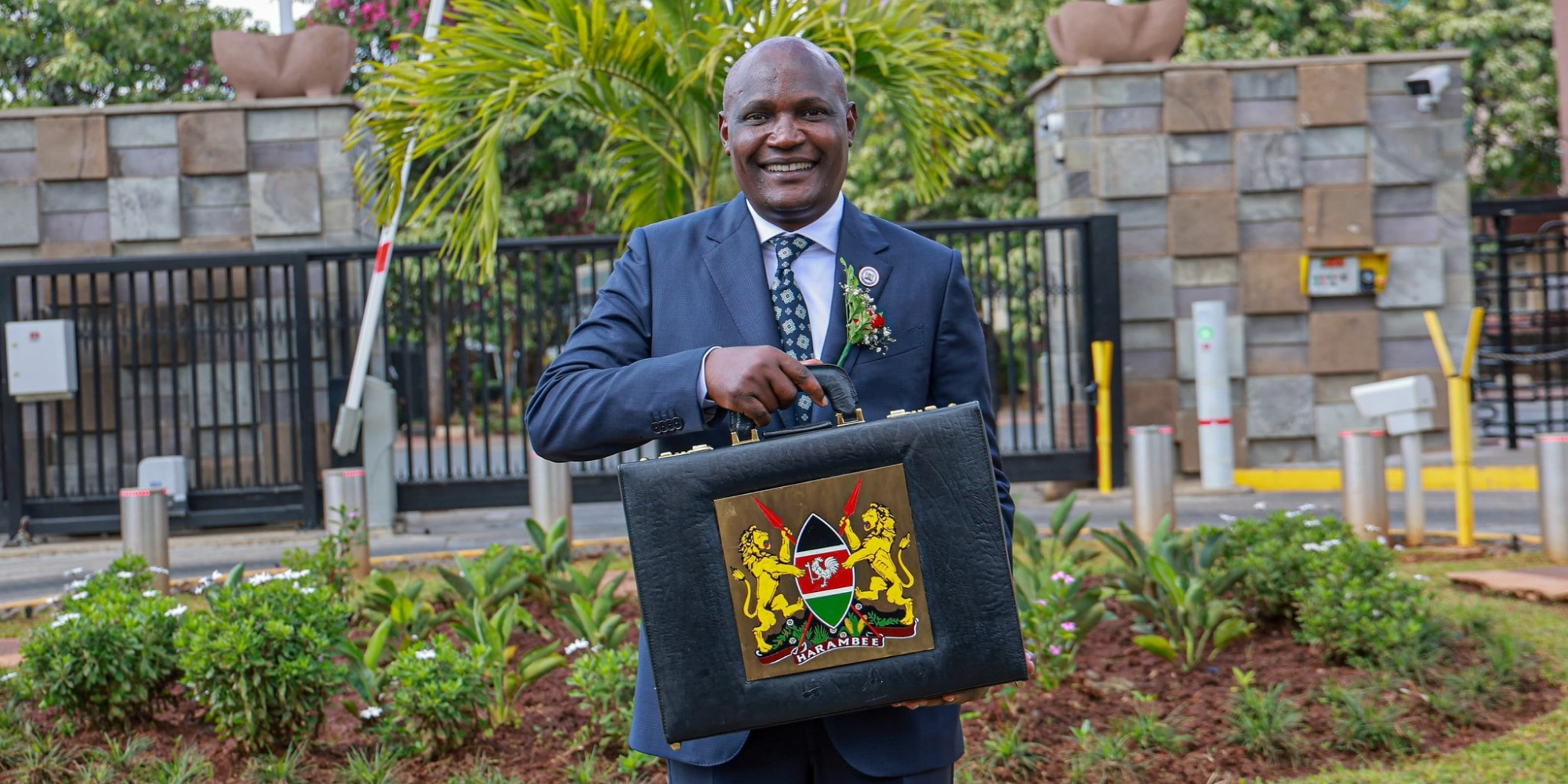
Cabinet Secretary for Treasury and Economic Planning John Mbadi during a 2025/26 budget reading at Treasury House in Nairobi. PHOTO/ PoK