Mbadi Defends Ksh 3 Billion Mombasa Sugar Tax Waivers Amid Parliamentary Probe
Share

Treasury Cabinet Secretary John Mbadi has defended the government’s decision to grant Mombasa Sugar Refinery Limited tax exemptions, insisting the waivers were issued legally under the public interest provisions of the Miscellaneous Fees and Levies Act.
Appearing before the National Assembly Departmental Committee on Trade, Industry and Cooperatives, Mbadi said the exemptions covered only the Import Declaration Fee (IDF) and the Railway Development Levy (RDL), arguing that the law empowers the National Treasury to grant such waivers where they serve the public interest or promote investments worth at least Ksh 5 billion.
His explanation came as Mombasa Sugar Refinery Limited remains at the centre of a parliamentary investigation into the importation of raw sugar, the approval process used to clear the consignment, and tax exemptions valued at nearly Ksh 3 billion.
The inquiry has also placed the Kenya Revenue Authority (KRA) under scrutiny over the transaction.
Mbadi Defends Mombasa Sugar Exemptions
Mbadi maintained that the exemptions were neither arbitrary nor influenced solely by the company’s application, saying they followed recommendations from key government ministries tasked with agriculture and trade.
“The exemption from import declaration fee and railway development levy was granted pursuant to paragraph Roman 26 of Part A and paragraph 10 of Part B of the Second Schedule to the Miscellaneous Fees and Levies Act, respectively. The provisions empower the Cabinet Secretary to exempt goods where the exemption is considered to be in the public interest or is intended to promote an investment whose value is not less than Ksh 5 billion,” Mbadi told the committee.
The Treasury CS said Mombasa Sugar Refinery Limited qualified under the public interest criterion after the National Treasury considered the firm’s application alongside recommendations from the Ministry of Agriculture and Livestock Development and the Ministry of Investments, Trade and Industry.
Also Read:Why Your Favorite Products Could Soon Cost More as Manufacturers Protest New Sugar Tax
He said the government also evaluated the anticipated economic benefits of supporting domestic refining of industrial sugar before approving the exemptions.
“The decision took into account the application by Mombasa Sugar Refinery Limited and, further, the recommendations of the Ministry of Agriculture and Livestock Development and the Ministry of Investments, Trade and Industry, and the anticipated benefits of supporting domestic refining of industrial sugar,” he said.
Mbadi added that the recommendations from the two ministries formed a critical part of the approval process.
“So it is not just the request for Mombasa Sugar Refinery Limited that engineered the Cabinet Secretary and National Treasury to approve exemption, but also because there was strong recommendation from the State departments, that is Ministry of Agriculture and Livestock, and also Investment, Trade and Industry. And that is the practice,” Mbadi added.
Parliament Questions Revenue Loss
The parliamentary probe has focused on why Mombasa Sugar Refinery Limited was reportedly exempted from paying Value Added Tax (VAT), excise duty, the Import Declaration Fee, the Railway Development Levy, the Sugar Development Levy and the Merchant Shipping Levy.
Lawmakers have questioned how the exemptions resulted in an estimated Ksh 2.98 billion in foregone government revenue, prompting demands for greater accountability from KRA and other state agencies involved in clearing the consignment.
Appearing before the same committee, KRA maintained that the importer complied with all customs and regulatory requirements before the shipment was released.
The tax authority told legislators that Mombasa Sugar Refinery Limited paid approximately Ksh 500 million in import duty before the consignment was cleared.
Also Read:How to Book a Container Inspection at Mombasa Port: A Step-by-Step Guide
Missing Documents Raise Fresh Questions
The inquiry, however, took a new turn after KRA officials failed to produce documents identifying the manufacturer of the imported sugar.
Members of Parliament said the documents presented lacked crucial traceability information, including the manufacturing and expiry dates of the imported sugar, making it difficult for the committee to independently establish the product’s origin and movement through the supply chain.
Committee Chairperson Bernard Shinali said the circumstances surrounding the clearance of the consignment and the approval of the tax waivers had raised serious concerns that required further scrutiny.
Meanwhile, Mbadi insisted that the approval granted by the National Treasury was narrowly defined and came with strict conditions.
“The principal considerations included domestic value addition, utilization of installed refining capacity, provision of a local source of industrial sugar, employment and skills development, and improved competitiveness of locally manufactured industrial sugar. The approval was limited to import declaration fee and railway development levy, and was subject to the condition that the raw sugar be refined into sugar for industrial use,” Mbadi said.
The Treasury Cabinet Secretary warned that the exemptions were conditional and could be revoked if the imported sugar was diverted from its approved purpose.
“If the approved end use was not observed, the exempted levies together with applicable penalties and interest would become due and payable to the Commissioner,” Mbadi told lawmakers.
Follow our WhatsApp channel for instant news updates
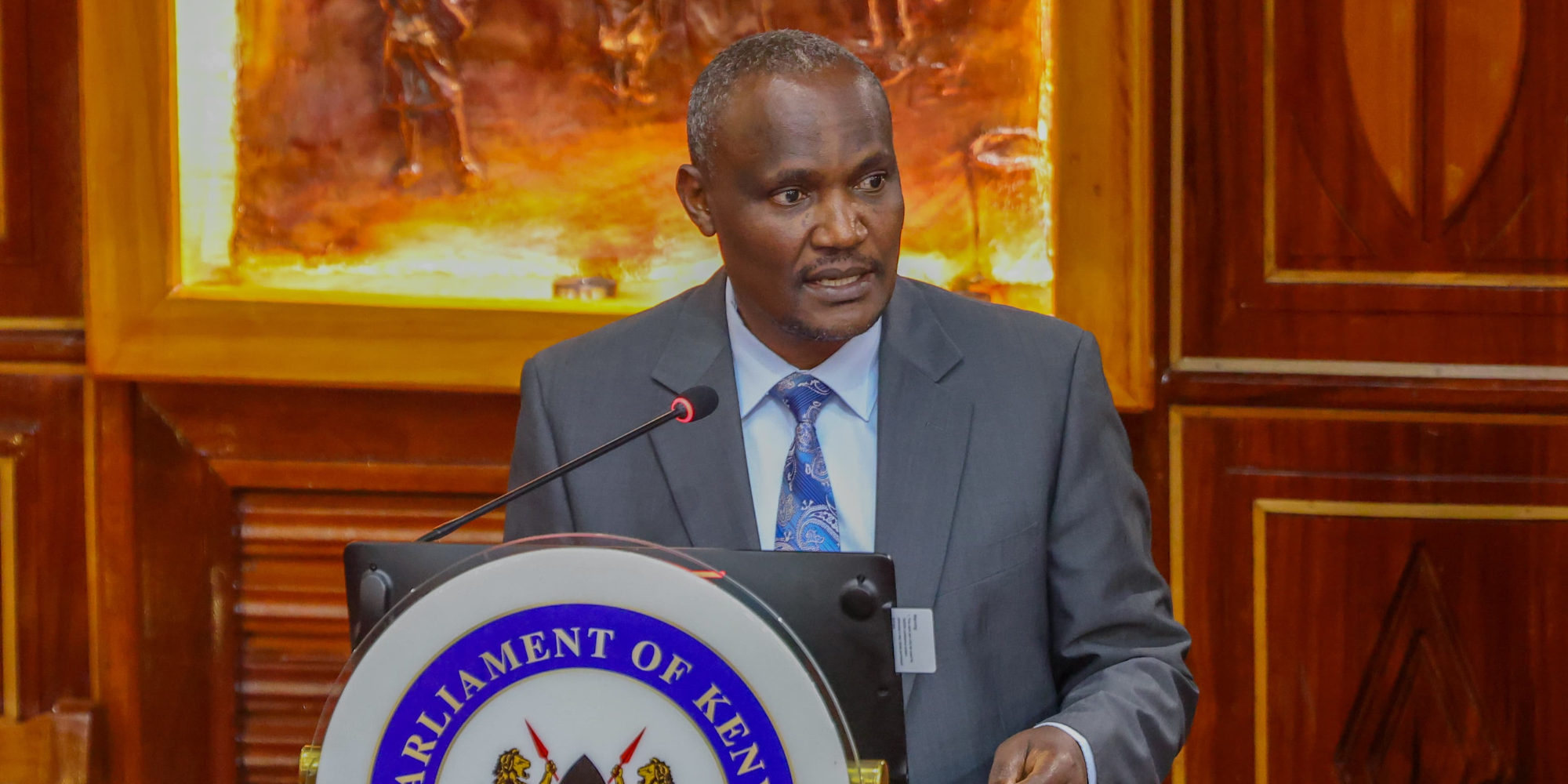
Treasury CS Mbadi during the presentation of the FY 20227 Budget Statement in Parliament on June 11
PHOTO/TCS