
Milk Prices Set to Rise as COFEK Warns of Worsening Supply Crisis
Share
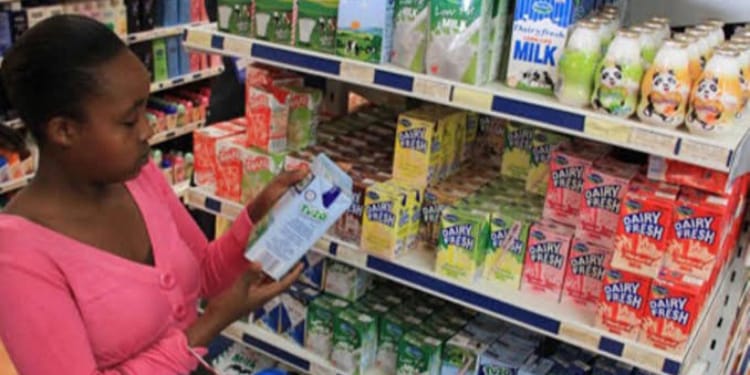
The Consumer Federation of Kenya (COFEK) has called on the government to urgently intervene in the milk crisis, saying that formal milk supply is declining and prices are rising.
In a statement issued on Monday, August 31, COFEK urged the Ministry of Agriculture, the Kenya Dairy Board (KDB) and the National Treasury to implement immediate measures to restore milk supply.
According to COFEK, the Kenya National Bureau of Statistics (KNBS) data shows that formal sector milk intake fell from 88.89 million litres in May 2026 to 84.44 million litres in June 2026, representing a five per cent month-on-month decline.
June’s intake was also 6.4 per cent lower than the 90.24 million litres recorded in June 2025. February recorded the lowest monthly intake at 74.43 million litres.
Supply Shortage
Additionally, COFEK said that the supply shortage is already being felt by consumers, with some retailers reportedly rationing milk purchases.
Fresh milk prices at outlets such as Waithaka Dairy Centre have increased from KSh70 to KSh80 per litre. COFEK also noted that branded packaged milk has become extremely scarce on supermarket shelves.
Also Read: How to Check if Your Alcohol Is Genuine or Fake in Kenya
In addition, COFEK said part of the pressure was due to rising production costs saying small scale farmers, who produce about 80% of Kenya’s milk, have seen daily yields fall from 7 to 9 litres to 4 to 5 litres per cow due to delayed rains and a roughly 45%increase in commercial feed costs.
However, COFEK argued that the current milk shortage was partly avoidable, claiming that authorities failed to utilize the milk surplus in 2025 adequately by building milk powder reserves.
COFEK Demands
Among its demands, COFEK wants the Ministry of Agriculture to issue a recovery plan in a span of seven days and the KDB to account for the 2025 milk surplus and any existing reserves.
Also Read: Alcoholic Beverages Association of Kenya Addresses Counterfeit Alcohol Concerns
Another demand is for the National Treasury to waive import duty and VAT on key dairy feed inputs such as yellow maize and soya to help reduce production costs.
It also called for closer monitoring of retail prices and regular public updates until the situation is stable.
Follow our WhatsApp channel for instant news updates
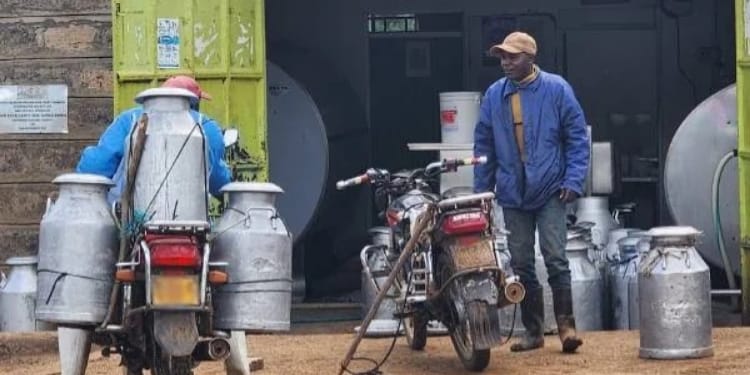
Men putting milk in containers
PHOTO/EV