
Ombudsman Breaks Silence on Proposed Siaya Nuclear Power Plant
Share


The Commission on Administrative Justice has clarified its role in the proposed Siaya nuclear power project amid growing concerns from communities over access to information, public participation, land, environmental safeguards and nuclear safety.
Chairperson Charles Dulo said the clarification followed a meeting with representatives of the Friends of Siaya Anti-Nuclear Plant (FSANP) and other community members at the Commission’s Kisumu Regional Office on Monday.
The meeting came after concerns surrounding a planned “Occupy Kisumu Ombudsman Office” People’s March, with residents seeking answers on the status and possible impact of the proposed project.
Community representatives raised questions ranging from access to project documents and meaningful public participation to possible land acquisition, compensation, resettlement, and protection of livelihoods.
They also sought information on environmental and social assessments, possible effects on the Lake Victoria Basin, nuclear safety, emergency preparedness and radioactive waste management.
Concerns were further raised over allegations of intimidation or criminalisation of people opposing or expressing reservations about the project, as well as claims of administrative failures in the handling of information, communication, and stakeholder engagement.
Dulo, however, stressed that the concerns presented during the meeting remain allegations and that the Commission had not made findings on their validity.
He said specific complaints supported by evidence would be examined to establish whether they fall within the Commission’s constitutional and statutory mandate.
Ombudsman handling two separate information cases
A key issue addressed in the statement was the existence of two separate Access to Information matters, which the Commission said should not be conflated.
One case involves FSANP and the Nuclear Power and Energy Agency (NuPEA), following an information request submitted by the community group on July 30 concerning the proposed project.
FSANP sought a wide range of records covering site selection, technical and feasibility studies, environmental and social assessments, land acquisition, resettlement, livelihoods, nuclear safety, emergency preparedness and radioactive waste management.
Information was also requested on possible impacts on Lake Victoria, public participation, financing, procurement, legal and governance arrangements, monitoring and compliance.
NuPEA responded on August 20, addressing several of the issues raised and providing a repository containing documents it said were responsive to part of the request.
FSANP subsequently applied to the Ombudsman for a review on August 24, arguing that some information had not been provided.
Among the documents it identified were the Strategic Environmental Assessment Report, review comments by the Netherlands Commission for Environmental Assessment and the KenGen Resettlement and Compensation Framework.
Also Read: Ombudsman Intervenes as Student Recovers Ksh 33,000 Tuition Fee Balance
Dulo said the application was lodged within the required 30-day period under the Access to Information Act and remains under consideration.
Only seven days had elapsed since its receipt as of August 31, he noted, adding that a ruling was being prepared. FSANP’s request for expedited consideration will also be handled in accordance with the law.
A separate case involves the Western Kenya Social Justice Centres Working Group, acting on behalf of the Our Energy, Our Voice Campaign, and the Siaya County Government.
The group had sought information from the county government and County Assembly in March on the project’s status, consultations with national government agencies, environmental and technical studies, site suitability, risk assessments, public participation and land acquisition.
After claiming it had not received a response within the required period, the group lodged a complaint with the Commission in May.
Siaya County Government later told the Commission that it did not hold correspondence, agreements, minutes, reports or other records relating to consultations with national agencies over the proposed nuclear plant.
It also said it had not undertaken, commissioned or received environmental, social, economic, technical or feasibility studies concerning the project.
Following the county’s response, the Commission notified the applicant of its position and lifted summons that had required the Governor of Siaya to appear before it. That matter is also awaiting a final ruling.
Commission says it is neither supporting nor opposing project
Dulo said the distinction between the two cases was important because they involve different public entities and different information requests.
One concerns information provided by NuPEA and whether the response fully met the applicant’s request. The other centres on information sought from Siaya County, which has stated that it does not possess the records requested.
Under the law, the Commission must determine whether information is held by or under the control of the relevant public entity and whether it can legally be disclosed.
Any applicable restrictions, including those relating to safety, privacy, commercial interests and matters under active consideration, must also be considered.
Beyond the information disputes, Dulo made clear that the Ombudsman does not have a mandate to decide whether Kenya should establish a nuclear power plant or whether Siaya should host one.
“Our responsibility is to ensure that, where public administration is concerned, public institutions act lawfully, fairly, transparently and accountably,” he said.
Technical and regulatory questions surrounding nuclear safety, environmental protection and other specialised aspects of the project remain the responsibility of institutions with the relevant mandates.
Also Read: Ombudsman Office Appoints Naisiae Paloshe Tobiko as New CEO
The Commission can, however, examine how public bodies handle administrative processes where complaints fall within its jurisdiction.
Dulo encouraged FSANP and other affected communities to document decisions, notices, correspondence, public participation records and other actions they consider irregular.
Such evidence, he said, would enable the Commission to assess complaints involving possible maladministration, procedural impropriety, unreasonable delay, abuse of administrative power, unfair administrative action or denial of access to information.
He also reaffirmed that citizens have a right to question decisions affecting them, seek information and participate in public affairs.
As the proposed project moves through different stages, including environmental assessments, public participation, land processes and licensing, the Commission said it would remain accessible to communities seeking administrative redress.
For the Ombudsman, the immediate issue is therefore not whether the Siaya nuclear project should proceed, but whether public institutions involved in its administration are acting within the law and respecting citizens’ rights.
Dulo said the Commission would continue handling complaints independently and on the basis of evidence, due process and the law.
Follow our WhatsApp channel for more updates
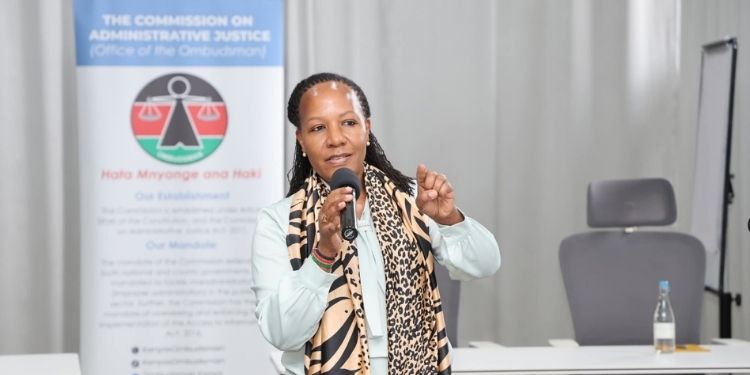
CEO and Commission Secretary Ms. Naisiae Paloshe Tobiko. PHOTO/ X.