Ruto Announces Employment of 1,800 Local Teachers in Wajir, Mandera and Garissa
Share
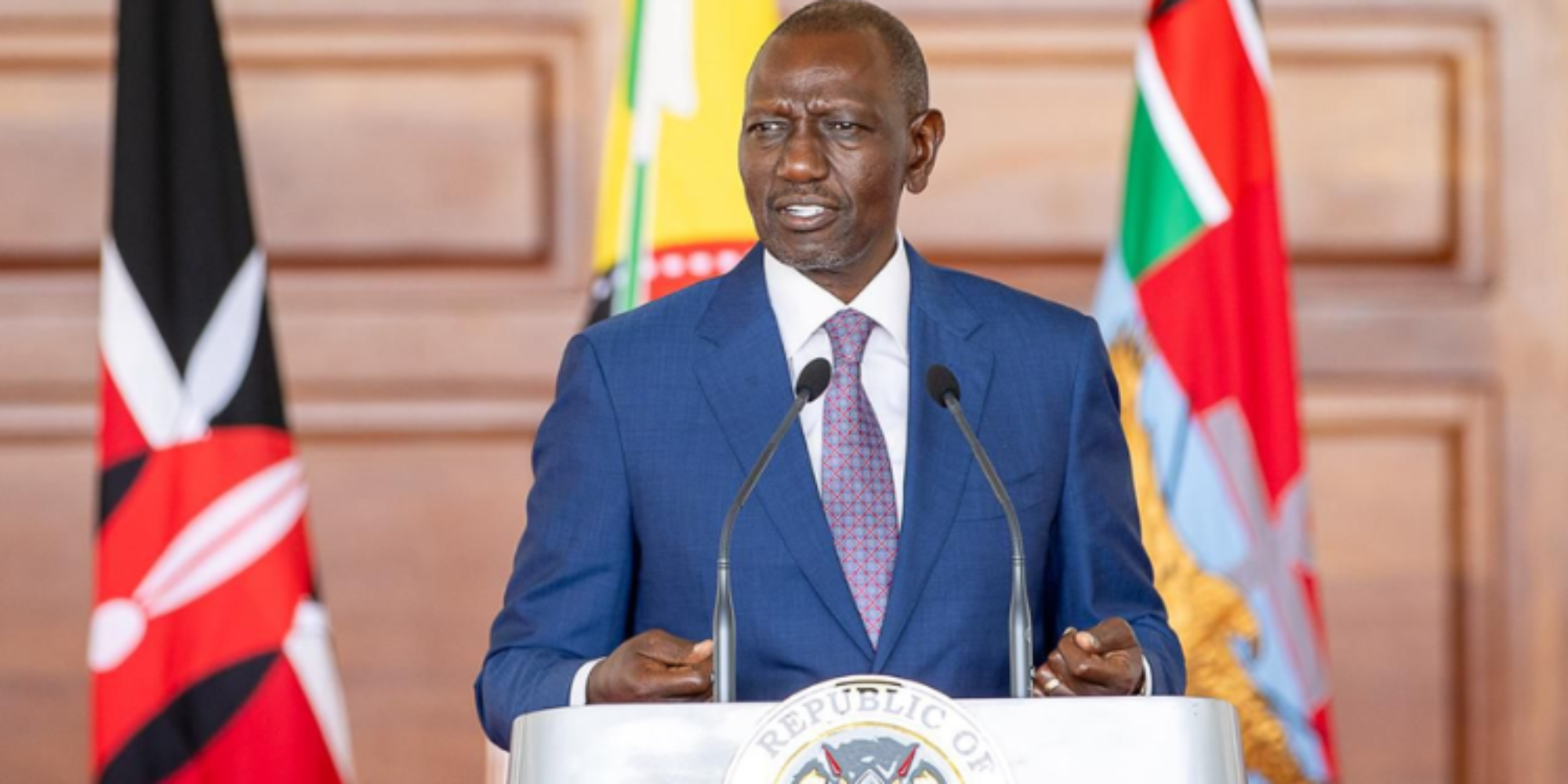
President William Ruto has announced a series of education reforms and investments aimed at expanding access to learning opportunities in northern Kenya and other marginalized regions, while directing the Ministry of Education to formally integrate alternative learning pathways into the national education system.
Speaking in Wajir during Madaraka Day celebrations on June 1, 2026, the President said the government had made significant progress in addressing teacher shortages in the region through an affirmative action recruitment program.
“Today, through this affirmative action program, a record 1,800 local teachers from the three counties of Wajir, Mandera, and Garissa have been employed and will be deployed in the region,” he said.
The Head of State also highlighted efforts to strengthen the future teaching workforce, noting that thousands of young people from the region are currently pursuing teacher training courses.
“Additionally, 4,616 young people from this region are enrolled in teacher training colleges, the highest number in our history. This is how lasting solutions are built, by investing in people,” he stated.
Massive Investment in Education Infrastructure
Ruto said the government’s broader education agenda has included extensive investment in school infrastructure across the country, particularly in underserved areas that have historically lagged behind.
“On infrastructure, we have built 23,000 classrooms and a further 1,000 laboratories are under construction, many of them in other regions that have waited for too long for modern learning facilities,” he said.
He added that technical and vocational education remains a key pillar of the administration’s development strategy, with enrollment numbers continuing to rise.
“At the same time, more than 850,000 young Kenyans are enrolled in our technical, vocational education colleges, acquiring the skills, the tools, and the confidence needed to build this nation with their hands from the bottom up,” Ruto said.
The President stressed the government’s commitment to ensuring that children living in arid and semi-arid regions enjoy equal access to quality education regardless of location.
“Here in Wajir and across northern Kenya, our commitment is this. No child will be denied the opportunity to learn because of geography or historical neglect,” he declared.
Also Read:Ruto Breaks Silence on Claims of Issuing Foreigners With ID Cards Ahead of 2027 Election
School Feeding and Digital Connectivity Expansion
Ruto said school feeding initiatives continue to play a crucial role in improving attendance and retention rates among learners in vulnerable regions.
“School feeding programs are already supporting 2.4 million learners in arid and semi-arid regions, while we continue to deploy teachers, build infrastructure, and expand digital connectivity across this region,” he said.
Despite the gains, the President acknowledged that some children remain excluded from formal education due to gaps in the recognition of alternative learning systems commonly used in parts of northern Kenya.
“Yet, some children in northern Kenya and other marginalized regions remain outside the formal education system because of certain alternative learning pathways that have not been adequately recognized or accommodated within our education framework,” he noted.
Also Read:Ruto Announces Plans to Build Wajir University
Directive on Alternative Learning Pathways
According to the President, the challenge is particularly visible in the lack of a formal framework for programs such as Tuksik, Madrasa, and pastoral instruction.
“This challenge is particularly evident in the absence of a clear framework to recognize and integrate Tuksik, Madrasa, and the program for pastoral instruction into the national education system,” he said.
Consequently, Ruto directed the Ministry of Education to begin consultations aimed at developing a policy framework that will facilitate their recognition and integration.
“Today, I direct the Cabinet Secretary for Education to engage all relevant stakeholders and take the necessary measures under the Basic Education Act to consult widely and recommend appropriate measures for the formal integration of the same,” he announced.
The President said the move would ensure that children from all backgrounds have access to recognized educational opportunities and future prospects.
“This will ensure that every child, regardless of background or circumstance, has a recognized pathway into learning, skill, and opportunity. Every child deserves a door into learning. It is our duty to open every door,” he said.
Ruto concluded by emphasizing that education must go hand in hand with broader social development goals.
“Yet, operating and opening the door for opportunity is only part of the journey. Inclusion must also mean quality healthcare, dignity, and well-being,” he said.
Follow our WhatsApp channel for instant news updates

President Ruto while visiting the people of Habaswein in Wajir County on May 31
PHOTO/PCS