SPIRO Unveils First Sustainability Report, Targets Net-Zero Emissions by 2040
Share
Leading electric mobility solutions provider SPIRO released its first-ever Sustainability Report highlighting the company’s environmental, social and economic impact along with its climate goals that are expected to help in advancing the clean transportation revolution across the continent.
This report provides the ESG baseline for SPIRO which will help in measuring its future progress as it grows its offering of affordable electric mobility solutions in Africa.
The Sustainability Report was released on July 21, 2026, from Dubai and reveals the commitment of the company to reach net-zero Scope 1 and Scope 2 greenhouse gas emissions in 2040, as well as the forecasted avoidance of 700,000 tonnes of carbon dioxide emissions each year due to its electric mobility ecosystem by 2030.
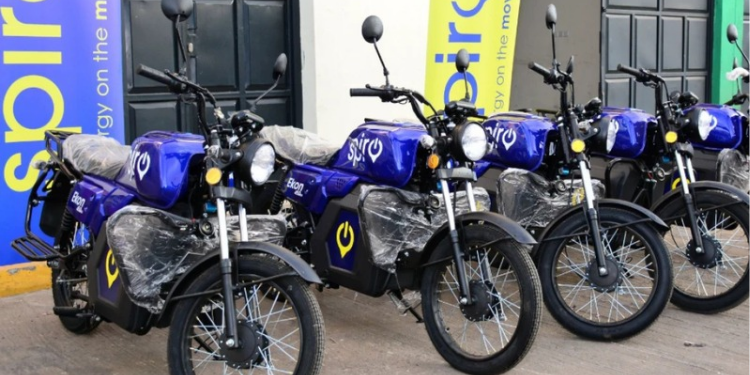
The company emphasized that besides the environmental impact, the report also shows how the economic and social benefit is created through its activities, which include manufacturing, training of the staff, renewable energy projects and affordable transport solutions which help in reducing operational costs of commercial motorcycle riders.
Sustainability a Major Focus of Founders
Speaking about the release of the publication, the founder of SPIRO and chairman of Equitane Gagan Gupta stated that sustainability is key to the vision of the firm when it comes to transport transformation.
“Having grown up in India, I have witnessed firsthand the impact of vehicle emissions on public health and urban environments. At SPIRO, our responsibility as founders is not only to scale innovation, but to ensure that the systems we build endure economically, socially, and environmentally for generations to come,” Gupta said.
Group Chief Executive Officer Anant Badjatya said the inaugural report demonstrates the company’s maturity in measuring and improving its impact while reinforcing sustainability as a key driver of future investment and expansion.
“This report reflects how far SPIRO has come, not only in terms of growth, but in our ability to measure and improve our impact. As we expand across Africa, sustainability will remain a core business driver, shaping how we invest, manufacture, innovate and partner for the long term,” Anant said.
Also Read:Spiro Appoints Anant Badjatya as Group CEO to Drive Pan-African Expansion
Head of ESG and Sustainability Imtinen Hamlaoui said the company has now established its first comprehensive ESG baseline covering Scope 1, Scope 2 and Scope 3 emissions.
“By establishing our first comprehensive ESG baseline, including Scope 1, 2 and 3 emissions, we are creating the foundations needed to track progress, set measurable targets and strengthen transparency as SPIRO continues to scale across Africa. Sustainability is not a standalone initiative, it is integrated into how we operate, innovate and create long-term value,” Hamlaoui stated.
Climate Roadmap and Renewable Energy Initiatives
As per the report, SPIRO has been able to conduct its first ever complete greenhouses gas inventory from emissions within its entire operations and value chain which is quite a milestone in its sustainability journey.
The report revealed that through efficiency measures carried out in the last year, energy consumption within SPIRO’s assembly factories was reduced by 15-25 percent.
Moreover, it is being evaluated that 80-125 KVA solar panel systems could be installed in selected battery-swapping sites to improve energy resilience and lessen the dependency on the electricity grid of the nation.
Energy management measures in assembly plants have already helped to reduce electricity consumption of SPIRO in line with its environmental goals.
Also Read:Spiro Raises $215M to Boost Africa’s Electric Mobility and Charging Network
Skills Investment and Affordable Mobility
In addition to initiatives in climate protection, SPIRO emphasized its commitment to developing skills through the creation of Spiro Academy that trained over 4,000 individuals throughout Africa in 2025 in electric vehicle service and battery management.
The report mentions Africa’s first women’s electric motorcycle manufacturing line that helps to promote workforce inclusion and develop technical skills and industrial capabilities.
The report additionally highlights the economic advantages of electric mobility, pointing out that commercial users of SPIRO motorcycles save up to 70-80 percent on operational costs compared to petrol motorcycles.
In addition, they can save money on maintenance services and avoid problems connected with rising fuel prices.
According to SPIRO, the company currently possesses the largest electric mobility network in Africa that includes over 100,000 electric motorcycles, over 2,500 battery swapping stations and over 30 million battery swaps performed.
Follow our WhatsApp channel for instant news updates

Anant Badjatya, former CEO of Indofast Energy, has been appointed Group CEO of Spiro to drive its Pan-African electric mobility expansion following a $215M funding round. PHOTO/ Spiro