

Today in History: When Raphael Tuju Survived a Plane Crash That Killed Two Politicians
Share

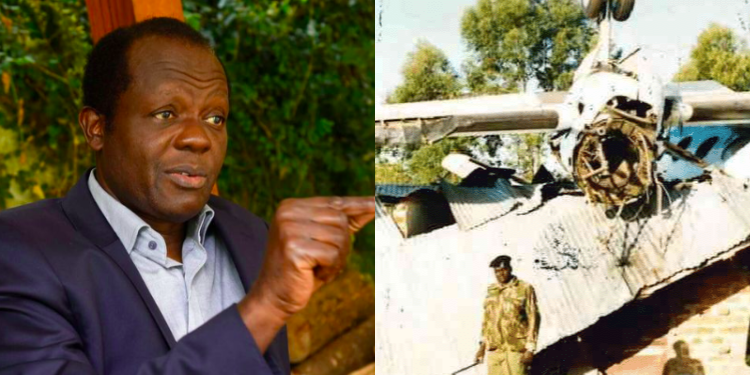
On January 24, 2003, barely a month after the 2002 General Election, a plane carrying senior government officials crashed shortly after takeoff from Busia Airstrip in what is now Busia County.
Among those on board were then Labour Minister Ahmed Mohamed Khalif, Information and Tourism Minister Raphael Tuju, Water Resources Minister Martha Karua, Minister of State in the Vice President’s Office Lina Jebii Kilimo, Assistant Minister Njeru Githae, Hamisi MP George Khaniri, and former FIDA chairperson Martha Koome, among others.
The delegation had attended a homecoming celebration for then Funyula MP Moody Awori, who had recently been appointed Minister for Home Affairs following the National Rainbow Coalition (NARC) victory in the 2002 elections.
After spending the day at Awori’s home in Funyula, the officials returned to Busia Airstrip in the evening to fly back to Nairobi aboard a chartered Grumman G-159 Gulfstream I aircraft (registration 5Y-EMJ).
At about 4:45 p.m., the plane took off but failed to gain sufficient altitude. It struck power lines near the airstrip, lost control, and crashed into a nearby house.
Then, Internal Security Minister Chris Murungaru later said the aircraft hit a pothole on the runway during takeoff, lost control, struck an electric pole, and crashed.
Fatalities and Survivors of the Busia Crash
Three people died in the crash:
- Ahmed Mohamed Khalif, Labour Minister.
- Captain Samuel (Sammy) Mungai, the pilot.
- Captain Abdikadir (Abdi) Kuno, the co-pilot.
Nine people survived with varying degrees of injuries, including Martha Karua, Raphael Tuju, Njeru Githae, George Khaniri, Martha Koome, Jillo Falana, Josephine Mwangi and Wanjiru Kihoro.
Although Wanjiru Kihoro survived the crash, she suffered severe injuries and later died several years later from complications linked to the accident.
How Tuju Escaped Death
Years later, Tuju revealed in a television interview that he narrowly escaped death because he changed seats shortly before takeoff.
According to Tuju, Ahmed Khalif had delayed the flight after stopping to pray at a mosque. While waiting, Tuju left his front-row seat and walked to speak with the pilots about the delay.
Also Read: Today in History: How the Artur Brothers Landed in Kenya and Were Granted Passports and Police Ranks
When Khalif eventually arrived, he occupied Tuju’s original seat.
“Khalif had gone to the mosque, and we were waiting for him. It took too long, and it was getting hot, so I walked to the pilot to ask why we were still there,” Tuju recalled.
“When Khalif arrived, he took my seat at the front. I couldn’t tell him to leave. Unfortunately, when the plane crashed, he hit his head on the barrier and died.”
Awori Speaks About the Tragedy
The crash shocked the entire country. President Mwai Kibaki had just formed his cabinet weeks earlier after the NARC party won the election, ending KANU’s nearly 40-year rule.
Also Read: Today in History: When Uganda’s Shortest-Serving “President” Ruled for Three Days
Moody Awori, who witnessed the takeoff, later recalled seeing the aircraft struggle to gain altitude before crashing moments later.
“We could see it taking too long to lift off,” Awori said years later. “Within seconds, we heard a loud bang and watched it go down.”
Awori also remembered the rescue efforts that followed, saying many survivors, including Martha Karua, Lina Kilimo and George Khaniri, suffered serious injuries and had to be rushed to the hospital.
For many years after the tragedy, Awori said he felt personally responsible because he had organised the homecoming event that brought the delegation to Busia.
“ For a long time, I felt responsible,” Awori said.
Follow our WhatsApp channel for instant news updates
Former Cabinet Secretary Raphael Tuju in a past media address. PHOTO/ Nation