
Winners of the EV Explorers Rhino Charge 2026 Innovation Challenge Unveiled
Share


The winners of the EV Explorers Rhino Charge 2026 Innovation Challenge have been unveiled, marking a significant milestone in the drive to promote innovation, sustainability, and the adoption of electric mobility in Kenya.
The two female engineering students, Caroline Mutheu and Esther Leja, students from Technical and Vocational Education and Training (TVET) institutions, impressed the judges with solutions that demonstrated creativity, technical ingenuity, and an understanding of the practical challenges associated with electric mobility.
As a result, each winner will receive a partial scholarship covering up to 75% of their remaining tuition fees, a three-month paid internship at Silent Savannah, and an opportunity to attend the 2027 Rhino Charge as technical observers alongside the EV Explorers crew.
The competition formed part of the wider Rhino Charge 2026 experience, an iconic off-road motorsport event that brings together teams to navigate challenging terrain while raising funds for conservation.
By introducing an electric mobility innovation component, the EV Explorers challenge created a platform for participants to demonstrate the potential of electric technology beyond conventional urban applications.
How KCB Foundation Shapes Kenya’s Workforce
Speaking during the awards ceremony, KCB Foundation Managing Director, Mendi Njonjo, said: “At KCB Foundation, we are helping shape the workforce required for Kenya’s green transition. Scholarships like these are an important tool for connecting education to applied learning, industry exposure, and pathways into employment. This is a practical example of our education-to-employment approach and demonstrates how we can work with industry to develop future-facing talent and connect young people to opportunities in the green economy.”
The growth of the sector is creating demand for technical skills in areas including electrical engineering, battery systems, vehicle design, electronics, energy management and charging infrastructure.
Kenya’s National Energy Efficiency and Conservation Strategy targets increased uptake of electric vehicles, while the country’s emerging e-mobility policy framework seeks to strengthen infrastructure, investment and skills development around the sector.
Also Read: Rhino Charge Raises Record Ksh 365 Million as Adil Khawaja Smashes Fundraising Milestone
Commenting on the milestone, Africa Practice Partner and EV Explorers team leader Richard Kiplagat said: “Our mission with EV Explorers is to demonstrate that African engineering can deliver world-class e-mobility solutions in even the most extreme conditions. Having made history as the first electric vehicle to complete the Rhino Charge, extending this platform to Caroline and Esther allows us to transfer real-world engineering data into the hands of talented young Kenyan women who will help shape the future of sustainable transport.”
EV Explorers Take Part in 37th Rhino Charge
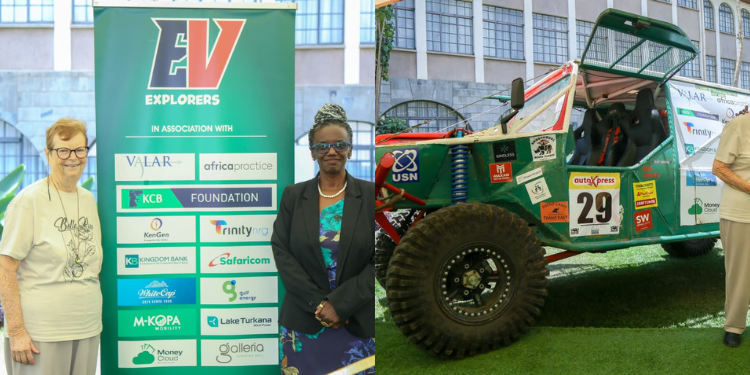
In May 2026, EV Explorers participated in the 37th Rhino Charge in Ngilai, Samburu County, becoming the first electric vehicle to complete the demanding off-road competition. The vehicle was designed, fabricated, and assembled in Kenya and completed the course using a 62-kWh battery system supported by an off-grid solar charging solution.
Detailing the focus of the challenge, Andrew Waititu, EV Explorers Innovation Challenge Lead, added: “Developing vehicles capable of operating in rough, off-grid terrain requires specialized knowledge of battery thermal management, structural durability, and solar integration. During their placement at Silent Savannah, our scholars will utilise the performance telemetry datasets to assist our crew with chassis, wiring, and energy optimizations for the 2027 entry.”
Also Read: Top Budget-Friendly Places to Visit in Nakuru With Family and Friends
The Rhino Charge provides an additional platform for linking engineering innovation with environmental conservation.
The 2026 event raised Ksh 365 million for conservation of Kenya’s mountain ecosystems.
Since its establishment, the Rhino Charge has raised more than Ksh 2.6 billion, while Rhino Ark has constructed approximately 650 kilometers of electric fencing protecting forest ecosystems and more than 80,000 households from human-wildlife conflict.
The 2027 Rhino Charge is scheduled for May 29, 2027, providing Caroline and Esther with an opportunity to observe the application of engineering, technology and innovation in one of Kenya’s most challenging off-road environments.
About the KCB Foundation
KCB Foundation was established in 2007 to implement KCB Bank Group’s corporate social investments.
The Foundation’s programmes are designed to address issues of relevance specifically within the thematic areas of enterprise development, education, health, environment, and humanitarian intervention.
Follow our WhatsApp channel for instant news updates
The Rhino Charge provides an additional platform for linking engineering innovation with environmental conservation. PHOTO/FILE.