
Ministry of Health Sends Warning Amid Deadly Floods
Share
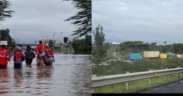
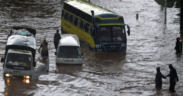
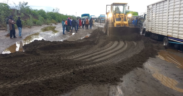
As heavy rains continue to pound several parts of the country, the Ministry of Health Kenya has issued a public health advisory warning Kenyans about potential health risks linked to flooding during the ongoing March-April-May (MAM) long rains.
In a statement released by Principal Secretary Mary Muthoni Muriuki on March 7,2026, the ministry cautioned that the ongoing rains, while beneficial for agriculture and water resources, could also expose communities to disease outbreaks and other health hazards.
“The Ministry of Health wishes to alert the public that the ongoing March-April-May (MAM) long rains are expected to continue in several parts of the country,” the statement read.
The ministry noted that flooding and heavy rainfall often create conditions that heighten the risk of communicable diseases, particularly where sanitation systems are disrupted.
Rising Health Risks During the Rainy Season
According to the ministry, heavy rainfall and flooding can lead to contamination of water sources, increased breeding of disease-carrying mosquitoes, and displacement of communities.
“Heavy rainfall and flooding can lead to contamination of water sources, increased breeding of disease vectors such as mosquitoes, displacement of communities, and disruptions to sanitation systems,” the ministry warned.
Also Read:Kenya Met Explains Cause of Current Heavy Rains and Floods
Health officials cautioned that these conditions may trigger outbreaks of diseases and other health emergencies.
Among the key threats highlighted are water-borne illnesses such as cholera, typhoid, and diarrhoea diseases caused by contaminated water or food.
Vector-borne diseases including malaria and dengue are also likely to increase due to stagnant water that creates breeding grounds for mosquitoes.
In addition, cold and damp weather conditions may lead to a rise in respiratory infections.
Authorities further warned about flood-related dangers such as drowning, injuries, and snake bites in affected areas.
Public Urged to Take Preventive Measures
To minimize health risks, the ministry urged Kenyans to adopt preventive measures during the rainy season.
Residents have been advised to ensure drinking water is safe by boiling, chlorinating, or using approved treatment methods.
The public is also encouraged to maintain proper hygiene through regular handwashing and safe food handling.
Other measures include; sleeping under insecticide-treated mosquito nets, draining stagnant water around homes, and avoiding walking or driving through flooded areas.
“Members of the public are encouraged to take precautions to protect themselves and their families,” the ministry said.
Also Read:Police Confirm 23 Dead in Nairobi Floods, List Affected Estates and Roads
Health officials also urged individuals experiencing symptoms such as severe diarrhoea, vomiting, fever, or breathing difficulties to seek immediate medical attention at the nearest health facility.
Government Strengthens Disease Surveillance
The Ministry of Health said it has intensified preparedness measures in collaboration with county governments and health partners to respond to potential disease outbreaks.
“The Ministry of Health, in collaboration with county governments and partners, has strengthened disease surveillance, emergency preparedness, and rapid response mechanisms to detect and respond to any public health threats,” the advisory stated.
County health teams have been directed to enhance monitoring for epidemic-prone diseases while supporting community awareness campaigns.
Call for Public Cooperation
The government has called on communities, local leaders, and stakeholders to remain vigilant and support public health efforts during the rainy season.
“Protecting public health during this rainy season requires collective responsibility and timely action,” the ministry emphasized.
Members of the public are encouraged to report unusual disease outbreaks and seek assistance through emergency helplines 719, 0729471414, or 0732353535.
Health authorities also urged Kenyans to stay informed about local vaccination programs and follow official public health guidance as the rains continue.
Follow our WhatsApp channel for instant news updates
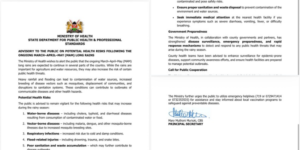
Public health advisory from the Ministry of Health
PHOTO/MoH/X