

OPINION: When Disorder Becomes a Language of Power
Share
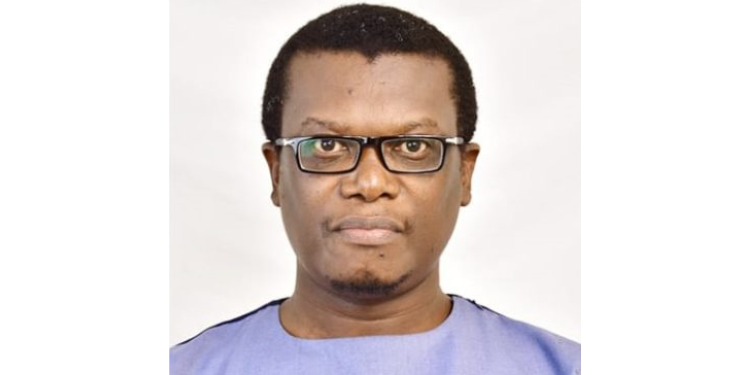
By Dr. Luchetu Likaka
The tense public moment involving James Nyikal and Tom Ojienda has stirred outrage, but not because it was rare. It is because it was painfully familiar.
Kenyans have seen this pattern repeat itself across rallies, funerals, and community gatherings: a space meant for dignity suddenly turns volatile, a crowd shifts from attentive to agitated, and a group of young men too organized to be accidental tilts the atmosphere into confrontation.
Then, almost predictably, leaders appear either indifferent or quietly amused, as if disorder were simply part of the choreography.
How Political Chaos Is Being Normalized and Used as a Tool of Power in Public Life
This is where honesty must replace politeness. What we are witnessing is not a spontaneous breakdown; it is the steady normalization of disruption as a political language. Goonism, in this sense, is not merely about unruly youth. It is about a system that has learned to weaponize presence, noise, and intimidation to assert dominance.
It thrives not only through direct orchestration but through tolerance, through leaders who benefit from it while avoiding responsibility for it.
The tragedy is layered. At the surface, there is the immediate disrespect, the collapse of solemnity, especially in spaces like funerals, where grief should be protected from spectacle.
But beneath that lies something more corrosive: the quiet acceptance that such behavior is inevitable, even useful. When leaders fail to decisively reject chaos, they do more than ignore it; they legitimize it. They send a message that power does not always need to persuade; it can simply overwhelm.
And it is the youth who are drawn into this machinery. Not as citizens being empowered, but as instruments being deployed. Their energy is harnessed not for building communities or shaping policy, but for disruption. They are given temporary roles in moments of tension, then left to navigate the same economic frustrations that made them vulnerable to mobilization in the first place. It is exploitation disguised as participation.
Also Read: Manufactured Chaos or Selective Policing? Why the IEBC Must Be Careful Not to Tilt the Field
The Cost of Normalizing Disorder in Public
What makes this pattern dangerous is how quickly it erodes the boundaries of what is acceptable. When disorder becomes routine, restraint begins to look like weakness.
Additionally, when intimidation becomes effective, dialogue begins to feel unnecessary.
Over time, politics shifts from a contest of ideas to a contest of control, and in that shift, institutions weaken, public trust thins, and leadership loses its moral center. The deeper question, then, is not about a single incident or a single individual.
It is about whether Kenya is willing to confront a political culture that has grown too comfortable with the erosion of civility. Because leadership is not defined in moments of applause; it is revealed in moments that demand restraint. A funeral demands humility. A public gathering demands responsibility. A leader demands accountability, especially from themselves.
Also Read: OPINION: A Nation Campaigning Itself into Collapse
If these standards continue to slip, then the consequences will not remain confined to isolated incidents. They will shape the character of public life itself. Citizens will begin to expect less, to tolerate more, and to disengage from a system that appears increasingly performative and detached from their dignity.
But this trajectory is not inevitable. It can be interrupted if the public chooses to shift the measure of leadership. Not by who speaks the loudest, but by who holds the line when it matters. Not by who commands the biggest crowd, but by who protects the integrity of the space they occupy.
Because in the end, a nation that allows disorder to become a tool of politics risks becoming governed not by principle, but by pressure. And once that line is crossed, restoring it becomes far harder than defending it in the first place.
Follow our WhatsApp channel for instant news updates
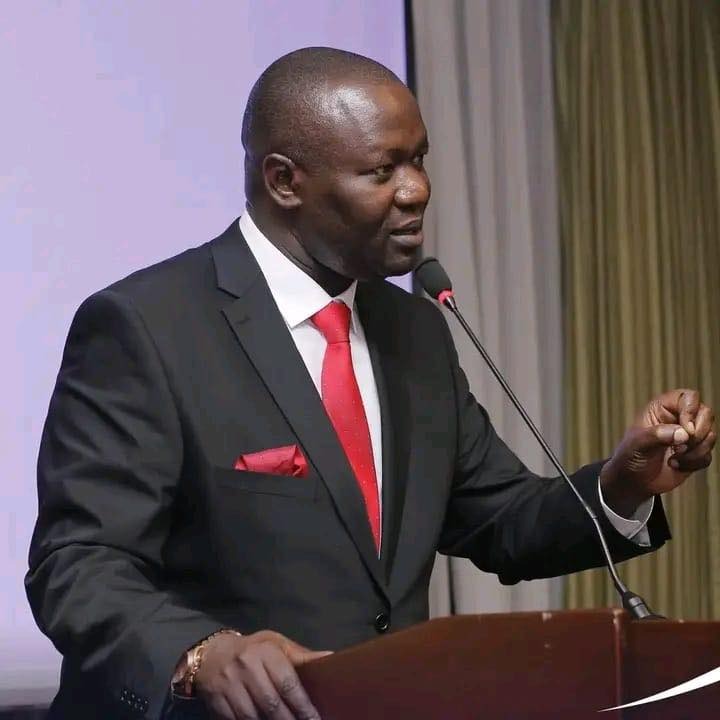
Kisumu County Senator Tom Ojienda. PHOTO/Parliament.