Out-of-School Girls Face Higher Pregnancy Risks, Gender Report Warns
Share
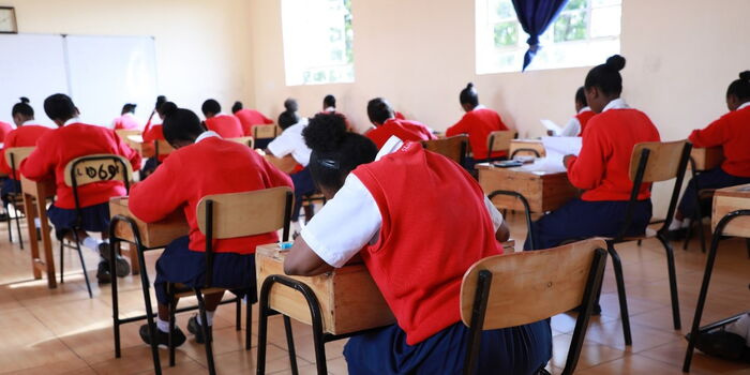
Findings from the recently launched Gender Report 2026 in Nairobi have shown that girls who are not in school are at a much greater risk of becoming pregnant than girls enrolled in schools.
The report, released by Usawa Agenda at the Kenya Institute of Curriculum Development (KICD), paints a grim picture of persistent gender inequalities within the country’s education system.
According to the report titled “The State of Gender Equality in Our Basic Education: 2nd Gender Equality In and Through Education Status Report 2026,” no child is more disadvantaged than a girl who is out of school.
Researchers established that an out-of-school teenage girl is 12 times more likely to experience early pregnancy than her in-school counterpart.
The report further identified Rift Valley as the region recording the highest rate of pregnancy while Central Kenya registered the highest rate of return to school among teenage mothers.
Findings also showed that stigma remains one of the biggest barriers preventing victims of teenage pregnancy from resuming their education.
“Stigma is still the main obstacle to many teenage pregnancy returning to school,” said Ms. Claudia Lagat, the Usawa Agenda Assistant Programme Officer for Policy Engagement.
“Lack of parental support is the biggest challenge most senior schools’ management face in trying to keep victims of teenage pregnancy in school,” Claudia Lagat added.
Teaching Profession Gender Imbalance
The report also highlighted widening inequalities within the teaching profession, noting that the sector becomes increasingly male-dominated as one progresses through higher education levels.
Data contained in the report showed that women account for 58 percent of teachers in primary schools, 51 percent in junior school, and only 43 percent in senior school.
According to the findings, science and mathematics subjects are predominantly taught by male teachers across different senior school pathways, including boys’, girls’, and mixed schools.
Researchers warned that the imbalance could negatively affect girls’ participation and performance in Science, Technology, Engineering and Mathematics (STEM) subjects.
The report additionally established that significant learning resource gaps continue to persist in boys’ schools at the senior secondary level.
Researchers described the disparities as a setback to national efforts aimed at promoting equality in and through education from foundational learning levels.
Speaking during the launch, Hon. Abdul Haro, MP for Mandera South and a member of the Parliamentary Committee on Education, called for urgent reforms within the education sector.
“Kenya’s children are our greatest resource, yet the quality of education they receive has been constrained by various factors, including gender disparities. This report is not a matter of entitlement, but an invitation for us to do better and to work together in strengthening our education system,” he said.
Also Read:OPINION: The HELB Funding Model Exposes Policy Failure in Kenya’s Education Sector
Calls for Policy and Education Reforms
Dr. Josephine Obonyo, Secretary Gender at the State Department for Gender and Affirmative Action in the Ministry of Gender, Culture, the Arts and Heritage, said the findings should guide government policy interventions.
“Education remains one of the most powerful tools for promoting gender equality. This report provides important evidence that should inform policy and practices. Effective education policy can only succeed when it is grounded in evidence that highlights the systemic issues still affecting equity in education,” she stated.
Dr. Obonyo added that school safety and resource allocation continue to present challenges that require coordinated action from both government agencies and stakeholders.
Meanwhile, Mr. Stephen Barongo, Head of Directorate for Primary Education at the Ministry of Education, stressed the importance of keeping girls in school longer as a strategy to reduce teenage pregnancies and early marriages.
“If we can give girls a little more time in school, we would significantly reduce the rates of early marriage, early pregnancy, and even poverty levels. Evidence shows that a girl who is out of school is more likely to become vulnerable to early pregnancy compared to her peers who remain in school,” Barongo said.
He further noted that the report’s findings should shape future education policies and practical interventions aimed at reducing gender inequality within schools.
Also Read:How Safaricom Is Turning Technology, Education and Finance into Opportunity for Millions
Stakeholders Push for Inclusive Education
Keynote speaker Prof. Dickson Andala, Chief Executive Officer of the National Research Fund, challenged stakeholders to reflect on whether Kenya’s education system is genuinely delivering on promises of equality and inclusion.
“The Usawa Agenda Report presents an important opportunity for the country to reflect on whether it is truly fulfilling its promise of promoting education for every child. This research should help align evidence, policy, and practice in order to drive meaningful and lasting change in the country,” Prof. Andala said.
He added that Kenya’s commitment to Sustainable Development Goals 4 and 5 requires more than access to school, emphasizing the need for quality education and gender equality throughout the learning process.
Also speaking during the launch, Ms. Margaret Koech, Founder and CEO of CHALAN Foundation, underscored the importance of creating inclusive education systems that support every learner regardless of background.
“The strongest education system is one that is inclusive and promotes learning opportunities for every child, regardless of gender or background. If we are to succeed in programmes that support girls, we must not leave boys behind,” she said.
Follow our WhatsApp channel for instant news updates

KICD structure image. PHOTO/pixels