
Details of Uhuru’s Deal With the U.S. That Allows Establishment of Ebola Facility in Kenya
Share

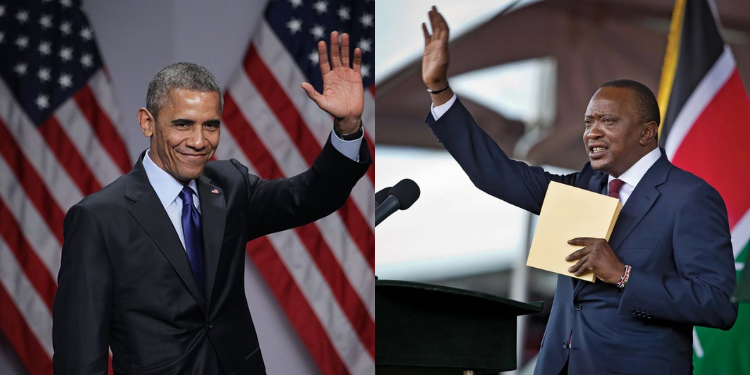
The biological threat collaboration deal between the US and Kenya, signed by the Uhuru Kenyatta regime in 2015, forms the basis of a US-planned Ebola quarantine facility for Americans on Kenyan soil at the Laikipia Air Base.
Kenya signed the deal when the Bundibugyo Ebola outbreak spread across eastern DR Congo and Uganda.
Biological threat reduction programs, international security efforts, and public health initiatives aim to prevent the proliferation of dangerous pathogens, secure biological materials, and detect outbreaks.
These programs counter both natural biological risks, such as zoonotic diseases like Ebola, and deliberate or accidental releases of harmful agents.
Former Health CS James Macharia and US Ambassador Robert Godec signed “Cooperation in Threat Reduction Biological Engagement Programs” on July 24, 2015.
They were meeting as President Obama flew into Nairobi for his historic homecoming visit.
“The cameras were not there. There was no press conference. Kenyans were not told what had been agreed in their name,” the report says.
The pact was ratified by the National Assembly on November 22, 2016, without public scrutiny.
Also Read: Nanyuki Residents Plan Protest Against Ebola Quarantine Facility Ahead of Madaraka Day
The Legal and Political Implications of the US-Kenya Health Pact
The pact handed US control of the project and contractors, and the deal granted US officials tax immunity and mutual liability, which shifts to Kenya the operational and legal consequences.
On April 5, 2022, Mutahi Kagwe, then Health CS, and his US counterpart, Ambassador Eric Kneedler, renewed it for another seven years to April 5, 2029.
When President William Ruto took office on September 13, 2022, he inherited the extended framework.
Ruto’s administration further pushed the agenda through a policy layer in December 2024 as Prime CS Musalia Mudavadi launched an updated Foreign Policy that had global health diplomacy as a pillar for the first time, identifying in 4.9.4 explicitly Kenya as a “health emergencies medical hub” providing space and facilities for other countries to have testing facilities, personnel, and emergency management space.
“By the time that Foreign Policy document was published, Kenya had already said yes to becoming a quarantine destination before the specific request was formally made,” the article stated.
This also allowed any ministry to enact health diplomacy arrangements without the need for further approval by parliament.
Also Read: Kenya Power Announces Planned Blackout in Parts of Nairobi and Five Other Counties Today
The US-Kenya Health Security Pact Amidst an Ebola Outbreak
The Bundibugyo Ebola outbreak was declared on May 15, 2026, and by May 17, the WHO listed it as a growing epidemic.
By May 28, over 1,200 had been infected and 241 had died in eastern DRC and western Uganda.
On May 28, United States Secretary of State Marco Rubio made a call to the Head of State, President William Ruto, confirming an approximate Ksh 1.74 billion contribution by the US for preparedness, and Kenya provided written assurance to allow US access to the Laikipia Air Base the same day.
By May 29, two US Air Force C-17 Globemaster III aircraft landed at the facility.
The Katiba Institute, headed by Nora Mbagathi, had lodged an urgent High Court petition on May 28, challenging the facility on constitutional grounds.
Follow our WhatsApp channel for instant news updates

44th US President Barack Obama and former president Uhuru Kenyatta during a joint press conference at the State House in Nairobi, Kenya, on July 25, 2015. / PHOTO Courtesy