Same Claim, Different Election Cycle: Gachagua &Kalonzo Following Politics of ID Panic in Kenya
Share

For nearly two decades, allegations of identity document manipulation, voter register tampering, and the issuance of citizenship documents to influence election outcomes have resurfaced during almost every election period in Kenya.
From the disputed 2007 General Election and the 2010 constitutional referendum to the 2017 presidential election and the political battles ahead of the 2027 General Election, debates over the issuance of national identity cards to non-citizens and access to registration documents have remained central to the country’s electoral politics.
This time, former Deputy President Rigathi Gachagua and Wiper leader Kalonzo Musyoka have accused President William Ruto’s administration of deliberately manipulating registration documents.
“As we go towards the General Election, William Ruto and his people are sensing defeat and have decided to have selective issuance of IDs,” Gachagua said.
“In areas perceived to be against William Ruto, our young people are being denied IDs. In Nakuru, communities that support William Ruto are being issued IDs within 2-3 days, and chiefs from those communities are collecting those IDs and taking them home to the young people. Communities perceived to be against William Ruto are taking between 3-4 months for their IDs to be processed,” claimed the former Deputy President.
“We are putting the registrar of persons on notice. If this discrimination does not stop, we shall request our Gen Zs to occupy registration centres, Huduma centres, and your offices in Nairobi,” he said.
Kalonzo Musyoka framed the matter as a broader security concern.
“The consequences for ordinary Kenyans are both immediate and lasting: heightened scrutiny at international borders, severe complications in obtaining visas for education and employment, lasting reputational damage to the Kenyan passport, and the erosion of bilateral trust with Western and regional partners. This is not a partisan matter. It is a matter of national security,” Kalonzo stated.
Raila Claims on Registering Foreigners
The allegations are strikingly similar to claims that have surfaced repeatedly in previous election cycles.
Ahead of the 2017 General Election, opposition leader Raila Odinga alleged that the National Intelligence Service (NIS) was involved in registering foreigners from Uganda and Ethiopia as voters.
On January 24, 2017, then-President Uhuru Kenyatta dismissed the allegations, saying the opposition was manufacturing claims because it anticipated defeat.
“Kenyans are the ones registering, and claims that we are registering Ugandans are ridiculous,” Uhuru said while addressing supporters in Kirinyaga County.
Uhuru further argued that claims of foreign voter importation were intended to create grounds for rejecting election results.
“These claims he is making that we are registering foreigners are just a ploy to cause chaos and reject results if he loses elections,” Uhuru stated.
The Kibaki Period and ID Controversies
The politicization of identification documentation can similarly be attributed to the presidency of Mwai Kibaki.
In April 2010, Kibaki eased previous bans against the usage of generation-old national identification cards.
This allowed one million more Kenyans to register for voter enrollment associated with constitutional review elections and future general elections.
While the move seemed like an administrative decision to allow all eligible voters to enroll in voter registration, there was concern that this could affect voter mobilization before national elections.
Resonances from 2007
The seeds of these fears were sown all the way back during the controversial general elections held in 2007.
The contest between President Mwai Kibaki and Raila Odinga is widely considered one of the most controversial elections in Kenya’s history.
The ensuing Kriegler Commission, officially referred to as the Independent Review Commission, found several flaws in the voter register.
These included the exclusion of many potential voters, along with the inclusion of around 1.2 million dead individuals in the list.
According to the commission, there were clear irregularities in the voting process.
International monitors reported numerous reports regarding the manipulation of voter registration, voting count, and results delivery processes.
Though much of the controversy was centered around vote counting in 2007, it paved the way for the politics of distrust toward electoral systems.
From there, concerns involving voter registers, national identification cards, citizenship issues, and foreign voting have become commonplace before any future election.
Also Read: Huduma Kenya Confirms Free ID Replacements
Same Claim, Different Election Cycle
Whether under Kibaki, Uhuru, or now Ruto, the language has remained remarkably consistent.
Opposition leaders allege manipulation of identification systems, registration processes, or citizenship records.
Governments deny the accusations and accuse rivals of laying the groundwork for contesting election outcomes.
What changes are the political actors? What remains constant is the central question of trust.
Follow our WhatsApp channel for instant news updates
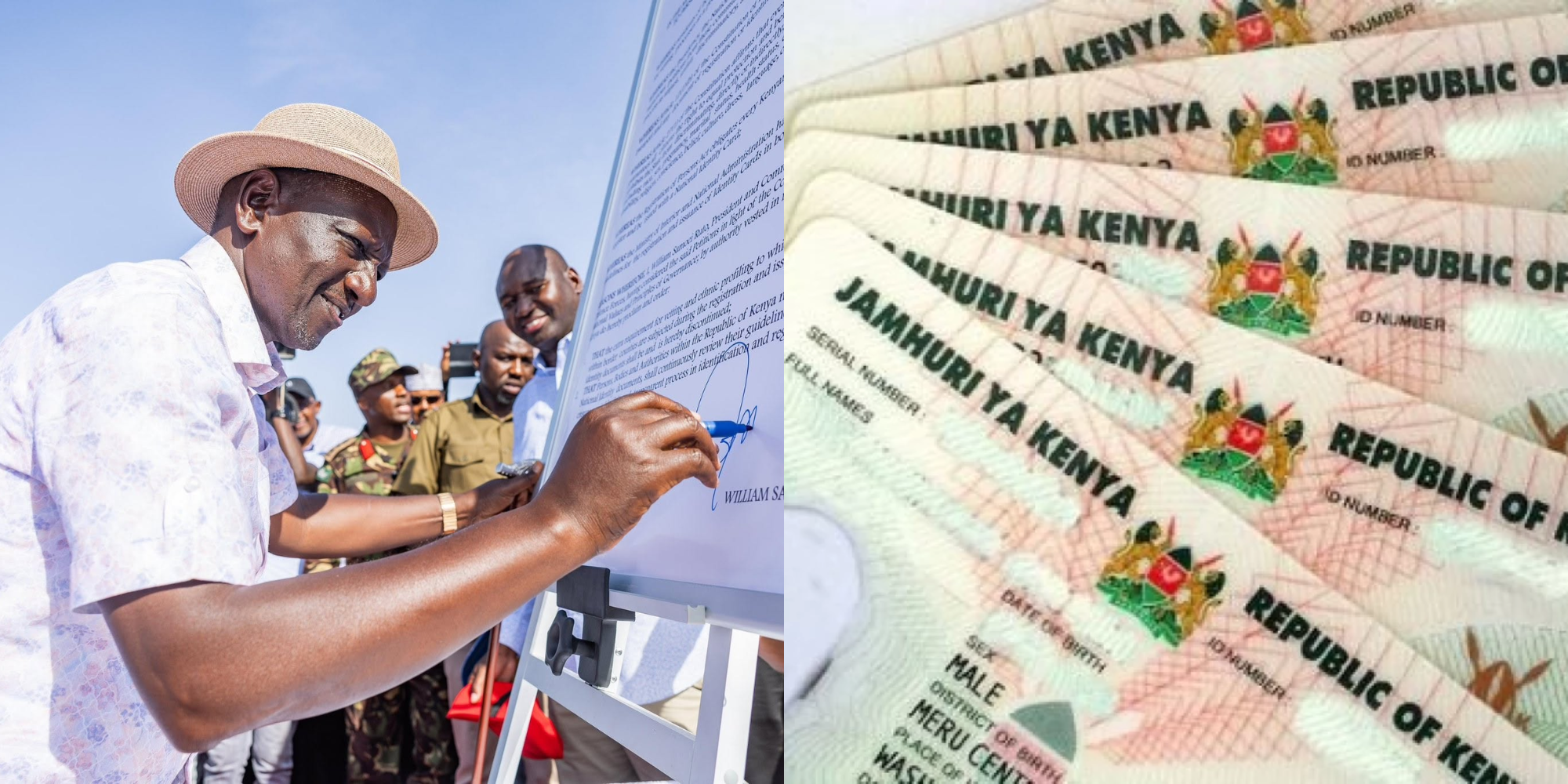
President William Ruto signing the Presidential Proclamation on Registration and Issuance of IDs to Border Counties in Wajir in February 2025. PHOTO/PCS/Citizen TV.