

It’s Not an Auction: Ruto Just Removed Extra Vetting for Somali and Border Communities in ID Applications
Share

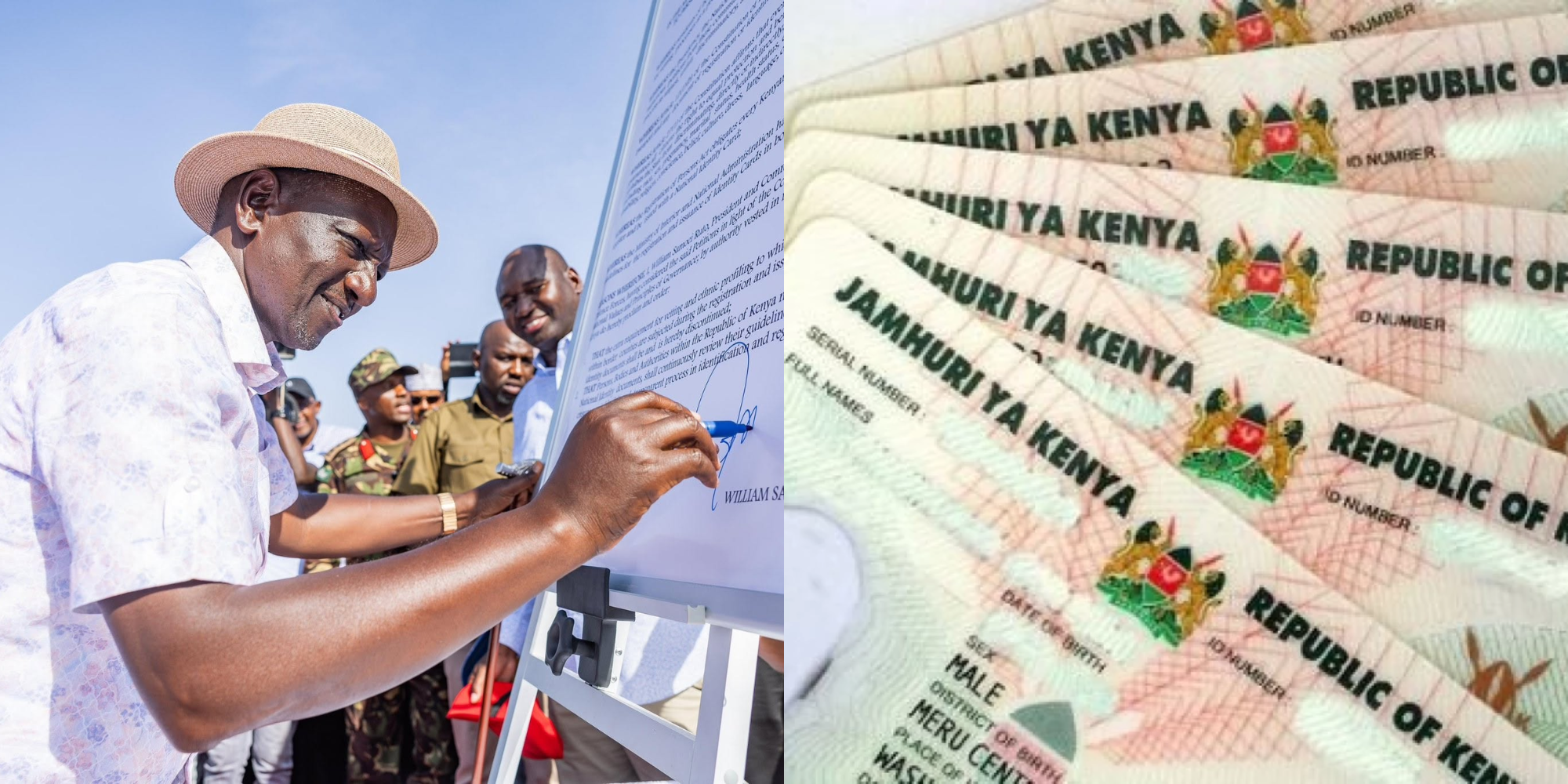
President William Ruto’s decision to abolish the decades-old vetting process for Kenyan Somalis and residents of border counties was intended to end discrimination against citizens rather than open the door for foreigners to obtain Kenyan identity documents.
There is political debate and public concern that the reforms introduced in February 2025 could allow non-citizens to obtain national identity cards ahead of the 2027 General Election.
The President has dismissed the claims that foreigners were allowed to obtain ID Cards and maintained that citizenship verification mechanisms remain intact.
“However, the decision was not an invitation for foreigners to acquire Kenyan documents illegally. Kenyan ID Cards will only be issued to legitimate citizens of this Republic,” Ruto stated.
Ruto said the reforms were designed to address historical injustices suffered by residents of northern Kenya, many of whom were born Kenyan citizens but faced extraordinary bureaucratic hurdles whenever they sought birth certificates or national identity cards.
He stated that the Constitution guarantees equal treatment for all citizens regardless of ethnicity, religion, or region.
Ending Decades of Discrimination
The abolition of the vetting system marked one of the most significant policy shifts affecting Kenyan Somalis since the practice was introduced in the 1990s.
For decades, applicants from North Eastern and some border counties were subjected to additional scrutiny beyond the requirements imposed on other Kenyans.
“If it’s about vetting, let all children of Kenya be vetted equally without any discrimination,” Ruto said.
When signing the Presidential Proclamation on Registration and Issuance of IDs to Border Counties in Wajir in February 2025, Ruto described the long-standing practice as unjust, disenfranchising, and inconsistent with constitutional principles of equality.
The declaration formally ended extra-vetting procedures that had affected generations of Kenyan Somalis seeking identification documents.
“We want the people of Northern Kenya to feel equal to the rest of the country,” the President said.
The President has repeatedly argued that many Kenyan citizens were denied opportunities because they lacked identification documents.
Without birth certificates or national IDs, affected residents often struggled to access education, employment, banking services, passports, voting rights, and government programmes.
Also Read: How to Apply for a National ID at Huduma Center
The Case That Shaped the Debate
During his Madaraka Day address, Ruto cited the experience of Bakaja Ibrahim Osman from Wajir, whose repeated attempts to obtain an identity card were reportedly met with demands for additional documentation and prolonged scrutiny.
According to the President, Osman’s experience reflected the plight of hundreds of thousands of residents from northern Kenya who were forced to navigate a vetting system rooted in suspicion despite being Kenyan citizens by birth.
“Thousands of young Kenyans who turned 18 last year here in Wajir County walked away with the national ID Cards. No hurdles, extra documentation, discrimination, or humiliation. Just their rightful documents in their hands on time,” he said.
Citizenship Verification Still Remains
Even as he defended the reforms, the President stressed that the government has not abolished citizenship verification.
Rather, he said, the administration has removed discriminatory procedures while retaining safeguards designed to protect the integrity of Kenya’s national registration system.
“Our commitment to justice and inclusion goes hand-in-hand with our duty to protect the integrity of our national identity and the security of our country,” he said.
The clarification followed concerns raised by some Kenyans who feared that the removal of extra-vetting requirements could weaken national security, particularly given Kenya’s long and porous border with Somalia.
Also Read: Ruto Breaks Silence on Claims of Issuing Foreigners With ID Cards Ahead of 2027 Election
How Kenyans Obtain National IDs
Under the Registration of Persons Act and accompanying regulations, applicants seeking a Kenyan national identity card are generally required to provide proof of birth, including a birth certificate, birth notification, or baptismal card, along with proof of citizenship, such as a parent’s Kenyan identity card or passport.
Before the 2025 reforms, many Kenyan Somalis and residents of border counties were required to go beyond these legal requirements.
They often had to present grandparents’ identity cards, appear before security committees, and provide witnesses to verify their origins.
The vetting committees frequently included representatives from the National Intelligence Service, National Police Service, local administrators, and community elders.
Follow our WhatsApp channel for instant news updates
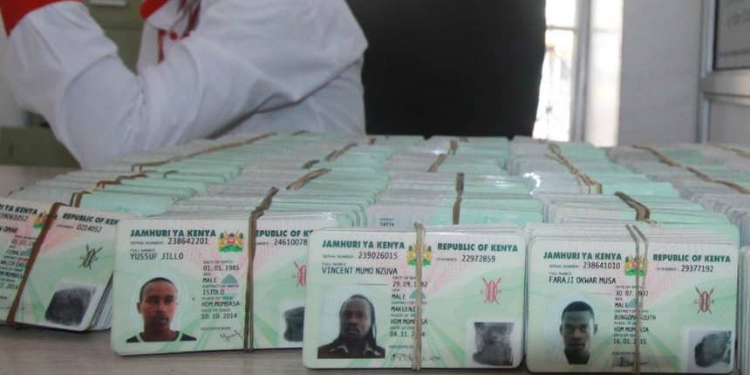
Uncollected ID Cards. PHOTO/Courtesy.