

Today in History: When Ida Odinga Helped George Wajackoyah Flee Kenya After Robert Ouko’s Murder
Share

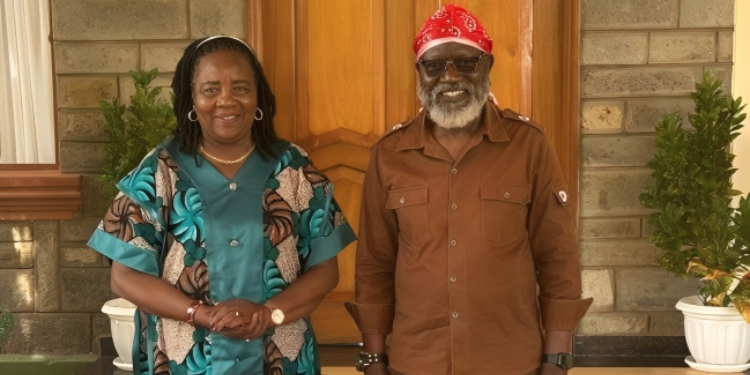
The murder of former Foreign Affairs Minister Dr Robert Ouko remains one of the biggest unsolved cases in Kenya’s history.
On February 15, 1990, the government announced through the then Voice of Kenya radio and television services that Ouko had gone missing. The statement said he had left his home in Koru on the morning of February 13 and had not been seen since.
The government appealed to Ouko to contact his family or the nearest police station. Members of the public were also asked to share any information about his whereabouts.
A day later, on February 16, the country was in mourning after Ouko’s partly burnt body was found about six kilometres from his home in Koru.
His death raised many questions, with Kenyans demanding answers about what had happened to the senior government official.
Scotland Yard Investigation
Following public pressure, President Daniel arap Moi’s government invited detectives from Scotland Yard in the United Kingdom to help investigate the case.
The team, led by Detective Superintendent John H.B. Troon, arrived in Kenya on February 21, 1990. The detectives carried out their own investigations, including a fresh examination of Ouko’s body before his burial on February 24.
At the same time, Kenyan security agencies were conducting separate investigations into the murder.
Wajackoyah’s Role in Ouko Murder Investigation
Among those involved in the internal investigations was Professor George Wajackoyah, who was then an inspector in the Special Branch, Kenya’s intelligence agency at the time, which later became the National Intelligence Service (NIS).
According to Wajackoyah, intelligence chief James Kanyotu assigned him to investigate who was behind Ouko’s death.
Also Read: Today in History: When Raphael Tuju Survived a Plane Crash That Killed Two Politicians
He says his team used intelligence-gathering methods, including surveillance and monitoring telephone communications.
Years later, Wajackoyah claimed that some powerful people were unhappy with the direction of his investigations.
Detention and Escape
Speaking during a recent podcast interview, Wajackoyah said he was later arrested and detained because of his work on the Ouko investigation.
He claimed he was first held at the police station at Jomo Kenyatta International Airport before being transferred to Manyani Prison, where he was tortured.
Also Read: Today in History: How the Artur Brothers Landed in Kenya and Were Granted Passports and Police Ranks
According to him, he was later released after officers from the Kenya Defence Forces intervened.
Wajackoyah said he was then taken to Agip House in Nairobi, where opposition leader Jaramogi Oginga Odinga was waiting for confirmation that he was safe. At the time, Raila Odinga was still in detention.
Wajackoyah recalled that Jaramogi sent Ida Odinga to confirm that he had arrived safely.
He further claimed that Ida Odinga later helped him leave the country.
According to Wajackoyah, Ida drove the vehicle that took him from Agip House to Embakasi, where he boarded a Lufthansa cargo plane that flew him to Germany.
The trip marked the beginning of his years in exile.
Claims About Ouko’s Murder
Wajackoyah has maintained that he cannot publicly discuss details of Ouko’s murder because he is bound by a court order.
He says the restriction remains in place until the court decides otherwise.
However, he has said that the information he holds is similar to claims attributed to him in a 1992 report by The Sunday Times of London.
The report alleged that Ouko was taken from his Koru home by senior government-linked officials, transported to a residence linked to State House, killed, and later dumped near his farm.
The allegations have remained controversial and have never been conclusively proven in court.
After spending years abroad, Wajackoyah eventually returned to Kenya in 2010.
He said that friends and contacts in the United States and the United Kingdom spoke to former President Mwai Kibaki on his behalf, helping pave the way for his return.
Follow our WhatsApp channel for instant news updates
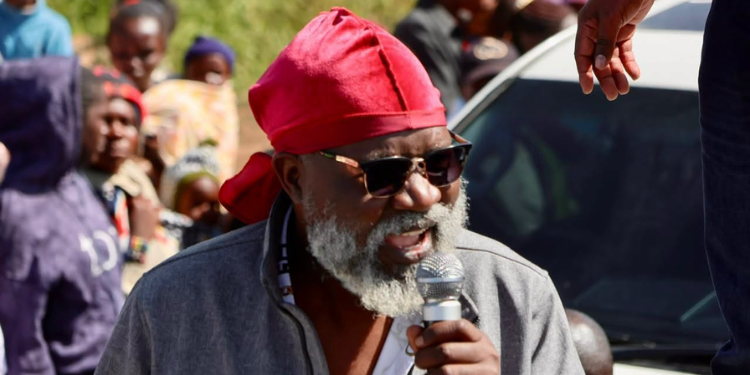
Professor George Wajackoyah addresses Ol Kalou residents on June 7, 2026. PHOTO/Wajackoyah