

Can Moving to Europe Make Your Skin Lighter? Here’s the Truth
Share

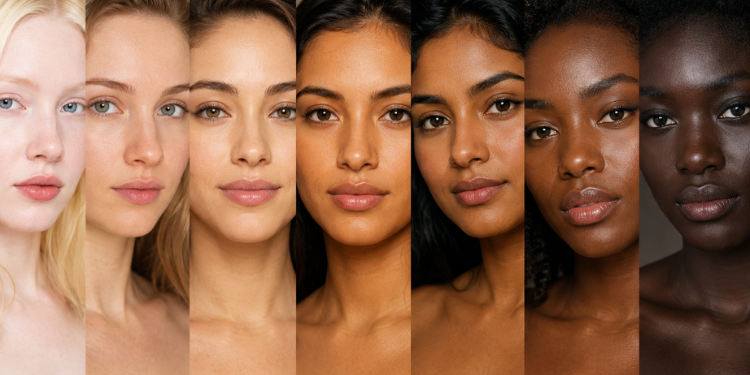
The difference in human skin color is largely determined by a pigment called melanin. Melanin is the natural pigment in our skin. It determines how light or dark our complexion is.
The more melanin a person has, the darker their skin. The less melanin they have, the lighter their skin.
“Albinism (from Latin albus, “white”; also called achromia, achromasia, or achromatosis) is a form of hypopigmentary congenital disorder, characterized by a partial (in hypomelanism, also known as hypomelanosis) or total (amelanism or amelanosis) lack of melanin pigment in the eyes, skin and hair, or more rarely in the eyes alone” This is per Research Gate, Dr. Sumanta Modal ,GITAM University”
However, melanin is not just responsible for appearance and looks.
It protects the skin from the sun’s harmful ultraviolet (UV) radiation, thus reducing damage to skin cells.
The greater the exposure to sunlight, the more melanin the body produces to shield itself from damage.
This is why populations that have lived for a long time in hot, sunny regions such as Africa and parts of South Asia naturally developed darker skin.
Vitamin D and Skin Color
Vitamin D is essential for strong bones, a healthy immune system, and overall health, and the body.
Melanin primarily produces vitamin D through exposure to sunlight.
In regions where UV radiation/ sunlight was much weaker, people with lighter skin are able to absorb more sunlight and thus produce vitamin D more efficiently.
Also Read: Skincare Mistakes Most Kenyan Ladies Make Without Knowing
This gives them an important health advantage over individuals with darker skin living in the same environment.
Thus, darker skin evolved as protection against intense sunlight in high-UV regions such as Africa.
Also, lighter skin evolved in regions where sunlight was less intense.
The History of Skin Color Evolution
All modern humans (including people commonly referred to as “white” and “black”) share a common ancestry.
All humans descend from ancient Africans, whose skin was dark.
Over tens of thousands of years, some remained in regions with high levels of ultraviolet (UV) radiation and retained darker skin.
This is because it continued to protect against intense sunlight.
Other groups started migrating into regions with much lower UV exposure, such as northern Europe and parts of Asia.
In these environments, producing enough vitamin D became more difficult because there was less sunlight.
Within these migrating populations, Natural selection applied.
Natural genetic variation meant that some individuals were born with slightly lighter skin due to random genetic mutations.
These individuals could absorb more ultraviolet (UV) light and produce vitamin D more efficiently than those with darker skin.
As a result, they were generally healthier, more likely to survive, and more likely to have children as compared to the others with darker skin.
These individuals reproduced more successfully, and the genetic variants associated with lighter skin were passed on to their offspring.
The darker ones ended up dying since they could not withstand the changes.
This went on and on until the beneficial genetic variants became increasingly common within the migrants.
Eventually, this resulted in the predominantly lighter skin tones seen among many people in Europe and some parts of Asia today.
Skin Color Change
Thus, skin color does not change within a person’s lifetime simply because they move to a different environment.
For example, an African who moves to Europe today will not naturally develop lighter skin, nor will their children simply because they were born there.
The vice versa is also true.
Evolution occurs over many generations as advantageous genetic variants gradually become more common within a population.
Today, modern healthcare, improved nutrition, and vitamin D supplementation have greatly reduced the environmental pressures that once drove these evolutionary changes.
As a result, many Africans living in Europe, and vice versa, maintain healthy vitamin D levels through a balanced diet, supplements, and lifestyle choices, even when sunlight alone is insufficient.
Follow our WhatsApp channel for instant news updates.

Makeup products
PHOTO/Brittanica