Shock as Ministry Reveals 23 Public Universities Were Insolvent
Share
The Ministry of Education has admitted that years of delayed capitation and inadequate funding have pushed public universities, Technical and Vocational Education and Training (TVET) institutions and teacher training colleges into severe financial distress, exposing deep-rooted challenges facing Kenya’s tertiary education sector.
The disclosure came as Members of Parliament demanded accountability over stalled infrastructure projects, declining student enrolment, mounting debts and weak financial management across public institutions.
Education Cabinet Secretary Julius Migos Ogamba made the revelations while appearing before the National Assembly’s Public Investments Committee on Governance and Education (PIC-G&E) at Parliament Buildings on Wednesday, July 15.
Accompanied by Higher Education Principal Secretary Beatrice Inyangala, TVET Principal Secretary Esther Thaara Muoria, Universities Fund Acting Chief Executive Edwin Wanyonyi and Higher Education Loans Board (HELB) Chief Executive Geoffrey Monari, the CS responded to the Auditor-General’s reports covering the 2018/19 to 2024/25 financial years.
The Auditor-General’s reports highlighted delayed capitation, stalled infrastructure projects, declining enrolment in TVET institutions, poor financial management, unaccounted government equipment and growing financial instability in universities and colleges.
MPs Raise Alarm Over Funding Crisis in TVETs and Universities
Kilome MP Thaddeus Nzambia said delayed capitation had become a major contributor to declining enrolment in TVET institutions, warning that many colleges were losing students because of financial uncertainty.
Also Read: Council of Legal Education Releases Updated List of Licensed Law Schools in Kenya
“The principals consistently point to delayed capitation as the major reason students are dropping out. This was a good programme meant to equip young people with technical skills, but the current trend is worrying,” Nzambia said.
Embakasi West MP Mark Mwenje questioned why institutions continued to struggle financially despite repeated government assurances that capitation funds had been released.
He further raised concerns over a Ksh 28.9 billion funding gap affecting public universities, saying many students were increasingly depending on Constituency Development Fund bursaries and HELB loans to remain in school.
“Students are under immense pressure, especially when examinations approach. Universities require predictable funding instead of leaving students to depend on bursaries that cannot adequately meet tuition costs,” Mwenje said.
Lunga Lunga MP Mangale Munga criticised the continued launch of new infrastructure projects while older developments worth billions of shillings remained incomplete.
Kasipul MP Boyd Were specifically cited Jaramogi Oginga Odinga University, where projects valued at more than Ksh 3 billion have stalled for years, raising concerns over prudent use of public resources.
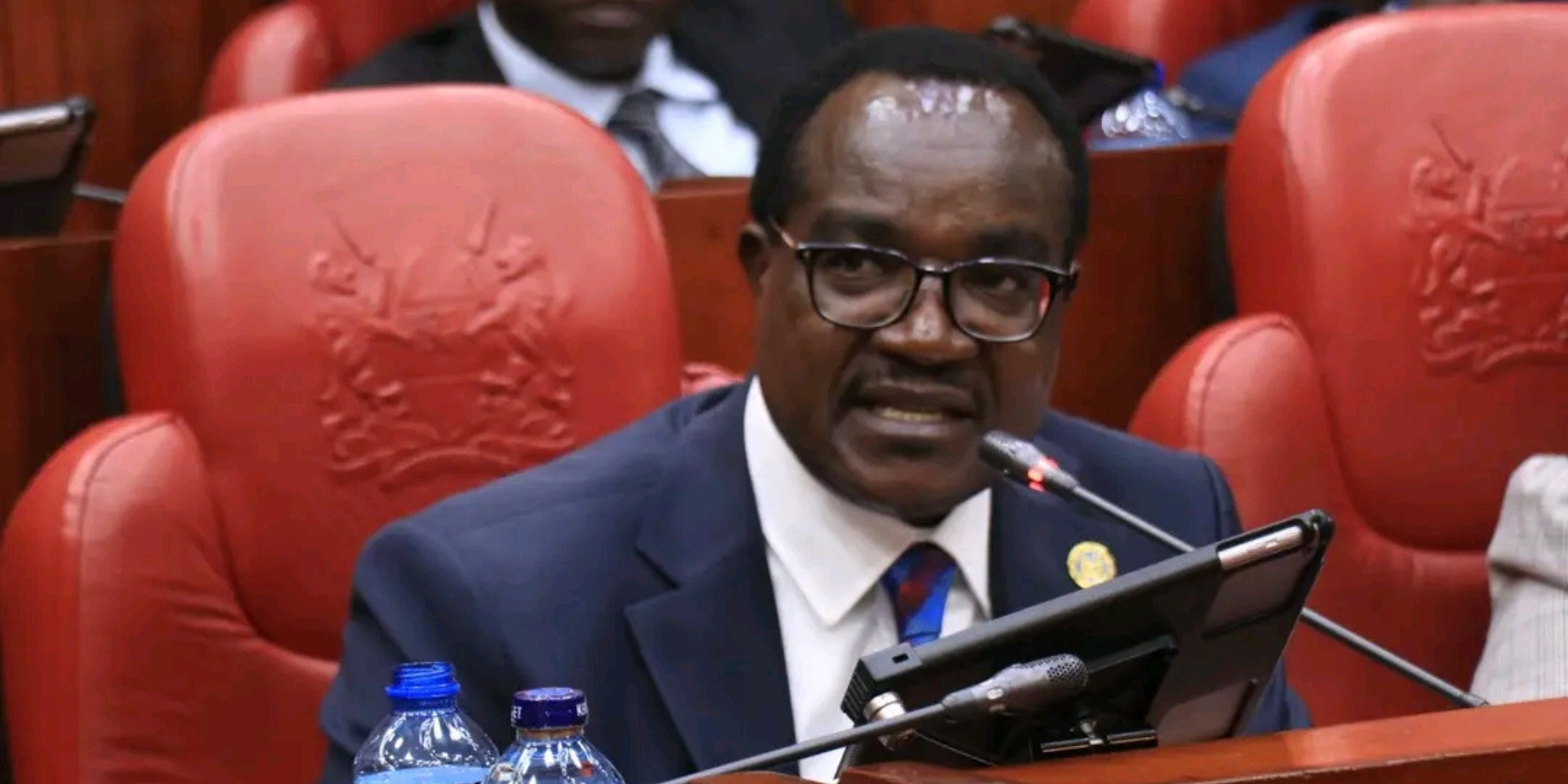
Committee Chairperson and Luanda MP Dick Maungu directed the ministry to strengthen oversight and ensure institutions complete ongoing projects before initiating new ones.
He also questioned why some colleges continued storing hundreds of unused sewing machines while neighbouring institutions lacked similar equipment.
Ministry Admits Funding Constraints
Responding to the concerns, CS Ogamba acknowledged that the Ministry of Education has consistently received less funding than it requested from the National Treasury, resulting in annual financial deficits across higher learning institutions.
“The challenge has been that whatever amount we request, because of financial constraints, we do not receive the full allocation. That creates annual deficits, except in the 2025/26 financial year, where TVET capitation was fully disbursed as budgeted,” Ogamba told the committee.
The CS announced that the government was preparing the proposed Tertiary Education Funding Bill, 2025, which seeks to establish a sustainable financing framework by consolidating tertiary education funding into a single pool for equitable distribution among institutions.
He further revealed that the ministry had introduced a policy prohibiting institutions from starting new projects before completing ongoing ones.
Priority, he said, would be given to projects that are at least 85% complete, while contracts for stalled projects caused by non-performing contractors would be terminated following legal review, with recovery proceedings initiated where public funds had been lost.
Also Read: How HELB Sends Money to University and TVET Students in Kenya (Bank and M-Pesa)
Universities Slowly Recovering
In one of the session’s most striking revelations, Ogamba disclosed that 23 public universities were technically insolvent when the Kenya Kwanza administration assumed office, although reforms have since reduced the number significantly.
“We found 23 universities in the red. Through reforms and timely funding, we have reduced that number to 11, and we are working towards restoring all universities to financial stability,” he said.
The CS said the ministry had also directed universities to commercialise idle assets to generate additional revenue, while TVET institutions had been encouraged to strengthen partnerships with industry to diversify income sources.
At the same time, the ministry is auditing government-supplied equipment to facilitate redistribution of underutilised assets to institutions where they are most needed.
Ogamba also dismissed reports that government capitation for senior schools had been reduced from Ksh 22,244 to Ksh 14,000 per learner, maintaining that government policy remained unchanged.
Follow our WhatsApp channel for instant news updates
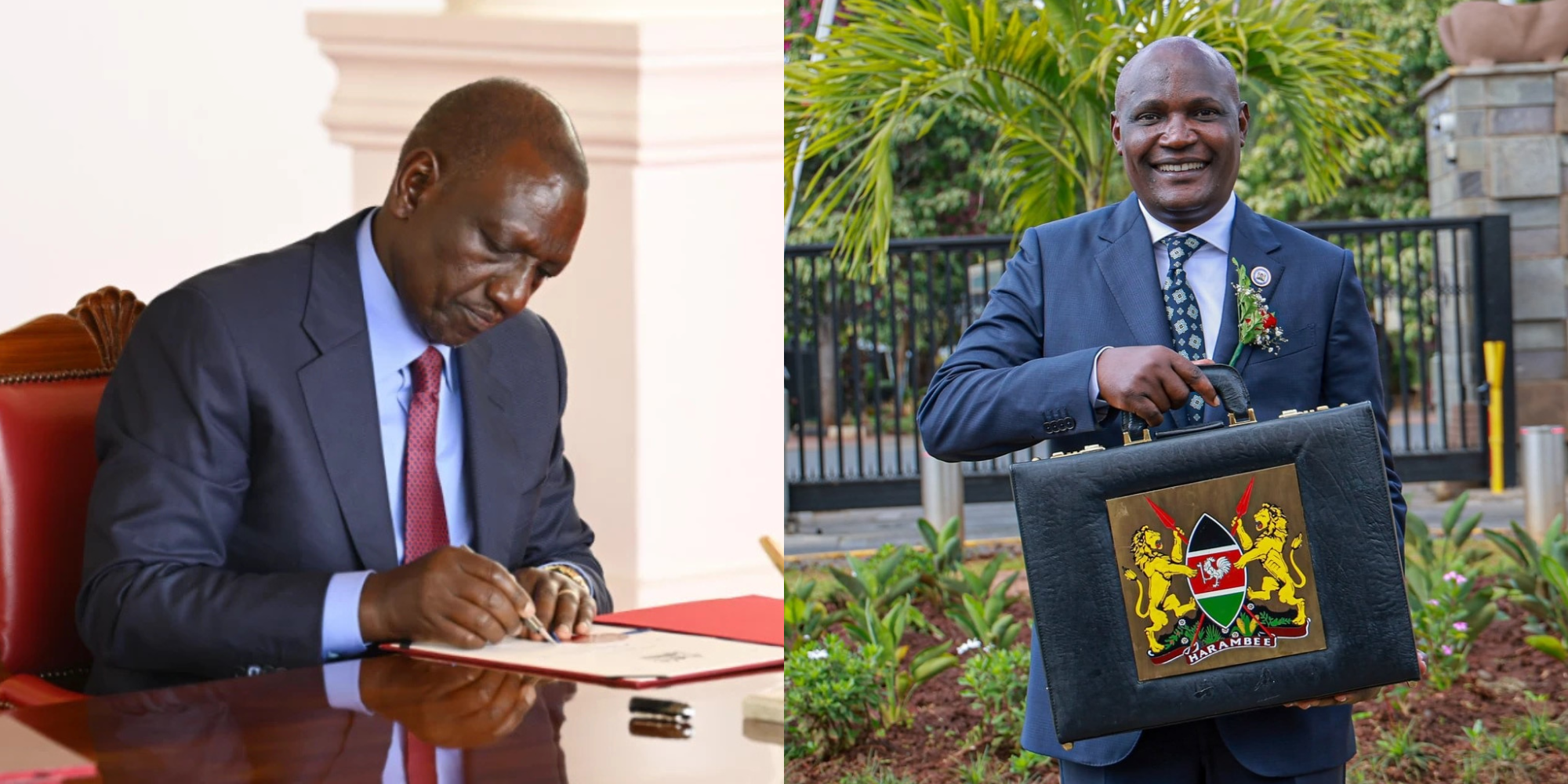
A photo collage of President William Ruto assenting the finance bill 2026 into law at StateHouse and treasury CS John Mbadi during 2026/27 budget reading at Bunge towers. PHOTO/ File