Why M-Pesa Records Alone May Not Prove a Loan in Court
Share
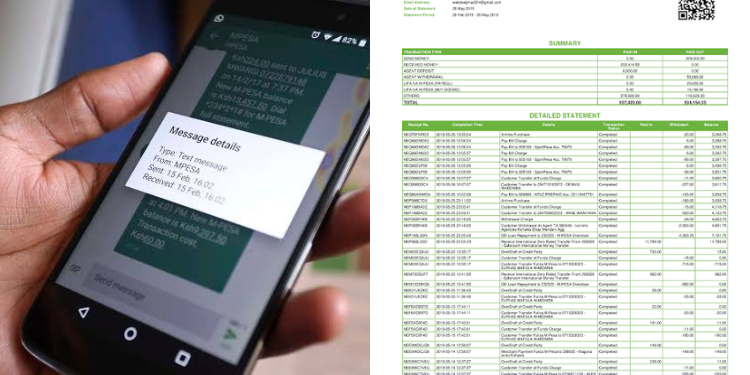
Sending money through M-Pesa creates a digital record of the transaction, but the record alone may not provide sufficient evidence in court.
When a loan dispute reaches court, judges may look beyond the transaction itself to determine why the sender transferred the money and whether the recipient agreed to repay it.
A recent Small Claims Court decision has explained the evidence parties may need when they disagree over the purpose of money transferred through M-Pesa.
In a ruling delivered in August 2026, the court ordered Sharon Mutai to refund her friend, Lucy Tanui, Ksh 995,100 following a dispute over several M-Pesa transfers made between April and May 2025.
The court also awarded Tanui Ksh 67,000 in costs and interest.
How the M-Pesa Loan Dispute Started
Lucy Tanui told the court that she had transferred different amounts to Mutai through M-Pesa, totalling Ksh995,100, on the understanding that the money would be refunded.
When the money was not returned, she moved to court in June 2026 seeking recovery of the amount, damages for breach of contract, costs and interest.
Also Read: Blow to Mogo as Court Declares Ksh 976,750 Loan Demand Illegal
Her evidence included M-Pesa statements showing the various transfers made to Mutai. However, Mutai did not deny receiving the money, but she gave a different explanation for the transactions.
Mutai claimed that the Ksh 995,100 was not money that Tanui had lent her. Instead, she told the court that the payments represented instalments through which she was being repaid an earlier Ksh 1.4 million cash loan that she had allegedly advanced to Lucy in 2024.
However, her explanation faced a challenge over the evidence presented in court as she did not provide a written loan agreement, acknowledgement, receipt, witness or other independent evidence showing the money she had advanced.
The court further questioned why Mutai had not filed a counterclaim for the alleged outstanding Ksh 404,900 if the Ksh995,100 in M-Pesa transfers were repayments of the earlier Ksh 1.4 million loan, adding that the absence of such evidence weakened her explanation for the payments.
Can an Oral Loan Agreement Be Enforced?
However, the absence of a written loan agreement does not necessarily mean that an agreement cannot be enforced in court.
The law recognises that oral contracts can be legally enforceable, although they can be more difficult to prove because the parties may disagree over what was actually agreed.
Also Read: Why Court Awarded Man Ksh 505,500 Four Years After Safari Van Crash
In Attorney General v Kabuito Contractors Limited [2023] KECA 230 (KLR), the Court of Appeal noted that anyone seeking to enforce an oral agreement must prove its existence and terms through evidence.
Courts may consider the parties’ conduct, communications and surrounding circumstances when determining what they agreed.
Therefore, while an M-Pesa statement can prove that a payment was made, keeping additional records can help establish the nature of the transaction.
Messages confirming that the money was a loan, details of the amount borrowed, agreed repayment dates, acknowledgements and other communications can help demonstrate the parties’ intentions.
Follow our WhatsApp channel for instant news updates.
Safaricom user interacting with M-PESA. PHOTO/Citizen TV